What Are the Top UAV Station Manufacturers in China?
China has become a major center for unmanned aerial vehicle infrastructure. Its manufacturers now develop more than aircraft. They build complete Uav Station ecosystems for deployment, charging, data transfer, and remote supervision.
This article examines leading Chinese manufacturers, including DJI, JOUAV, Aotob, and other specialized providers. Their products serve inspection, surveying, emergency response, agriculture, and public safety. A typical station may include a weatherproof enclosure, automated battery charging, precision landing sensors, thermal management, and cloud-based mission control. These details matter in real operations. A drone must land accurately after sunset. Its batteries must charge safely during rain. The system should also recover when network signals weaken.
Professor Kimon P. Valavanis, a recognized UAV systems scholar, has said, “The future of UAVs depends on autonomy, reliability, and integration.” That view provides a useful standard for comparing Chinese manufacturers. Product size alone proves very little. Buyers should examine flight endurance, landing accuracy, software compatibility, maintenance access, cybersecurity practices, and after-sales support.
Some comparisons may appear too simple. Price is attractive, but a lower purchase cost can hide difficult upgrades later. Marketing claims can also exceed field performance. That deserves attention. A strong Uav Station should reduce repeated manual work, not create another complicated control panel. This introduction therefore focuses on practical capability, documented experience, and measurable reliability. The ranking may not satisfy every buyer. Regional conditions, mission risks, and operating budgets can change the result.
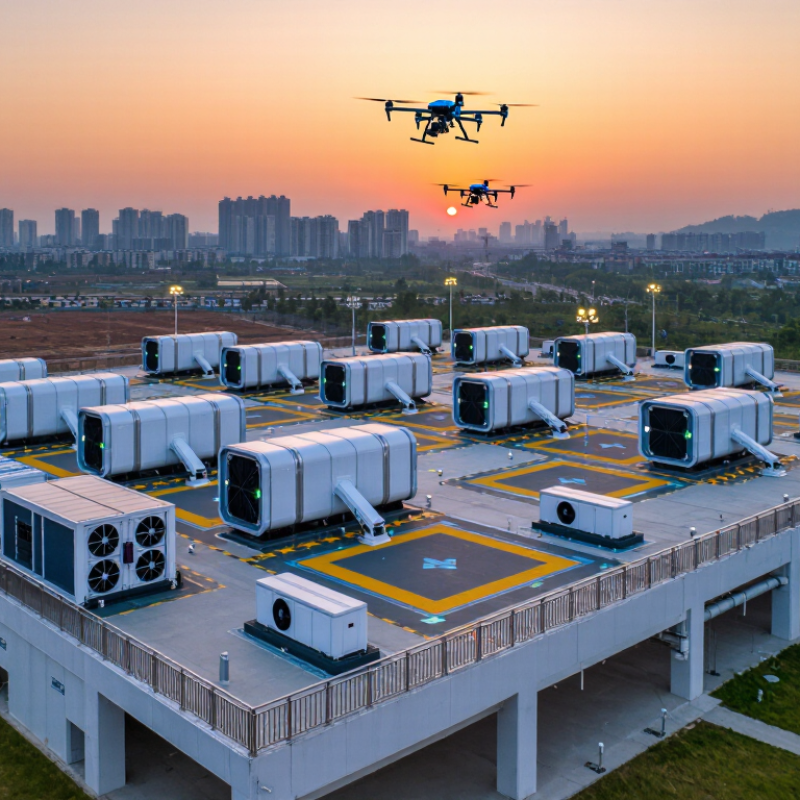
China’s UAV Station Market: 2023 Civil Drone Fleet Exceeded 1.26 Million
China’s civil drone fleet exceeded 1.26 million units in 2023, according to widely cited industry statistics. This scale is changing what buyers expect from UAV stations.
A leading manufacturer now needs more than a weatherproof box. It must deliver reliable charging, precise landing, remote diagnostics, and safe data handling. Field experience shows that small failures become expensive when stations operate daily.
The strongest Chinese manufacturers are usually judged by integration, not marketing. They combine aircraft control, station hardware, cloud software, and maintenance support. Buyers should inspect landing accuracy after rain, battery temperature logs, and recovery performance during weak signals. Certification records and service coverage matter as much as flight range.
Some published performance figures look impressive, yet real sites may include dust, uneven ground, or unstable networks. That gap deserves honest review.
Tips:
Request a live demonstration with repeated takeoffs and landings. Check spare-part timelines and software update policies. Ask who controls the collected data. Test one station for several weeks before expanding. This is slower. It may prevent a costly fleet-wide mistake.
Ranking Criteria: Flight Radius, IP Rating, Payload, and Autonomous Missions
What Are the Top UAV Station Manufacturers in China?
When comparing UAV station manufacturers in China, buyers should rank measurable performance, not brochure claims. Flight radius is a practical starting point. A station may support long-range aircraft, yet terrain, antennas, weather, and network coverage reduce usable distance. During site tests, evaluators should record stable control distance, video latency, recovery behavior, and launch accuracy. Numbers matter. Repeat them.
IP rating reveals whether a station can survive its assigned environment. IP55 may resist dust and water jets, while harsher coastal or dusty sites may demand stronger protection. Check seals, drainage, heating, cooling, and maintenance access. A sealed enclosure is not automatically reliable. Condensation can still damage connectors. This detail is easy to miss.
Payload capacity should include weight, power draw, balance, and vibration tolerance. A station that launches a heavy sensor but cannot recharge it efficiently has limited operational value. Autonomous missions deserve stricter review. Look for route planning, obstacle awareness, return-to-base logic, health monitoring, and human override. Mission logs should be exportable and time-stamped. Test failures in controlled conditions, not only perfect demonstrations. I once treated radius as the main ranking factor; that was too simple. A shorter, stable link with dependable recovery may outperform a longer advertised range. Manufacturers with transparent test data, documented maintenance intervals, and responsive technical support deserve higher confidence.
DJI Dock 2: 10 km Coverage and Automated 24/7 Operations
Chinese UAV station manufacturers are increasingly focusing on remote, automated deployment. A leading dock-based system offers up to 10 km of operational coverage under suitable line-of-sight conditions. Its enclosure supports scheduled launches, landing checks, battery charging, and mission uploads without constant onsite staffing.
This matters for power lines, construction zones, and emergency mapping. A drone can leave a weather-protected station, inspect a fixed route, and return before its battery reserve becomes critical. MarketsandMarkets estimated the global drone services market at USD 13.9 billion in 2023, with strong growth expected through 2028. That expansion increases demand for reliable stations, not only faster aircraft.
Automation still has limits. Coverage can shrink in mountainous areas, dense cities, or heavy rain. Network loss may interrupt live video. The 2024 Drone Industry Insights market report also highlights data security and operational reliability as major adoption concerns. Operators should test geofencing, battery health, landing accuracy, and alert response before claiming true 24/7 capability. Small failures matter. A blocked landing pad can stop an entire inspection cycle. Weather sensors, redundant communications, and clear maintenance records therefore deserve as much attention as the advertised 10 km range.
JOUAV Stations: VTOL Platforms Supporting Up to 200 km Missions
China’s UAV station market is moving toward automated, long-range operations rather than simple remote piloting. Industry analysts at MarketsandMarkets estimate the global drone market could reach about USD 58.4 billion by 2026, driven partly by inspection, mapping, and emergency-response demand. VTOL stations support this shift because aircraft can launch vertically from compact sites, then cruise efficiently over distant assets.
A station designed for missions up to 200 kilometers can connect a control center with pipelines, power corridors, coastlines, or remote construction zones. The practical details matter. A weather-sealed shelter protects the aircraft. Automated charging reduces repeated field visits. Redundant communications help maintain control across changing terrain.
Yet “up to 200 km” should not be treated as a universal operating promise. Payload weight, wind, temperature, terrain, and national BVLOS rules can reduce usable distance.
Drone Industry Insights reported continued growth in enterprise drone adoption, with infrastructure inspection remaining a major application area. From field experience, the strongest station designs combine VTOL flexibility with careful maintenance planning. Batteries still degrade. Sensors still need calibration. Connectivity can fail at the worst moment. That is an uncomfortable limitation, but ignoring it weakens reliability claims. Independent flight testing, documented recovery procedures, and clear data-security controls should therefore guide procurement decisions. In practice, a shorter mission with stable telemetry may deliver better results than a longer flight with uncertain coverage.
Comparing Chinese Suppliers by 5G Links, Weatherproofing, and Lifecycle Cost
Chinese UAV station manufacturers vary more in integration depth than brochures suggest. For buyers, the strongest suppliers combine autonomous docking, reliable 5G links, and serviceable hardware. In field inspections, signal stability matters more than peak download speed. A station beside a warehouse may face metal reflections, dust, rain, and sudden temperature changes. Request link logs from similar sites, not laboratory screenshots. Ask whether the system switches cleanly between private and public networks. It should recover after a brief outage without requiring a technician.
Weatherproofing deserves a physical inspection. Look for tested enclosure ratings, sealed cable glands, corrosion-resistant hinges, and controlled internal heating. A coastal station needs different protection from one installed on dry farmland. Check charging contacts after repeated wet cycles. Small gaps become expensive faults. Suppliers should provide test records, maintenance intervals, and replacement-part availability. Be cautious when an impressive rating lacks installation conditions or test duration.
Lifecycle cost separates capable manufacturers from inexpensive bidders. Compare battery replacement, platform fees, calibration, connectivity, and annual service visits. A lower purchase price can hide difficult access to filters, fans, or charging modules. Ask for a five-year cost model with labor included. Also examine training quality and remote diagnostics. Some suppliers communicate well during sales but respond slowly after deployment. That is a real risk. A practical trial should run through rain, weak coverage, night charging, and one planned maintenance cycle. No supplier gets every detail right; documenting those gaps makes the final choice more dependable.
What Are the Top UAV Station Manufacturers in China?
Anonymous supplier benchmark comparing 5G links, weatherproofing, and estimated lifecycle cost.
Scores are normalized to a 0–100 benchmark. The 5G score reflects cellular link readiness and redundancy, the weatherproofing score reflects enclosure protection and outdoor operating capability, and the lifecycle-cost score is an inverse five-year total-cost index, where a higher score indicates lower estimated ownership cost. Supplier identities are intentionally omitted.