Choosing among the top Laser Cladding machine manufacturers worldwide requires more than comparing laser power or machine price. A reliable evaluation considers engineering experience, process stability, service coverage, and documented results. This guide introduces leading manufacturers through practical criteria. These include laser source quality, powder feeding accuracy, scanning control, enclosure design, and software usability.
Real production details matter. A manufacturer may advertise a 6 kW laser, yet stable deposition depends on beam control and thermal management. Look for evidence from turbine repair, mining equipment, automotive tooling, and heavy industrial applications. Examine case studies closely. Check coating thickness, dilution rate, hardness, deposition speed, and post-processing requirements. Independent testing and customer references can reveal more than polished brochures.
Service is equally important. Spare parts, operator training, remote diagnostics, and local technical support affect long-term value. Certifications and quality systems also strengthen confidence, but they do not replace factory visits or sample trials. There is no universal best manufacturer. A compact workshop may need flexibility, while a large repair center may prioritize automation and throughput. Published specifications can be incomplete. That deserves caution. Even experienced buyers may overlook operator skill, powder handling, or fixture design. Therefore, this overview focuses on balanced evidence rather than simple rankings, helping readers identify manufacturers that match their materials, production goals, budget, and regional support needs.
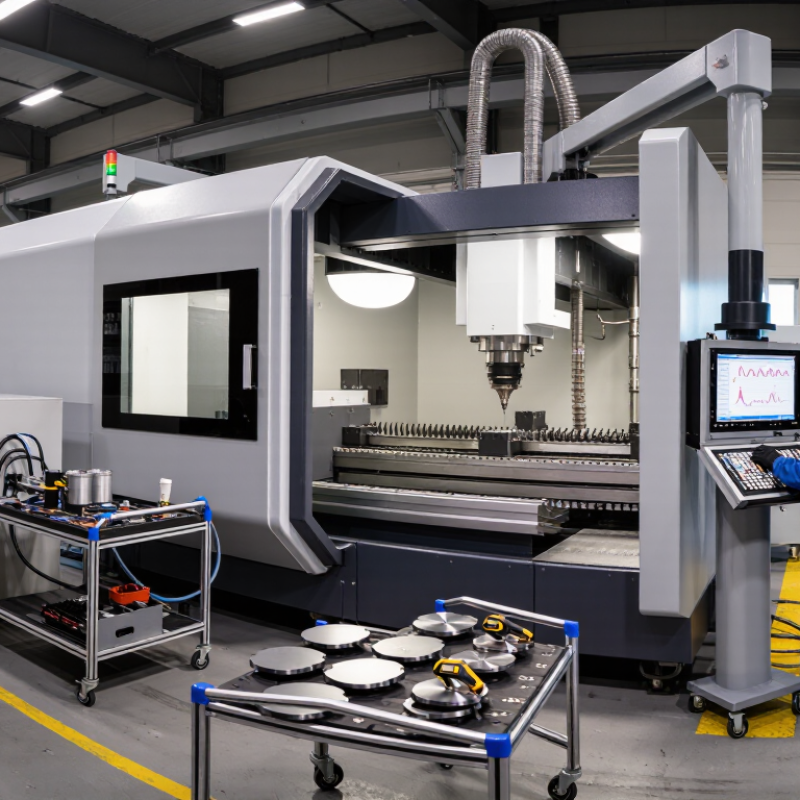
A laser cladding machine deposits protective metal onto a component using a focused laser beam. The system feeds powder or wire into the molten pool. The laser melts the material, while the base part remains mostly solid. This creates a dense metallurgical bond, not a simple painted coating.
The machine usually includes a laser source, powder feeder, motion platform, shielding gas system, and control software. Common applications include turbine repair, mining tools, molds, shafts, and oilfield components. According to MarketsandMarkets, the global laser cladding equipment market was valued at approximately USD 0.5 billion in 2023. The report also forecasts strong growth through 2028, supported by demand for repair and surface protection. Grand View Research identifies aerospace, energy, and industrial manufacturing as major application areas. Yet, market forecasts are not guarantees. Material waste, operator skill, and process calibration can change the final return.
Tips: Match the laser power to the coating material and part geometry. Check powder flow before production. Measure hardness and bonding strength after cladding. A shiny surface can still hide pores. It happens. Test cross-sections when failure costs are high. Keep shielding gas stable, because oxidation may weaken the deposit. Choose machines with precise motion control and traceable process records. In practice, the “best” machine depends on layer thickness, repair size, alloy behavior, and production volume. Cost alone gives an incomplete answer.
Laser cladding machines are judged by process control, not appearance. A high-power laser creates a small molten pool on a metal surface. Powder or wire enters this pool and melts with the substrate. After cooling, it forms a dense metallurgical coating.
The system usually combines a laser source, delivery nozzle, shielding gas, motion platform, and control software. Argon or nitrogen can protect the melt from oxidation. CNC or robotic movement then builds each track with controlled overlap. Operators monitor laser power, travel speed, feed rate, and powder efficiency. These details affect dilution, porosity, hardness, and heat-affected zones. According to MarketsandMarkets’ 2024 industry estimate, the laser cladding market could grow from roughly 0.6 billion dollars in the mid-2020s to more than 1 billion dollars within several years. Estimates differ. That difference deserves attention.
Tips: Begin with a small test coupon. Measure coating thickness, dilution, hardness, and bond strength before treating expensive parts. Keep the nozzle aligned. Even slight misalignment can create uneven tracks. In my experience, impressive deposition rates can hide poor surface preparation. Clean metal matters. So does repeatability. ASTM-based testing and documented process parameters make supplier comparisons more reliable than marketing claims. A manufacturer should also explain how its system handles powder recovery, thermal distortion, and post-cladding machining. No machine is perfect. Some applications still need slower speeds for better consistency.
Laser cladding uses a focused laser beam to create a melt pool while powder or wire is delivered into it. The representative ranges below show how laser power, travel speed, and powder feed rate commonly change with deposition scale. Actual settings depend on alloy, substrate, nozzle design, layer geometry, and shielding gas.
Values are representative engineering ranges: laser power in kW, travel speed in mm/min, and powder feed rate in g/min.
Choosing a laser cladding machine manufacturer requires more than comparing laser power or purchase prices. Industry forecasts from Grand View Research estimate the laser cladding market will expand at roughly 9% annually through 2030. However, market growth does not prove engineering quality. Buyers should examine demonstrated work on similar substrates, such as nickel alloys, tool steel, or turbine components. Ask for cross-sectional results, not only polished surface photographs. A reliable supplier should report dilution, porosity, hardness, layer thickness, and heat-affected depth under defined test conditions.
Process control deserves close attention. A serious evaluation includes powder size distribution, feeding stability, beam profile, shielding-gas control, and real-time monitoring. For example, a 0.8-millimeter deposition track may look uniform but still hide pores beneath the surface. ISO 14923 provides useful guidance for thermal-spray process qualification, although it does not replace application-specific cladding validation. Request repeatability data from multiple builds. One successful sample is weak evidence.
Lifecycle support often separates capable manufacturers from attractive sales packages. Review installation records, operator training, spare-parts availability, software update policies, and response times for service cases. The Wohlers Report 2024 showed continued industrial investment in advanced manufacturing, yet adoption still depends on measurable productivity and qualification costs. Be cautious with impressive deposition-rate claims. They may exclude setup, inspection, powder waste, or post-machining. Independent trials are valuable, but they are not perfect either; sample geometry can favor one process. A transparent manufacturer will disclose those limitations.
| Evaluation Dimension | Key Data to Verify | Reliable Evidence | Why It Matters | Suggested Weight |
|---|---|---|---|---|
| Laser Technology | Laser type, rated power range, wavelength, beam delivery method, and optical stability | Technical datasheets, optical test reports, and application demonstrations | Determines heat input, deposition behavior, process control, and compatibility with the selected material | 15% |
| Cladding Process Performance | Deposition rate, track width, layer thickness, dilution control, and repeatability | Customer-specific sample trials, metallurgical reports, and recorded process parameters | Shows whether the system can achieve the required coating quality and production throughput | 18% |
| Material Compatibility | Supported powders or wires, substrate compatibility, particle-size requirements, and feeding stability | Material certificates, powder-feed tests, and application references for comparable alloys | Reduces cracking, porosity, poor bonding, and inconsistent layer formation | 12% |
| Automation and Motion Control | Number of controlled axes, robot or CNC integration, path accuracy, sensing, and collision protection | Machine acceptance tests, controller documentation, calibration records, and offline programming demonstrations | Affects part geometry, accessibility, repeatability, and suitability for complex components | 12% |
| Process Monitoring and Quality Control | Temperature monitoring, melt-pool sensing, powder-flow monitoring, data logging, and inspection options | System specifications, sample production records, inspection plans, and traceability demonstrations | Enables early detection of defects and supports repeatable, documented production | 10% |
| Machine Configuration and Usability | Work envelope, maximum component size, fixture compatibility, loading method, software interface, and setup time | Layout drawings, user demonstrations, installation requirements, and operator feedback | Confirms that the equipment fits the facility and can be operated efficiently | 8% |
| Safety and Compliance | Laser enclosure, interlocks, emergency stops, fume extraction, electrical protection, and applicable conformity documentation | Risk assessments, conformity declarations, safety manuals, and third-party inspection records | Protects operators and supports compliance with local workplace and equipment requirements | 10% |
| Service, Training, and Spare Parts | Installation support, operator training, remote assistance, response procedures, warranty terms, and spare-parts availability | Service-level agreements, training plans, support contacts, and spare-parts lists | Reduces downtime and shortens the learning curve after installation | 8% |
| Total Cost of Ownership | Purchase price, installation, utilities, consumables, maintenance, software fees, and expected operating costs | Itemized quotations, lifecycle-cost calculations, maintenance schedules, and energy specifications | Provides a more meaningful comparison than purchase price alone | 5% |
| Recommended Evaluation Method | Use a weighted scorecard and require a documented sample trial using the target component, substrate, and cladding material | Compare verified evidence rather than marketing claims; record every tested parameter and result | Combines technical performance, operational suitability, compliance, and long-term support | 100% |
Top Laser Cladding Machine Manufacturers Worldwide
Top laser cladding machine manufacturers worldwide are judged by engineering depth, process stability, and long-term service. Reliable manufacturers usually provide systems for repairing shafts, turbine parts, molds, mining tools, and high-wear components. Their equipment must deliver controlled heat input, consistent powder feeding, and accurate layer geometry.
Experienced suppliers often offer coaxial or lateral powder nozzles, closed-loop monitoring, and programmable motion platforms. These features help technicians manage dilution, porosity, cracks, and uneven deposition. A strong manufacturer also supports material testing before installation. Sample trials can reveal whether a nickel alloy, cobalt alloy, or steel powder suits the component.
After-sales support matters as much as machine specifications. Buyers should examine training, spare-part access, software updates, and local technical assistance. Ask for measurable results, not polished promises. Actual repair records are more useful than impressive brochures.
No ranking stays permanent.
Manufacturing quality can vary between production batches. Even advanced systems may need careful parameter adjustment, especially with complex geometries or reflective metals. This is where practical experience becomes valuable. Engineers should inspect cross-sections, measure hardness, and compare wear performance after testing. A manufacturer that openly discusses limitations may be more dependable than one claiming perfect results. The best choice depends on application demands, operator skill, budget, and the supplier’s willingness to verify performance.
Choosing a laser cladding machine manufacturer should begin with your production reality, not an impressive brochure. Define the material, coating powder, part size, tolerance, and expected repair volume. A manufacturer experienced with turbine shafts may not understand your hydraulic components. Ask for sample trials using your actual substrate and powder. Measure the gap.
Technical support matters after installation. Check whether engineers can guide laser power, scanning speed, powder flow, and shielding gas settings. Request documented test results, maintenance schedules, and training plans. Reliable manufacturers explain limitations clearly instead of promising perfect results. That honesty is valuable.
Visit the factory if possible, or request a live machine demonstration. Inspect the powder feeder, motion system, cooling unit, and safety controls. Ask how quickly replacement parts arrive in your region. Speak with several existing users about uptime, coating consistency, and service response. Their experience may reveal details sales materials omit.
A strong supplier should help calculate operating costs, including powder waste, energy use, labor, and downtime. Review acceptance criteria before signing anything. Include coating hardness, bond strength, thickness variation, and inspection methods. I would also test a difficult geometry, not only an easy flat surface. Real production is rarely so cooperative. A rushed decision can leave an expensive machine underused, even when its specifications look excellent.
Rob was always very honest and upfront about everything and took the time to explain everything I needed.
“highly recommended. They provided us with a great storage container with ontime services.”
“Bought a used container, its perfect, no leaks and in good condition.”
“Good service and prompt delivery. A great option for temporary storage at a decent price.”

Join our mailing list to get the latest storage container inventory and offers