Choosing a Conductivity Meter in 2026 starts with the sample, not the sales ranking. A handheld meter suits field checks at a tap, cooling loop, or sampling point. Benchtop models offer stable readings and convenient controls for routine laboratory work. Inline meters monitor changes continuously, helping operators spot process shifts without collecting every sample by hand. Some portable instruments also measure pH or temperature, but extra features matter only when the workflow needs them.
The best type depends on the required range, accuracy, environment, and record-keeping needs. A salty process sample and a low-conductivity rinse water place very different demands on a sensor. Look for a suitable measurement range, reliable temperature compensation, and calibration procedures that staff can follow consistently. Check whether the probe can tolerate the sample and whether replacement parts are available. Small details matter.
A meter is only as dependable as its setup. Rinse the probe between samples, avoid trapping air around the sensing area, and follow the manufacturer’s calibration guidance. Even then, measurements can vary with temperature, contamination, and technique. That distinction is easy to overlook. This guide compares the leading meter types by their practical strengths, limitations, and typical uses. It also considers where a more advanced instrument may add value—and where a simple, well-maintained meter is the wiser choice. No single design fits every setting. The right choice is the one that produces consistent readings under real working conditions.
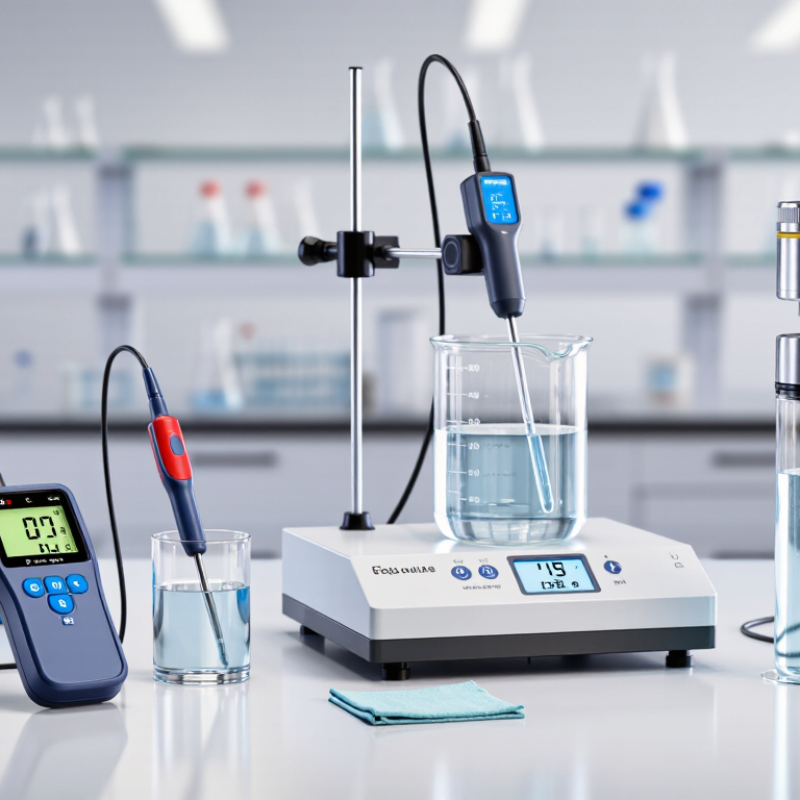
Conductivity meters estimate how readily a liquid carries electrical current. Dissolved ions, such as sodium and chloride, help carry that current between electrodes. More ions generally mean higher conductivity, reported in microsiemens per centimeter (µS/cm) or millisiemens per centimeter (mS/cm). The reading is not a direct measure of every dissolved substance. That distinction matters.
In 2026, common formats include handheld meters for field checks, benchtop meters for controlled testing, and inline sensors for continuous process monitoring. The USGS Water Science School reports that freshwater commonly measures about 50–1,500 µS/cm, while seawater is around 50,000 µS/cm. These are broad reference ranges, not pass-or-fail limits. ASTM D1125 describes standard methods for measuring water conductivity and resistivity. Temperature also changes readings, so many meters compensate to a reference temperature, often 25°C. Compensation helps, but it cannot fix a dirty or poorly calibrated probe.
Tips: Rinse the probe with the sample before measuring, remove trapped air bubbles, and wait for the reading to stabilize. Check calibration with a suitable standard near your expected range. Small habits matter. Still, field conditions can be messy, and automatic temperature correction is not magic. A clean probe is not automatically a trustworthy one.
Conductivity reference points help match a meter to the sample: pen and portable meters suit field checks, benchtop meters suit laboratory work, and inline meters monitor process streams continuously.
How to read it: The vertical axis is logarithmic because conductivity spans several orders of magnitude. Conductivity meters apply an alternating electrical signal through a probe and calculate conductivity from the measured response and cell constant. Temperature affects readings, so use temperature compensation or compare values at the same temperature. KCl values are reference standards; ultrapure-water and seawater values are approximate.
Handheld and portable conductivity meters are practical choices for field checks in 2026. A technician can carry one beside a sampling bottle, rinse the probe, and read conductivity in seconds. Handheld units usually offer a larger display and more controls; compact portable models trade some convenience for lighter packing. Both need clean electrodes, suitable calibration standards, and temperature compensation. Small details matter.
The USGS National Field Manual describes specific conductance as a field measurement commonly reported at 25°C. That reference temperature makes readings easier to compare across samples, though it cannot explain every change in water chemistry. The WHO Guidelines for Drinking-water Quality report that total dissolved solids below 600 mg/L are generally palatable, while levels above 1,000 mg/L can become increasingly unpalatable. Conductivity meters estimate ionic content; they do not measure TDS directly, and conversion depends on the water’s composition. Not a safety verdict. For a creek survey or process check, log the temperature, calibration status, and sample location with each reading. I would still question a sudden outlier before trusting it. A dirty probe, trapped air, or a poorly mixed sample can make a tidy screen misleading.
In 2026, benchtop and laboratory conductivity meters remain practical choices for repeatable measurements at a fixed workstation. A standard benchtop meter suits routine checks of water, prepared solutions, and process samples. It typically pairs a display unit with a probe, temperature sensor, and calibration controls. Multiparameter laboratory meters add measurements such as pH or dissolved oxygen, reducing bench clutter when workflows require several readings. That can save space.
The meter is only part of the measurement system. Probe selection should match the sample’s expected conductivity range, container size, and cleaning requirements. Temperature compensation helps compare readings, but it does not correct every sample-related effect. For reliable records, document calibration standards, sample temperature, and measurement conditions. Keep the probe clean, and allow readings to stabilize before recording them. Still, a neat display can hide a tired probe. Check its response against a known standard, especially when results drift or repeat poorly. It is easy to blame the instrument too quickly; sometimes the sample handling needs closer review. For laboratories comparing models, prioritize usable calibration steps, clear data export, and serviceable probes over extra features that may go unused.
Inline and process conductivity meters track dissolved ionic content directly inside pipes, tanks, and cleaning loops. Contact sensors use electrodes; they suit many low-to-moderate conductivity applications. Inductive, or toroidal, sensors measure through a plastic or lined pipe wall and tolerate fouling better. They are often useful in concentrated liquids or harsh process streams. The choice depends on the fluid, pipe geometry, and required response time—not just the meter’s range.
Small details matter. A sensor installed near a pump elbow may see bubbles or uneven flow, producing noisy readings. Temperature compensation also needs care: a generic correction may misrepresent fluids whose conductivity changes differently with temperature. USP General Chapter <645> sets 1.3 µS/cm at 25°C as the Stage 1 limit in its pharmaceutical water conductivity test. This is a useful example of how tightly defined measurement conditions support reliable process checks; it is not a universal limit for every water system. ASTM D1125 provides established methods for measuring water conductivity and resistivity. In practice, teams should document calibration, temperature, installation location, and cleaning intervals. One uncomfortable truth: a precise display cannot rescue a poorly placed or neglected sensor.
| Meter Type | Measurement Principle | Typical Inline Installation | Best Suited For | Key Advantages | Important Considerations |
|---|---|---|---|---|---|
| Two-electrode contact sensor | Measures electrical conductance between two electrodes in contact with the liquid. Conductivity is calculated using the sensor’s cell constant. | Inserted into a pipe, flow cell, tank, or bypass line. | Low-to-moderate conductivity liquids, water treatment, and general process monitoring. | Simple construction; widely applicable; performs well when the liquid and measurement range suit the selected cell constant. | Electrode polarization and surface deposits can affect readings, particularly in more conductive or fouling process streams. Correct cell-constant selection is important. |
| Four-electrode contact sensor | Uses separate current-carrying and voltage-measuring electrode pairs to reduce the effects of electrode polarization and lead resistance. | Installed directly in a process line or in a flow-through assembly. | Moderate-to-high conductivity liquids and processes where conductivity varies over a broad operating range. | Can cover a broader conductivity range than many two-electrode designs and is less affected by polarization. | Electrodes still contact the process liquid and can require cleaning. Installation and sensor geometry should match the application. |
| Inductive (toroidal) sensor | Uses electromagnetic coupling between coils to induce and detect current in the liquid; there are no exposed measurement electrodes. | Mounted in a pipe, tank, or compatible flow assembly, with the sensing opening fully exposed to the liquid. | Conductive liquids, corrosive or dirty streams, and applications prone to coating or electrode fouling. | No exposed electrodes to corrode or polarize; often well suited to challenging process liquids and lower-maintenance installations. | Generally not suitable for very low conductivity measurements. Sensor size, pipe geometry, air pockets, and installation position can affect performance. |
| High-purity water contact sensor | Typically uses a low cell-constant electrode cell and an AC measurement signal to measure very low conductivity. | Installed in a clean flow cell or a carefully designed sample or process line. | Purified water, condensate, and other applications requiring low-conductivity measurements. | Designed to resolve small conductivity changes in clean, low-ion water. | Very low conductivity measurements are sensitive to contamination, air exposure, temperature, and installation details. Use a suitable flow arrangement and temperature compensation method. |
| Sanitary inline conductivity assembly | A hygienic process assembly that uses a contact or inductive sensing element; the measurement principle depends on the sensor fitted. | Installed with hygienic connections in a process line or vessel, typically where cleanability and sanitary design are required. | Food, beverage, pharmaceutical, and other hygienic processes. | Can support clean-in-place workflows and hygienic installation when the assembly is designed and installed for the process. | “Sanitary” describes the installation and construction, not a separate measurement principle. Verify wetted materials, surface finish, seals, and cleaning compatibility. |
| Temperature-compensated process system | Combines an inline conductivity sensor with temperature measurement and a transmitter that applies a configured compensation method. | Sensor mounts in the process; the transmitter displays, records, or communicates the compensated measurement. | Continuous monitoring where conductivity changes with process temperature or where a reference-temperature value is required. | Provides a more consistent basis for comparing readings across temperature changes when the selected compensation model fits the liquid. | Conductivity’s temperature dependence varies by solution. A generic compensation coefficient may be unsuitable for some chemicals or high-purity water; validate the method for the application. |
What Are the Top Conductivity Meter Types in 2026?
Choosing a Conductivity Meter for Different Applications
The right conductivity meter depends on where and what you measure. A benchtop meter suits routine laboratory testing, where stable readings and clear displays matter. Portable meters are easier to carry between sampling points, such as tanks or irrigation lines. Pocket meters work for quick checks, but their smaller probes may be less suitable for unusual or dirty samples. Inline meters monitor process water continuously, although installation and maintenance need careful planning.
Match the probe to the sample, not just the meter. Pure water and concentrated solutions can require different measurement ranges and cell constants. Temperature compensation helps compare readings, but it cannot fix a poorly chosen probe. In practice, messy samples and rushed rinsing can affect results. That detail is easy to overlook.
Tips: Check the expected conductivity range before buying. Calibrate with suitable standards, rinse the probe between samples, and allow readings to stabilize. For field use, consider battery life and a case that protects the sensor. Keep a simple log of calibration dates and sample temperatures. Calibration takes time. It is still worth doing.
Rob was always very honest and upfront about everything and took the time to explain everything I needed.
“highly recommended. They provided us with a great storage container with ontime services.”
“Bought a used container, its perfect, no leaks and in good condition.”
“Good service and prompt delivery. A great option for temporary storage at a decent price.”

Join our mailing list to get the latest storage container inventory and offers