China Top 10 Slim Frame Aluminum Sliding Door Suppliers
Slim frame aluminum sliding doors bring wider views and a cleaner visual line to homes, offices, and hospitality spaces. Their narrow profiles can make a room feel brighter, but the frame is only part of the decision. Track design, glass options, rollers, seals, and drainage all affect everyday performance. A door that looks elegant in a catalog may feel different after months of regular use.
This guide to China’s top 10 slim frame aluminum sliding door suppliers helps buyers compare potential partners with practical questions in mind. Look beyond product photos. Check available profile dimensions, finish choices, glazing specifications, hardware details, production capabilities, and the clarity of technical documents. Ask how the supplier handles custom openings, packaging, installation guidance, and after-sales support. Details matter.
The right supplier depends on the project. A large residential opening may need different hardware and glass than a compact balcony door. Request samples, drawings, and current specifications before making a commitment, and confirm that quoted features match the final order. Supplier information and product ranges can change, so treat any shortlist as a starting point rather than a guarantee. That distinction is easy to miss. A careful comparison takes time, but it can prevent mismatched expectations and costly adjustments later.
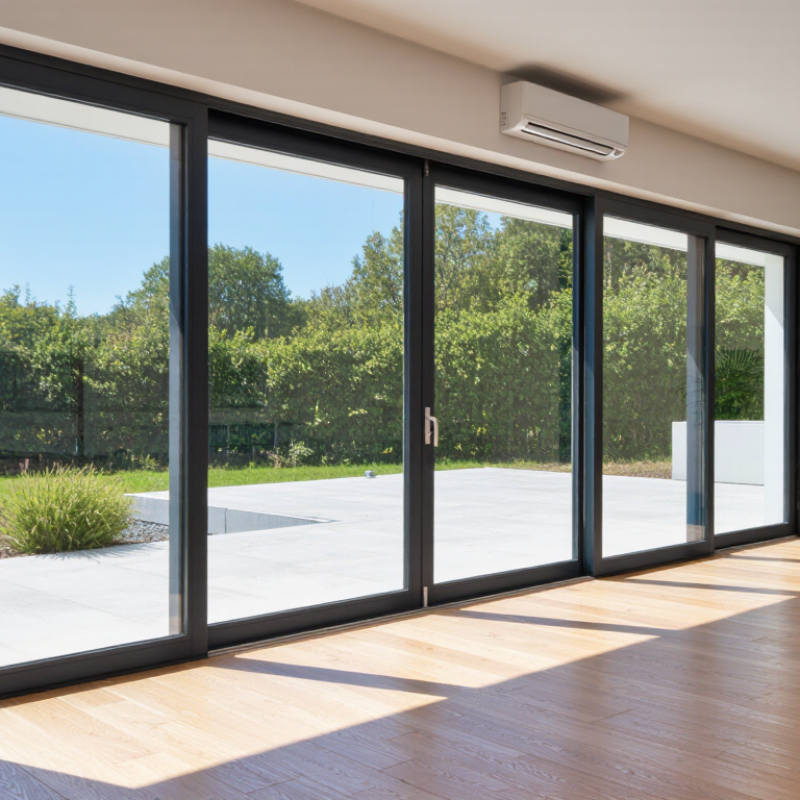
What Defines a Slim Frame Aluminum Sliding Door
A slim-frame aluminum sliding door uses narrower visible stiles and rails than a conventional system, giving the glass a larger share of the opening. There is no single industry-wide width that defines “slim,” so compare measured sightlines on technical drawings, not product labels. The frame still has to carry the glass and resist wind loads. Looks simple. On a sample, inspect the meeting stile, corner joints, drainage slots, and handle: these details can reveal how the door is engineered.
Slim profiles also leave less room for insulation, so frame appearance alone says little about comfort. Check for a thermal break, compatible glazing, and tested air, water, and structural performance.
The International Energy Agency’s 2023 Tracking Buildings report estimates that building operations account for about 30% of global final energy use and 26% of energy-related emissions. Those figures are not specific to doors, but they explain why whole-window thermal performance matters.
Ask suppliers for the declared U-factor and supporting test reports, then compare like-for-like configurations.
One caveat: a beautiful showroom sample cannot show how installation tolerances or drainage perform after years of use.
How China’s Supplier Market Is Organized
China’s slim-frame aluminum sliding-door suppliers generally sit in three layers: aluminum-profile producers, door-system fabricators, and export-oriented assemblers. Profile producers supply extrusions and finishes; fabricators cut, machine, and assemble frames, tracks, rollers, and glass. Some factories cover several stages, while trading companies coordinate orders across independent workshops. The labels can blur. A “manufacturer” may not produce its own profiles.
Market conditions shape this structure. China’s National Bureau of Statistics reported that real-estate development investment fell 9.6% in 2023, while newly started floor area fell 20.4%. These figures are not door-export statistics, but they indicate pressure on domestic construction demand and stronger competition for export orders. Buyers may therefore encounter suppliers with different capabilities, even when product photos look similar.
For sourcing, compare the actual production scope, not just catalog claims. Ask who extrudes the frame, whether corner joints are assembled in-house, and how track alignment is checked. Request section drawings, alloy and finish specifications, and test records for rollers and weather sealing. A sample should show real details: drainage slots, brush seals, corner connections, and glass-clearance tolerances. Factory audits help, but paperwork alone can miss subcontracting. That distinction matters.
Profiles of Ten Leading Chinese Suppliers
Profiles of Ten Leading Chinese Suppliers
A useful supplier profile starts with measurable details, not broad claims. Compare each firm’s frame depth, alloy grade, wall thickness, thermal-break design, and available test records. Ask how its slim frame handles a large glass panel, a loaded roller, and repeated opening cycles. These details reveal more than catalogue photos. Ten supplier profiles should also distinguish extrusion capability, finishing options, quality checks, customization, and export experience. Verify the evidence directly; a polished brochure is not a performance test.
Aluminum recycling matters, but it does not prove a door is durable or energy-efficient. The International Aluminium Institute reports that recycling aluminum uses about 5% of the energy needed for primary production. Treat this as an industry-wide figure, not a product-specific claim. For each supplier, request documented information on recycled content, finish, drainage design, and applicable air- and water-resistance testing. Some listings may omit test conditions. That is worth questioning.
Tips: Compare like with like. Check the same panel size, glass weight, and test method across suppliers. A slim sightline looks elegant, but hardware capacity and installation accuracy still matter.
How to Compare Suppliers for Your Project
When comparing slim-frame aluminum sliding door suppliers, look beyond the visible frame width. Confirm the full system’s glass options, thermal break, drainage design, and tested air, water, and structural performance. The U.S. Department of Energy’s Energy Saver guidance estimates that windows, doors, and skylights collectively account for 25–30% of residential heating and cooling energy use. That makes documented thermal performance relevant, not just a selling point. Request test results for the configuration you plan to order; a similar showroom sample may not perform identically.
Check whether the supplier can produce your opening size, panel weight, track layout, and finish consistently. Ask for fabrication tolerances, hardware specifications, warranty terms, and realistic lead times in writing. A sample can look flawless, yet a few millimeters of site error may affect alignment and sealing. This detail is easy to overlook.
Tips: Compare like with like. Send each supplier the same drawings and performance targets, then review itemized quotations and test documents side by side. Ask how rollers and seals are replaced after installation. If an answer stays vague, pause. Price matters, but so do service access and clear documentation. A perfect comparison is unlikely; record any assumptions before choosing.
China Top 10 Slim Frame Aluminum Sliding Door Suppliers — How to Compare Suppliers for Your Project
Suggested evaluation weights for comparing suppliers. Use the same criteria when reviewing each supplier’s documented specifications and project proposal.
How to use this chart: These are suggested starting weights, not measured supplier rankings or market statistics. Adjust them to match your project, then score each supplier using verified test reports, product specifications, written warranty terms, and comparable quotations.