Choosing a Residual Circuit Breaker manufacturer is about more than comparing prices or familiar brand names. These devices monitor differences between outgoing and returning current, helping disconnect a circuit when leakage is detected. Small imbalance. Important protection.
This guide introduces ten manufacturers for buyers comparing product ranges, technical documentation, and support. It is not a universal ranking. Product availability and performance can vary by region, model, and application, so check current manufacturer datasheets before making a decision. A useful comparison looks at rated residual operating current, pole configuration, installation format, and compatibility with the wider protection system. It should also distinguish RCCBs, which generally need separate overcurrent protection, from RCBOs, which combine residual-current and overcurrent functions.
Look beyond the catalogue. Clear wiring diagrams, traceable product specifications, responsive technical assistance, and consistent quality controls can matter during installation and maintenance. For a real project, confirm that the selected device suits the circuit, expected load, and environment. Follow the equipment instructions and consult a qualified electrical professional when needed. No shortlist is perfect. Even a respected manufacturer may offer models that do not fit every panel or application. The names ahead provide a starting point for careful research, not a substitute for checking the details.
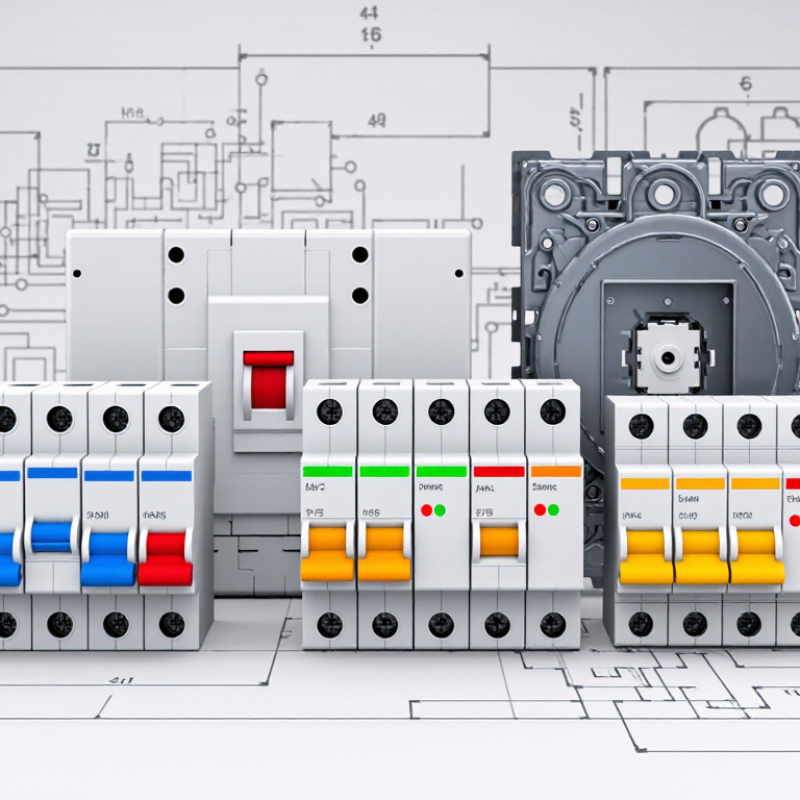
Residual Circuit Breakers: Types, Functions, and Applications
A residual current device (RCD) compares current flowing through live and neutral conductors. If some current leaks to earth, the imbalance can trigger disconnection. The response can help reduce electric-shock risk and limit certain electrical-fire hazards. It is not a substitute for overcurrent protection unless the device includes it.
Types matter. An RCCB detects residual current but needs a separate circuit breaker for overload and short-circuit protection. An RCBO combines both functions in one unit. IEC classifications distinguish the current waveforms devices can detect: Type AC, A, F, and B suit different loads, from basic alternating-current circuits to equipment that may produce smooth direct current. The wrong type can leave a gap.
In its 2015–2019 report, the U.S. National Fire Protection Association estimated an average of 46,700 home structure fires annually involving electrical failure or malfunction. This broad figure does not mean RCDs could prevent every such fire. IEC 60364-4-41 specifies RCDs rated up to 30 mA for additional protection in certain circuits; local requirements vary. Bathrooms, outdoor sockets, and workshop circuits often need careful selection. A damp floor changes the risk. Device labels do not tell the whole story; load characteristics and installation conditions matter, too.
Manufacturer-neutral technical guide. The entries below describe common residual-current device types and configurations; they are not a manufacturer ranking.
| Device type or configuration | Residual-current detection | Overcurrent protection | Typical applications | Selection notes |
|---|---|---|---|---|
| 1. Type AC RCCB | Detects sinusoidal alternating residual current. | No; requires separate overcurrent protection. | Circuits with simple loads that produce sinusoidal AC residual current. | Check local rules and connected equipment; electronic loads can produce other residual-current waveforms. |
| 2. Type A RCCB | Detects sinusoidal AC and pulsating DC residual current. | No; requires separate overcurrent protection. | General circuits supplying electronic equipment, such as appliances with rectifiers. | A common choice for many modern loads; verify the equipment instructions for DC residual-current requirements. |
| 3. Type F RCCB | Covers Type A waveforms and specified composite-frequency residual currents associated with certain single-phase converters. | No; requires separate overcurrent protection. | Some single-phase variable-speed appliances, such as inverter-driven equipment. | Use where the load instructions or applicable design standards call for Type F protection. |
| 4. Type B RCCB | Detects AC, pulsating DC, smooth DC, and specified higher-frequency residual currents. | No; requires separate overcurrent protection. | Applications that may produce smooth DC residual current, including some converters and charging systems. | Select based on the equipment design and applicable standards; it is not automatically required for every installation. |
| 5. Type A RCBO | Detects sinusoidal AC and pulsating DC residual current. | Yes; combines residual-current and overcurrent protection. | Individual final circuits supplying general electronic loads. | Check rated current, breaking capacity, residual operating current, and pole arrangement for the circuit. |
| 6. Type F RCBO | Provides Type F residual-current detection for specified composite-frequency waveforms. | Yes; combines residual-current and overcurrent protection. | Dedicated circuits for compatible single-phase inverter-driven loads. | A combined device can help isolate a fault to one circuit; confirm compatibility with the load. |
| 7. Type B RCBO | Provides Type B detection, including smooth DC residual current within its specified operating characteristics. | Yes; combines residual-current and overcurrent protection. | Dedicated circuits where equipment can produce smooth DC residual current and an RCBO arrangement is required. | Check the equipment documentation and installation standards before choosing the detection type. |
| 8. Selective (Type S) RCD | Uses a time delay to provide selectivity with suitable downstream RCDs. | Usually no; depends on the device design. | Upstream protection in coordinated installations where continuity of supply is considered. | Coordination must follow device specifications and local rules; a time-delayed upstream device is not a substitute for required additional protection. |
| 9. Two-pole (2P) device | Detection depends on the selected device type, such as AC, A, F, or B. | Depends on whether the device is an RCCB or RCBO. | Commonly used in single-phase circuits, subject to the installation system and local requirements. | Confirm which conductors must be switched and protected for the particular system. |
| 10. Four-pole (4P) device | Detection depends on the selected device type and correct passage of all required live conductors through the device. | Depends on whether the device is an RCCB or RCBO. | Commonly used for three-phase circuits, with or without a neutral where the device is designed for that arrangement. | Check the wiring diagram, neutral requirements, rated voltage, and system configuration. |
RCCB means residual current circuit-breaker without integral overcurrent protection; RCBO combines residual-current and overcurrent protection. Device selection, sensitivity, and installation must comply with applicable local standards and equipment instructions.
Rob was always very honest and upfront about everything and took the time to explain everything I needed.

“highly recommended. They provided us with a great storage container with ontime services.”
“Bought a used container, its perfect, no leaks and in good condition.”
“Good service and prompt delivery. A great option for temporary storage at a decent price.”