Choosing a 304l Stainless Steel Sheet is not just a matter of picking a grade and thickness. The right sheet must suit its environment, fabrication process, finish, and service life. 304L’s low carbon content can help reduce sensitization during welding, but it does not make the material immune to corrosion. Details matter.
Materials scientist Michael F. Ashby is known for his work on material selection. A practical paraphrase of his selection approach is: “Choose materials for the conditions they must withstand, not just the name on the label.” That is a useful starting point. Still, it is only a starting point. Actual performance depends on factors such as exposure to chlorides, cleaning chemicals, heat, and moisture.
This guide examines seven practical checks before you buy: confirm the grade, assess the operating environment, select suitable thickness, inspect surface finish, consider forming and welding needs, review applicable specifications, and verify supplier documentation. Look closely at the details. A sheet may appear flawless under warehouse lights, yet its finish or thickness may not fit the finished part. Ask for traceable documentation, and clarify whether the quoted dimensions describe nominal or actual thickness. Small oversight, real consequences. These tips cannot replace project-specific engineering review, and that caveat is worth keeping in view. A careful selection can reduce rework and help the finished component perform as intended.
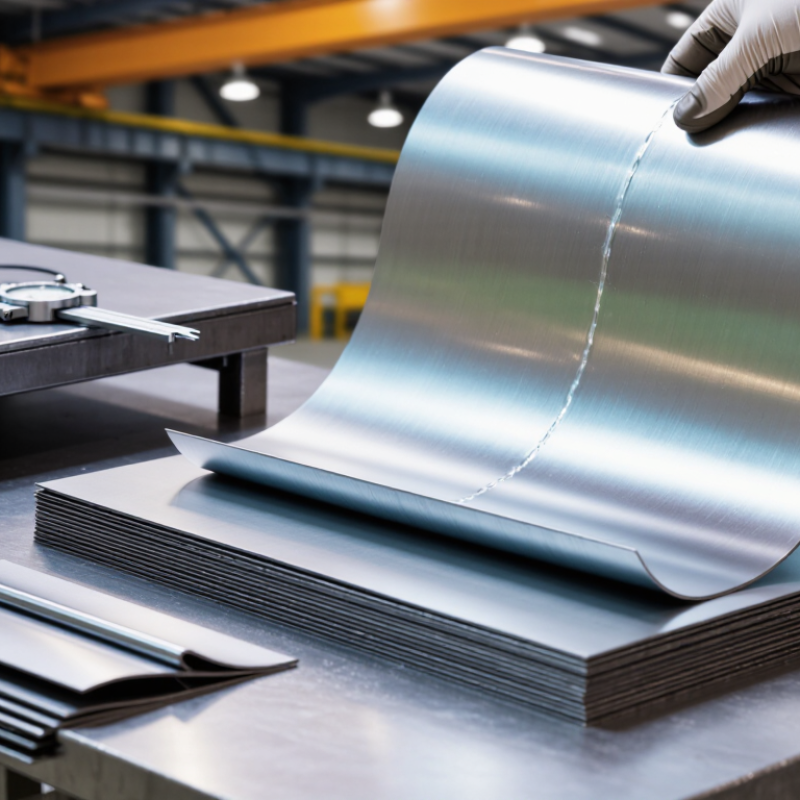
304L stainless steel sheet is an austenitic stainless grade with a lower carbon limit than standard 304. That difference matters during welding. Less carbon reduces the risk of chromium-carbide precipitation near heated areas, helping preserve corrosion resistance around the weld. It does not make the sheet immune to every environment.
Tip: Check the grade certificate, not just the product label. Confirm the material is identified as 304L and review its chemical composition against the applicable specification. Carbon content is a key detail. A quick visual check cannot verify it.
When choosing sheet, consider thickness, finish, forming needs, and exposure conditions together. For example, a fabricated panel with welded edges may benefit from 304L’s low-carbon composition. But salt exposure, cleaning chemicals, and stagnant moisture can still cause problems. Grade selection is not the whole corrosion plan.
Tip: Ask how the sheet will be welded and cleaned. Remove heat tint and fabrication residue using methods suitable for stainless steel. Keep carbon-steel tools away from the surface to reduce contamination. One detail is easy to miss: even the right grade can perform poorly after careless handling. Check the specification and intended service before ordering.
| Tip | What to Check | Relevant Data | Selection Guidance |
|---|---|---|---|
| 1. Confirm the grade | Verify that the material is specified and certified as Type 304L, rather than relying on a general “304” description. | ASTM A240/A240M covers chromium and chromium-nickel stainless-steel plate, sheet, and strip for pressure-vessel and general applications. | State the grade and applicable product standard in the purchase specification, and review the material test certificate. |
| 2. Check the low-carbon limit | Confirm the certified carbon content against the 304L specification. | Type 304L has a maximum carbon content of 0.030% by mass. Type 304 has a higher maximum of 0.080% under ASTM A240/A240M. | The lower carbon limit can reduce sensitization risk during welding or elevated-temperature exposure; it does not make the material immune to corrosion. |
| 3. Review the main alloy ranges | Compare the certified heat analysis with the grade’s specified chemistry. | For Type 304L under ASTM A240/A240M, chromium is 18.0–20.0% and nickel is 8.0–12.0% by mass. | Use the test certificate to verify the chemistry of the supplied heat; nominal grade ranges are not a substitute for product certification. |
| 4. Match thickness and tolerances to the design | Specify the required thickness, sheet size, and dimensional tolerances. | Thickness and dimensional tolerances depend on the applicable product requirements and order specification. | Allow for forming, machining, and fabrication needs, and confirm the ordered thickness and tolerances against the governing standard. |
| 5. Choose the surface finish for its use | Identify the required finish and appearance, such as 2B or No. 4. | Common stainless-steel sheet finishes include 2B, a smooth, reflective cold-rolled finish, and No. 4, a mechanically polished finish with directional lines. | Specify the finish by its recognized designation and agree on any appearance or protective-film requirements before ordering. |
| 6. Consider the service environment | Assess exposure to chlorides, chemicals, moisture, temperature, and cleaning conditions. | 304L is a general-purpose austenitic stainless steel. Its low carbon content does not provide the added molybdenum found in 316L. | For chloride-rich or otherwise aggressive environments, evaluate whether a more corrosion-resistant grade is needed; confirm suitability for the actual service conditions. |
| 7. Verify mechanical requirements and documentation | Check the required mechanical properties, delivery condition, traceability, and inspection documents. | ASTM A240/A240M lists minimum tensile strength of 485 MPa (70 ksi), minimum yield strength of 170 MPa (25 ksi), and minimum elongation of 40% for annealed Type 304L sheet. | Confirm the applicable standard edition, product thickness requirements, and certified test results; do not assume every finished sheet has identical properties. |
Rob was always very honest and upfront about everything and took the time to explain everything I needed.

“highly recommended. They provided us with a great storage container with ontime services.”
“Bought a used container, its perfect, no leaks and in good condition.”
“Good service and prompt delivery. A great option for temporary storage at a decent price.”