10 Tips for Buying the Best Mobility Scooter?
Choosing The Mobility Scooter that fits your life takes more than comparing prices or advertised range. It means matching the scooter to real routines: a narrow hallway, a sloped driveway, a busier-than-expected shopping trip. Small details matter.
The World Health Organization’s 2022 Global Report on Assistive Technology estimates that more than 2.5 billion people need one or more assistive products, including mobility devices. It projects that number could reach 3.5 billion by 2050. WHO Director-General Dr. Tedros Adhanom Ghebreyesus has emphasized the broader importance of access, saying, “Assistive technology is a human right.” That is a public-health perspective, not a scooter-buying checklist—but it is a useful reminder that the right device supports participation, independence, and everyday choices.
This guide offers 10 practical tips for comparing models, from seat comfort and turning space to battery range, transport, and servicing. Check the specifications, then test the scooter on surfaces you actually use. A showroom floor is smooth. Your pavement may not be. Consider who will lift or transport the scooter, too, and ask the seller how batteries, tyres, and repairs are handled. A longer advertised range can look reassuring; real-world performance varies with terrain, load, temperature, and battery condition. No single model suits everyone. Take your time, ask questions, and be willing to reconsider.
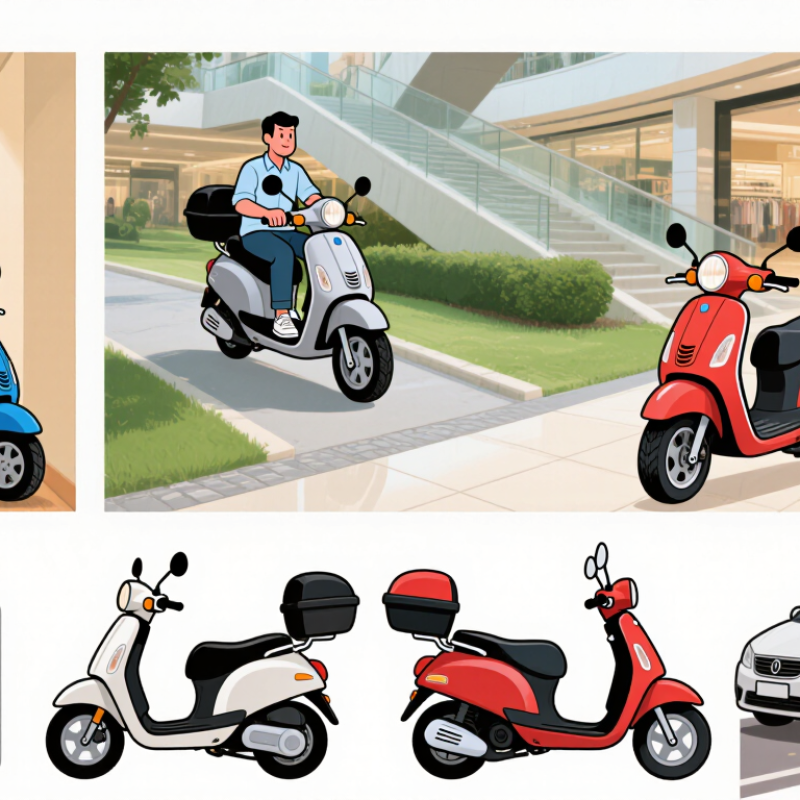
Define Your Needs: Match Daily Travel, Terrain, and Indoor Turning Space
Before comparing scooters, map a normal day from the front door to your regular destinations. Note the distance, number of trips, and places where you stop. A grocery run may include a sloped driveway, a long aisle, and a tight checkout queue. Don’t guess. Check the scooter’s stated range, but allow for hills, passenger weight, battery age, and frequent starts. Real trips rarely match ideal test conditions.
Look closely at the surfaces you use. Smooth pavements call for different capabilities than cracked paths, gravel, or steep ramps. Check the model’s guidance on gradients and ground clearance, and consider how stable it feels over bumps. If possible, test it on a route like yours. A short showroom ride can be reassuring, but it may not reveal how the scooter handles your uneven garden path.
Measure indoor spaces before choosing. Record the narrowest doorway, hallway width, and the area needed to turn near a bed or kitchen counter. Compare those measurements with the scooter’s width and turning circle, leaving room for your hands and feet. Small details matter. Also consider where it will be stored and charged, and whether you can transfer onto the seat comfortably. I once overlooked a door swing; the scooter fit, but the room still felt awkward to navigate.
Compare Power and Range: Check Battery Type, Rated Mileage, and Charging Time
A scooter’s quoted range is a test result, not a promise. Riders, hills, cold weather, soft tires, and frequent stops all draw more power. Compare the rated mileage with your real route: a flat, quiet test course may not resemble a sloped pavement commute. Leave a reserve for the return trip.
Battery chemistry affects weight, charging, and long-term use. The U.S. Department of Energy’s energy-storage materials describe lithium-ion batteries as having higher energy density than lead-acid batteries. That can mean a lighter battery for similar stored energy, but it does not guarantee longer scooter range. Ask whether the stated mileage assumes a new, fully charged battery and a particular rider weight. Small print matters.
Charging time deserves equal attention. Battery University’s BU-409 technical guide gives typical charging windows of about 1–3 hours for lithium-ion and 12–16 hours for lead-acid batteries; scooter chargers and pack sizes can change those figures. Check the manual for the exact battery type, charger rating, and recommended charging routine. A short top-up before dinner sounds convenient, but it may not restore enough charge for tomorrow’s longer outing. Range estimates are imperfect, and planning a little cautiously is sensible.
Verify Fit and Capacity: Measure Seat Width, Legroom, and Maximum User Weight
A scooter can look spacious in a showroom and still feel cramped after ten minutes. Measure your hips while seated, wearing the clothes you normally use outdoors. Compare that measurement with the seat’s usable width, not just its outer frame. Leave a little room on both sides. Too much space can also make it harder to sit securely.
Check legroom with your feet resting naturally on the platform. Measure from the seat edge to the foot area, then consider knee clearance beneath the tiller. If possible, sit on the scooter and turn the tiller through its full range. Your knees should not press against it. Small details matter.
Read the stated maximum user weight for the exact scooter configuration. Include clothing and anything you routinely carry, and follow the maker’s guidance about whether accessories affect capacity. Being close to the limit is a reason to ask a qualified mobility retailer or healthcare professional before buying. Specifications can be easy to misread; I would double-check them rather than assume. Take your measurements with you, and note where the seat or leg area feels tight during a test sit.
Check Safety and Stability: Look for ISO 7176-1, -2, and -3 Test Compliance
A scooter can feel steady on a smooth showroom floor and behave differently on a sloped driveway. Ask for test documentation, not just a general “safety tested” claim.
ISO 7176-1 measures static stability
ISO 7176-2 evaluates dynamic stability for powered wheelchairs
ISO 7176-3 measures braking effectiveness
Together, these tests help assess tipping risk and stopping performance under defined conditions. Small details matter: check whether the reports cover the exact model and configuration you plan to buy, including its seat and accessories.
The WHO and UNICEF Global Report on Assistive Technology (2022) estimates that more than 2.5 billion people need assistive products, while nearly one billion lack access.
That scale makes reliable assessment important, but a standards test is not a promise of safety on every route. Ask how results relate to your weight, typical slopes, turning space, and surfaces such as wet paving. If possible, test a gentle turn and controlled stop yourself. I would not rely on a certificate alone; real-world handling deserves a careful check, too.
Assess Transport and Support: Compare Folded Size, Warranty, and Service Availability
Before choosing a scooter, measure the real route from storage to car, not just its folded dimensions. Check whether the frame folds without tools and whether the battery must be removed. A compact model can still be awkward to lift. Try placing it in your trunk, then check whether groceries or a walking aid still fit. Note the heaviest piece, not only the scooter’s total weight. That detail is easy to overlook.
Support matters after the test ride. Ask what the warranty covers, how long repairs typically take, and whether service is available near home. Confirm whether batteries, tires, and control components are included; coverage can differ between parts and labor. The WHO and UNICEF’s 2022 Global Report on Assistive Technology estimates that 2.5 billion people need at least one assistive product, while nearly one billion lack access. That broad gap is a reminder to check local repair access before buying, not assume help will be nearby. Get warranty terms in writing. Small print matters. I would also ask who handles a breakdown during a trip, since a low price is less reassuring when the nearest service point is far away.
10 Tips for Buying the Best Mobility Scooter: Assess Transport and Support
Compare folded dimensions with your vehicle’s opening and storage space. The ranges below are approximate examples for compact folding scooters, not universal specifications.
Also check: Get warranty coverage and exclusions in writing, and confirm that repair service and replacement parts are available near you. Always verify the exact folded measurements and support terms for the scooter you plan to buy.