Top Mini Fridge Compressor Manufacturers in China?
China is an important sourcing base for compact refrigeration components, but choosing a Mini Fridge Compressor manufacturer takes more than comparing prices. Buyers need to consider the intended cabinet size, operating environment, cooling demand, and expected duty cycle. A compressor that performs well in a quiet hotel room may not suit a vehicle exposed to vibration and changing temperatures. Fit matters.
This guide introduces manufacturers in China and the factors that can help buyers assess their suitability. It considers product range, technical documentation, production capabilities, quality-control practices, and communication during sampling. These details are useful, but they do not prove that a supplier is right for every project. Ask for specifications that match your application, including rated voltage, cooling capacity, noise data, and recommended operating conditions. Then confirm how the compressor performs within the complete refrigeration system.
Small details count. A clear datasheet, traceable model information, and consistent answers can make supplier discussions more productive. Where possible, compare samples under similar conditions and record temperature stability, power use, and sound levels. Do not rely on a single test or a broad marketing claim; cabinet insulation, ventilation, and installation can change results. The lowest quotation may also leave important service or warranty terms unclear. This overview offers a practical starting point, not a substitute for technical verification. Careful checks can reduce surprises, though they cannot remove every risk.
How Mini-Fridge Compressors Are Classified by Capacity, Refrigerant, and Design
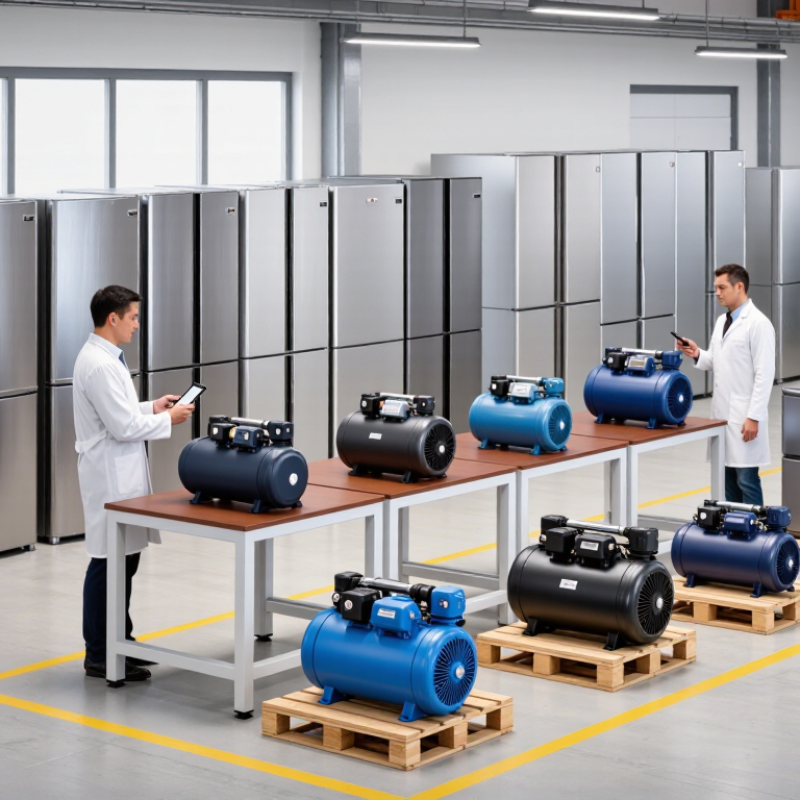
Mini-fridge compressors are commonly classified by cooling capacity, refrigerant, and mechanical design. Capacity is usually stated in watts or BTU per hour, but the number alone does not predict performance. A compressor must match the cabinet’s insulation, interior volume, and expected room temperature. Small does not mean simple. A unit beside a warm oven or opened frequently may need more cooling than its size suggests. When comparing specifications, check operating conditions and noise data as well as the headline capacity.
Refrigerant type affects compressor materials, lubricant compatibility, and system pressure. Compact refrigerators may use different refrigerants, so a replacement compressor must be specified for the original system, not chosen by appearance. Design is another distinction: hermetic reciprocating models are common in small appliances, while rotary designs may suit certain compact layouts. Each has different vibration, efficiency, and installation characteristics. The quietest option on paper may still transmit a low hum through a thin cabinet wall. That detail is easy to overlook. For buyers evaluating Chinese manufacturers, request performance data under stated test conditions and confirm that capacity, refrigerant, and compressor design are compatible with the complete refrigerator system.
Top Mini Fridge Compressor Manufacturers in China? - How Mini-Fridge Compressors Are Classified by Capacity, Refrigerant, and Design | Classification dimension | Category | Typical characteristics | Selection notes |
| Cooling capacity | Very low: approximately 30–60 W | A representative range for compact, low-load refrigeration systems. | Check the rated capacity at the specified evaporating and condensing temperatures; capacity is not the same as electrical input power. |
| Cooling capacity | Low: approximately 60–100 W | A useful indicative band for many small refrigerator applications. | Final sizing depends on cabinet volume, insulation, ambient temperature, door openings, and pull-down requirements. |
| Cooling capacity | Higher mini-fridge range: approximately 100–180 W | May suit larger compact cabinets or designs with higher heat loads. | These are illustrative selection bands, not universal industry classes. Compare performance at identical rating conditions. |
| Refrigerant | R600a (isobutane) | Common in modern domestic refrigerators; classified as A3, meaning lower toxicity and higher flammability under the ASHRAE safety classification. | Requires equipment designed and approved for a flammable refrigerant, including appropriate charge limits and servicing procedures. |
| Refrigerant | R134a | A non-flammable A1 refrigerant that has been used in small refrigeration systems. | Check local environmental rules and system compatibility; R134a has a substantially higher global-warming impact than R600a or R290. |
| Refrigerant | R290 (propane) | A low-GWP hydrocarbon refrigerant, classified as A3; used in some purpose-designed refrigeration equipment. | Use only with a system engineered and certified for R290. It is not a drop-in replacement for another refrigerant. |
| Compressor design | Hermetic reciprocating | A sealed motor-compressor assembly using a piston mechanism; a widely used design in small refrigeration appliances. | Compare capacity, efficiency, sound level, starting requirements, and approved refrigerant rather than design type alone. |
| Compressor design | Variable-speed drive | An operating and control approach that varies compressor speed to adjust cooling output; it can be paired with different compressor mechanisms. | Confirm inverter compatibility, control specifications, supply voltage, and the intended operating range. |
| Compressor design | DC compressor system | Designed to operate from a DC electrical supply, often with dedicated electronic controls; used in some portable and off-grid refrigeration applications. | Verify the permitted voltage range, controller requirements, wiring, and performance at the intended power-supply conditions. |
| Capacity ranges are indicative comparison bands rather than standardized product classes. Always use the compressor manufacturer's published performance data and applicable safety and regulatory requirements for final selection. |
Which Chinese Suppliers Lead: Huayi, Donper, Wanbao, and Qianjiang
China’s mini-fridge compressor leaders should be compared by application, not headline production alone. The National Bureau of Statistics reported 96.02 million household refrigerators produced in China in 2023. That figure shows the scale of the manufacturing base, but it does not reveal mini-fridge compressor market share. The International Energy Agency’s The Future of Cooling report projects that global energy demand for space cooling could triple by 2050. Efficient, quiet compressors matter.
For the four Chinese suppliers in this comparison, buyers should verify more than catalogue capacity. Ask for operating-temperature ranges, sound readings, energy-use test conditions, and evidence of batch consistency. A supplier with broad refrigerator experience may offer useful production depth; another may suit compact units better if its compressor starts reliably under frequent cycling. These are checks, not proof of a ranking. Without comparable, current performance data, naming a single leader would overstate what public figures can show.
Tips: Request test reports for the exact compressor model and refrigerant. Compare noise at the same distance and load. Check sample performance inside your own cabinet; insulation and airflow can change results. Small details matter. I would also retest after delivery, since a promising sample does not guarantee every production batch.
How R600a’s GWP-100 of About 3 Shapes Compressor Selection
Top Mini Fridge Compressor Manufacturers in China?
How R600a’s GWP-100 of About 3 Shapes Compressor Selection
R600a’s GWP-100 is about 3, making its climate impact from direct refrigerant leakage relatively low compared with many higher-GWP options. That number matters. But it does not tell buyers which compressor will perform well in a mini fridge. The compressor must be designed and tested for R600a, with suitable displacement, operating pressures, and lubricant compatibility.
When comparing Chinese manufacturers, ask for performance data under realistic conditions. A compact fridge may sit in a warm kitchen, where high ambient temperatures challenge cooling performance. Check pull-down time, energy use, noise, and starting reliability—not just rated capacity. Also ask how the compressor and appliance are tested together. A good compressor on paper can disappoint inside a poorly insulated cabinet.
R600a is flammable, so the appliance design, refrigerant charge, electrical components, and service instructions need careful attention. Request clear safety documentation and confirmation that testing follows applicable requirements in the intended market. Lower GWP is valuable, but it does not excuse weak engineering. I would still compare sample results with the factory’s figures; those numbers do not always match perfectly.
R600a and Mini-Fridge Compressor Selection
100-year global warming potential (GWP) of selected refrigerants
R600a has a GWP-100 of about 3, far below the values shown for R134a and R404A. GWP is only one selection factor: compressors must be approved for the refrigerant and application, and R600a’s flammability requires compliant system design. GWP values are from the IPCC Fourth Assessment Report (2007).
How to Compare Cooling Capacity, COP, Noise, and IEC 60335-2-24 Compliance
When comparing mini-fridge compressor manufacturers in China, request cooling capacity and COP from the same test conditions. COP is cooling output divided by electrical input; it is not a fixed compressor rating. Ask for ambient temperature, cabinet setpoint, test load, and steady-state results. IEC 62552 provides standardized methods for testing household refrigerator performance. A high headline COP can mislead if the cabinet, insulation, and door seal differ. Test the complete unit.
Noise needs a stated dB(A) value, not “quiet” on a quotation. The EU refrigerator energy-label regulation, Regulation (EU) 2019/2016, groups airborne noise into four classes: below 30, 30–<36, 36–<42, and 42 dB(A) or higher. Request the lab report and measurement setup; compressor vibration can sound different on a hard counter than inside a test room. Small details matter.
For safety, check evidence against IEC 60335-2-24, which covers household refrigerating appliances and related equipment. Ask for the exact model scope, test edition, and report issuer, then confirm the certificate matches the proposed unit. Compare capacity, COP, and noise alongside these documents—not as separate sales claims. One weak point remains: suppliers may test under different conditions, so a neat comparison table can still hide real-world differences. Judge evidence, not polish.
What to Verify in Factory Audits, Product Testing, and Supplier Certifications
A factory audit should follow the compressor from incoming parts to final inspection. Check whether copper tubing, electrical components, and refrigerant charges match the approved bill of materials. Compare production records with the units selected for testing; a polished sample may not reflect routine output. A spotless showroom proves little. The International Institute of Refrigeration’s 2019 report estimates that refrigeration uses about 17% of global electricity, making energy performance and heat control important audit priorities. Ask the supplier to show calibrated temperature sensors, logged test conditions, and repeatable results under the same ambient temperature and voltage.
Product testing should include startup current, noise, vibration, cooling recovery, and continuous operation—not just a brief temperature check. For mini fridges, inspect door seals and cabinet insulation too; small gaps can undermine compressor performance. IEC 62552 provides test methods for household refrigerating appliances, but confirm that the chosen method fits the product and market. Small details matter. Review test reports for sample size, dates, model numbers, and laboratory identity. If figures seem unusually perfect, request raw readings or an independent retest. That may slow approval.
Verify certificates directly with the issuing body, including scope, expiry date, and covered factory or model. A certificate for one production site does not automatically cover another. Match certification records against nameplates and shipment documents. Supplier paperwork can be incomplete, and audits cannot remove every risk; record open gaps and agree on evidence and deadlines before placing repeat orders.