Industrial facilities rely on hoses to move heated air, water, oils, and process materials. Near a boiler or drying line, the hose may face radiant heat, hot contents, vibration, and repeated bending. A Heat Resistant Rubber Hose is designed to tolerate elevated temperatures, but its suitability depends on the actual working conditions. “Heat resistant” does not mean suitable for every hot fluid or every installation.
The rubber compound, reinforcement, and inner lining all affect performance. So do operating pressure, temperature peaks, fluid compatibility, and the hose’s minimum bend radius. Small details matter. A hose routed too tightly behind a pump can wear against a bracket, even when its temperature rating appears adequate. Buyers should compare manufacturer data with real operating conditions, including brief temperature spikes and cleaning cycles. Steam service requires a hose specifically rated for that application.
Inspection matters, too. Look for cracks, swelling, exposed reinforcement, or stiff sections, especially near couplings and bends. These signs do not predict every failure, but they deserve attention. A clear maintenance record helps teams track hose age, service conditions, and replacement decisions. It is easy to focus on the temperature number alone. That can be misleading. Choosing carefully can reduce unplanned stoppages and support safer, more reliable operations, though no hose removes the need for proper installation and routine checks.
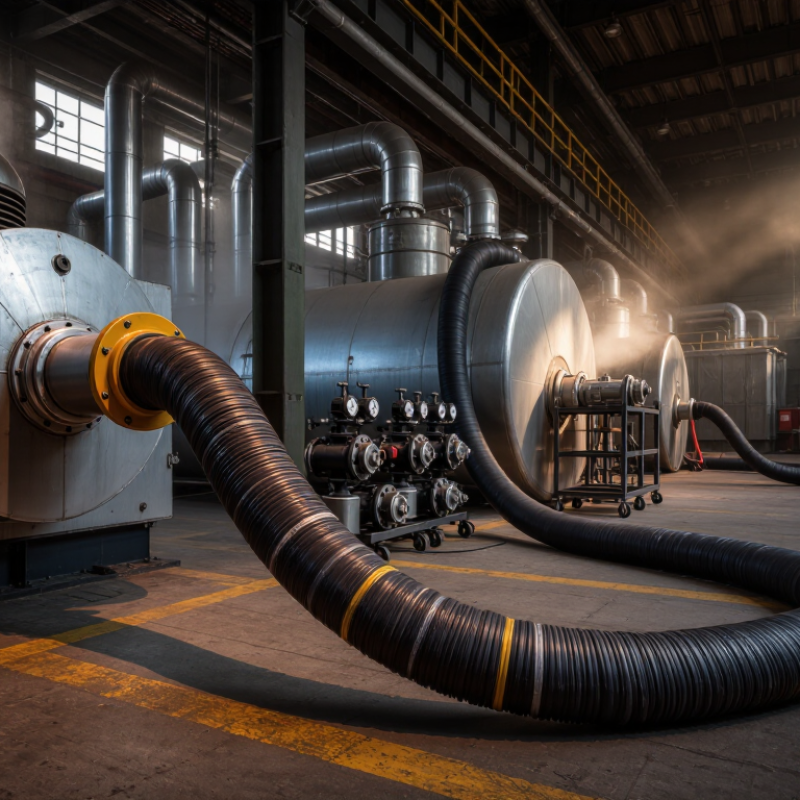
A heat-resistant rubber hose is a flexible tube designed to carry hot air, water, oil, or process fluids while limiting damage from elevated temperatures. Its inner tube contacts the medium; textile or wire reinforcement helps it withstand pressure, and the outer cover resists abrasion and surrounding heat. The rubber compound matters. EPDM, silicone, and other elastomers differ in temperature tolerance, chemical compatibility, and flexibility. There is no single temperature rating for every “heat-resistant” hose.
A rating should come from the hose’s technical specification, not appearance. ISO 8330:2022 standardizes terminology for rubber and plastic hoses, while ISO 188:2023 describes accelerated heat-aging tests. These tests assess changes in rubber properties; they do not set one universal service temperature. That distinction matters. The U.S. Department of Energy’s Manufacturing Energy and Carbon Footprints, using 2010 data, estimates process heating at about 29% of manufacturing energy use. That figure shows why hot-process equipment deserves careful attention, though it is not a hose-rating guide. Check the medium, pressure, temperature peaks, and exposure time together. A hose may look sound after heat exposure, yet its inner layer can still have aged. Less obvious, but important.
Heat-resistant rubber hoses can help convey hot air, water, or other compatible media while maintaining flexibility. Ratings shown are approximate examples for common rubber compounds, not universal limits; actual hose temperature capacity depends on its formulation, reinforcement, pressure, and conveyed fluid. Always check the hose manufacturer's specifications.
A heat-resistant rubber hose is built in bonded layers, not from one magic compound. The inner tube carries the fluid and must resist its chemistry and temperature. A rubber compound such as EPDM or silicone may suit hot air or water, while oils often need a different formulation. Textile braid or steel wire reinforces the tube, limiting expansion and resisting pressure. The outer cover protects against abrasion, moisture, and ozone. Some designs add a helical wire to resist collapse under suction. During manufacture, the layers are assembled and vulcanized into one structure. Small gaps or poor bonding can become failure points.
Material data helps, but it does not predict hose life by itself. ASTM D573 describes accelerated oven-aging tests for rubber; its listed conditions include exposures at 70°C and 100°C. Tensile strength and elongation are compared before and after aging. These are rubber-specimen results, not a guarantee that a complete hose will last at those temperatures. Hose assemblies also face pressure pulses, tight bends, vibration, and changing fluids. A cover can look sound while the inner tube has hardened. That is easy to miss.
Tip: Check the hose’s rated temperature for the actual fluid, pressure, and duty cycle. Ask for test documentation, inspect cut samples for clean layer bonding, and avoid sharp bends near fittings. If temperature swings are frequent, review the assembly after service; a tidy exterior is not proof of a healthy hose.
Heat resistance helps a hose retain flexibility and sealing performance under demanding operating conditions. Hot oil, heated wash water, and high-temperature air can accelerate hardening, softening, or cracking in unsuitable rubber. A hose selected for the actual fluid, pressure, and temperature range can help limit leaks and unplanned shutdowns. Check both continuous and short-term temperature ratings; the highest number alone can mislead.
The U.S. Bureau of Labor Statistics recorded 479 fatal occupational injuries involving environmental heat from 2011 through 2022. This figure describes workplace heat exposure, not hose failures, and a heat-rated hose cannot prevent heat illness by itself.
Still, reliable transfer equipment can reduce leak-related cleanup and urgent maintenance near hot processes. Small gains matter. One detail is easy to miss: fittings and clamps must also suit the operating temperature.
Tips: Check the whole assembly. Inspect the hose cover for blisters, hard spots, or cracks, especially near bends and hot equipment. Record the service temperature and fluid before replacement. Ratings vary by product, so verify the specification rather than guessing.
Heat-resistant rubber hoses are used wherever hot fluids, air, or exhaust must move through equipment that vibrates or needs regular servicing. Typical settings include foundries, asphalt plants, boiler rooms, engine compartments, and manufacturing lines with heated oils or wash water. U.S. Department of Energy’s 2022 Industrial Decarbonization Roadmap reports that industry accounts for about 33% of U.S. energy use. That scale helps explain the many hot-process environments where suitable hose assemblies matter.
Look for them near furnaces, ovens, pumps, and mobile machinery, where a hose may bend around a frame while exposed to radiant heat, abrasion, or oil. Food-processing sites may use heat-rated hoses for hot water cleaning, but the hose must also suit the cleaning chemicals and contact requirements. Not every rubber hose can carry steam. Use a hose specifically rated for the steam temperature and pressure, and check the manufacturer’s limits for the actual fluid. That detail is easy to miss. DOE’s report describes industrial energy use, not hose performance; temperature ratings, pressure, and material compatibility still need to be checked for each installation. A short hose can fail early if it rubs against a sharp guard or stays kinked after a shift.
Choosing a heat-resistant rubber hose starts with actual operating conditions, not just the highest temperature listed in a specification. Record the fluid, its concentration, continuous temperature, and brief temperature spikes. Heat is not enough. A hose exposed to hot oil may need a different lining from one carrying steam or hot water. Check working pressure, pressure surges, vacuum exposure, and minimum bend radius. A tight loop near a furnace can kink or fatigue even a high-temperature hose. Fit matters. Confirm that hose construction and end connections suit the fluid and pressure together. Also account for movement, vibration, and nearby abrasion. A small mismatch can become a leak.
Set maintenance intervals according to service conditions and the hose maker’s stated limits. Inspect more often near heat, chemicals, or repeated flexing. Look for cracks, blisters, soft spots, hardening, swelling, exposed reinforcement, and loose fittings. Check again. A visual inspection may miss internal damage, so track age and service history too. Replace a suspect assembly rather than patching it under pressure. Let the line cool and isolate pressure before handling it. Use compatible cleaning methods; harsh solvents can quietly damage rubber. Store spare hose away from sunlight, ozone sources, sharp edges, and hot equipment. Inspection timing is not always obvious. Review it after process changes or recurring failures, then adjust intervals using recorded findings rather than guesswork.
| Selection or maintenance factor | What to assess | Practical guidance | Maintenance check |
|---|---|---|---|
| Operating temperature | Normal and peak fluid temperatures, ambient heat, and exposure duration. | Choose a hose whose documented continuous and intermittent temperature ratings cover the actual conditions. Heat can reduce pressure capacity and service life; do not rely on a material’s general temperature range alone. | Look for hardening, softening, cracks, blisters, or discoloration. Investigate repeated temperature excursions. |
| Fluid and material compatibility | Fluid composition, concentration, temperature, and contact time. | Check compatibility for the complete hose assembly. For example, EPDM is commonly used for hot water but is generally unsuitable for petroleum oils; NBR is commonly selected for many oil applications. Confirm the specific fluid and hose rating. | Check for swelling, softening, tackiness, leaks, or changes in the conveyed fluid. Replace a hose showing chemical attack. |
| Working pressure and surges | Maximum operating pressure, pressure spikes, vacuum conditions, and temperature-related derating. | Select an assembly rated for the system’s pressure conditions at its operating temperature. Account for pressure surges and follow the hose’s stated working-pressure limits. | Check for bulges, exposed reinforcement, damaged fittings, and leakage. Depressurize before inspection or removal. |
| Steam service | Steam type, pressure, temperature, condensate, and cleaning or sterilization cycles. | Use an assembly specifically rated for the intended steam service. Do not substitute a general-purpose air or water hose; steam ratings and procedures are hose-specific. | Inspect regularly for cover damage, kinks, coupling movement, and leaks. Follow the hose maker’s steam-service inspection and replacement guidance. |
| Flexibility and bend radius | Hose routing, movement, vibration, and the minimum bend radius specified for the assembly. | Route the hose without twisting or bending it below its specified minimum radius. Use suitable supports and avoid placing the hose under tension. | Check for flattened sections, kinks, twisting, and strain near fittings. Re-route or support the hose if needed. |
| Abrasion and external heat | Contact with machinery, sharp edges, hot surfaces, sparks, and outdoor exposure. | Choose an appropriate cover and add guards or sleeves where the application requires them. Keep the hose away from hot surfaces unless its external-temperature rating permits contact. | Look for cuts, chafing, exposed reinforcement, burns, or cover wear. Correct the cause of damage before installing a replacement. |
| Fittings and assembly | Hose-to-fitting compatibility, connection type, assembly pressure rating, and installation requirements. | Use fittings and assembly methods approved for the hose construction and service. A hose’s rating does not automatically establish the rating of the assembled system. | Check for corrosion, looseness, leakage, and movement at connections. Do not tighten or repair a pressurized assembly. |
| Inspection and replacement planning | Service criticality, operating severity, inspection findings, and applicable site procedures. | Set inspection frequency according to risk, use, and site requirements; there is no single interval suitable for every hose. Keep service and replacement records. | Remove a hose from service if it shows leaks, exposed reinforcement, severe cracking, bulging, or damaged fittings. Follow applicable safety procedures and manufacturer guidance. |
Ratings vary by hose construction and application. Confirm temperature, pressure, fluid compatibility, bend-radius, and assembly requirements in the documentation for the specific hose.
Rob was always very honest and upfront about everything and took the time to explain everything I needed.
“highly recommended. They provided us with a great storage container with ontime services.”
“Bought a used container, its perfect, no leaks and in good condition.”
“Good service and prompt delivery. A great option for temporary storage at a decent price.”

Join our mailing list to get the latest storage container inventory and offers