A Grid On Inverter, more commonly called a grid-tied or on-grid inverter, connects renewable electricity with a utility network. It converts the solar panels’ direct current into synchronized alternating current. That current must match the grid’s voltage, frequency, and phase. Small differences matter.
Professor Remus Teodorescu, a respected power-electronics researcher, has described the inverter as “the heart of a photovoltaic system.” This comparison is practical. The inverter manages energy conversion, monitors electrical conditions, and communicates with protective equipment. In a rooftop system, it may also track maximum power while sunlight changes behind clouds. A clear afternoon can produce steady output. A passing shadow can change it within seconds.
The process sounds simple. It is not. Sensors measure the grid continuously. Control software adjusts switching devices thousands of times per second. If the utility supply fails, anti-islanding protection must disconnect the system. This protects repair workers and prevents unstable operation. Grid standards and installation rules also vary by region, so technical details should never be guessed.
This guide explains how a Grid On Inverter works, where it fits in a solar installation, and why its safety functions are essential. It will examine efficiency, monitoring, grid synchronization, and common system limitations. The terminology is slightly imperfect, too. “Grid On Inverter” is widely understood, although “on-grid inverter” is usually more precise. That small distinction matters when comparing products, specifications, and professional advice.
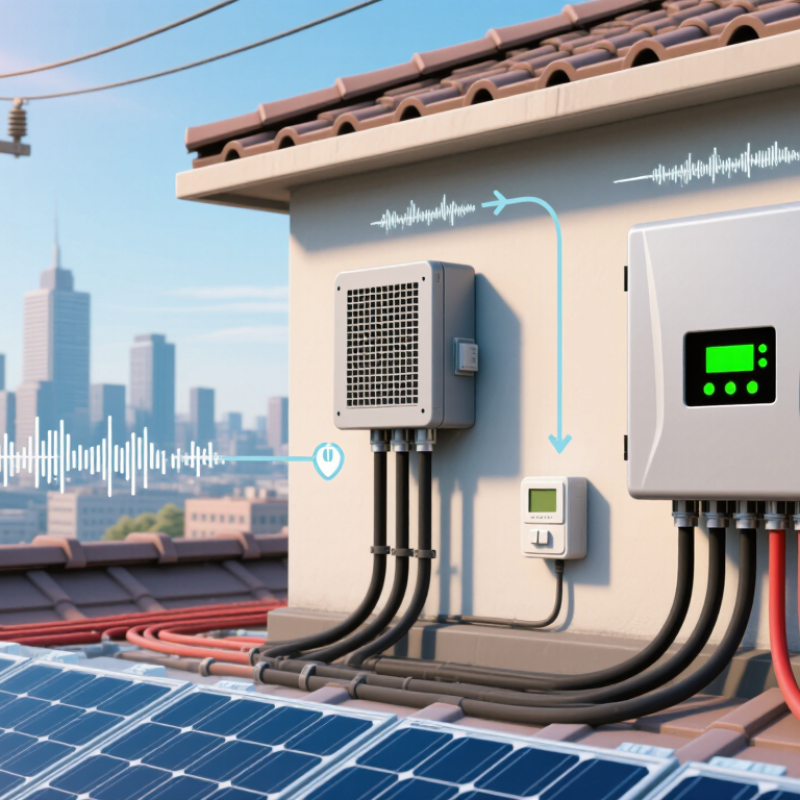
A grid-tied inverter connects a solar array to the public electricity grid. Solar panels produce direct current, or DC, while household circuits use alternating current, or AC. The inverter converts DC into usable AC and matches the grid’s voltage, frequency, and phase. This synchronization must be precise.
During sunny hours, solar power can run lights, appliances, and other loads in the building. If production exceeds demand, the remaining electricity may flow through a meter toward the grid, subject to local rules and an approved interconnection agreement. When clouds reduce output, the building draws electricity from the grid as usual. It feels seamless. Until the grid fails.
A certified grid-tied inverter normally stops exporting power during an outage. This safety function, called anti-islanding protection, helps prevent energizing lines during maintenance. A battery-based system may provide backup power, but it needs suitable isolation equipment and correct configuration. It is not enough to add a battery casually.
Installation requires attention to cable sizing, grounding, overcurrent protection, ventilation, and local electrical requirements. A qualified professional should test the system under different operating conditions. In practice, monitoring data can reveal unexpected shading, loose connections, or gradual performance loss. Even accurate equipment can produce disappointing results when roof orientation or household demand is overlooked. Planning is often less simple than the sales diagram suggests.
A grid-on inverter, often called a grid-tied inverter, converts solar panels’ variable direct current into usable alternating current. Its power electronics switch thousands of times per second, shaping a clean AC waveform for household loads and the utility network. Maximum power point tracking continually adjusts operating voltage as sunlight changes. Clouds can alter the input within seconds.
The inverter must also synchronize with the grid before exporting electricity. A phase-locked loop measures grid voltage, frequency, and phase angle. It then aligns the inverter’s AC output with that reference. In a 50 or 60 hertz system, even a small timing error matters. Internal controls also manage voltage support, reactive power, and current limits under standards such as IEEE 1547. If the grid disappears, anti-islanding protection disconnects the inverter instead of energizing the line.
This coordination supports a rapidly expanding solar fleet. IRENA’s Renewable Capacity Statistics 2024 reported approximately 1.42 terawatts of global solar capacity at the end of 2023. The IEA PVPS Trends in Photovoltaic Applications 2024 report also described another exceptionally strong year for photovoltaic deployment. More capacity increases the value of accurate synchronization and responsive controls. Field technicians still check waveform quality, grounding, protection settings, and communication functions during commissioning. A good inverter can react quickly, but installation conditions remain imperfect. That deserves attention.
A grid-tied inverter converts solar panels’ variable direct current into grid-compatible alternating current. It also synchronizes voltage, frequency, and phase with the utility network. This coordination matters because the inverter must stop exporting power when the grid fails.
Inside the enclosure, the DC input stage includes protection devices, a disconnect, and capacitors that smooth voltage fluctuations. The maximum power point tracking circuit continually adjusts operating voltage. It helps panels produce more energy under changing sunlight, partial shade, and temperature shifts. An insulated-gate transistor bridge then switches DC into a controlled AC waveform. A filter removes unwanted electrical noise before power reaches the grid.
Small details matter.
A control board supervises sensors, relays, communications, and anti-islanding protection. The relay can isolate the inverter within milliseconds during abnormal grid conditions. Heat sinks and fans manage losses, although dust and high temperatures can reduce their effectiveness. The International Energy Agency Photovoltaic Power Systems Programme reported global photovoltaic capacity above 1.6 terawatts at the end of 2023, increasing the importance of reliable inverter design. IRENA’s Renewable Capacity Statistics 2024 recorded about 346 gigawatts of solar additions during 2023. These figures show the scale of equipment operating behind ordinary meters.
Field inspections still reveal a weakness: design models may assume clean air, stable voltage, and ideal cable lengths. Real rooftops rarely cooperate.
A grid-on inverter connects a solar array to the public electricity grid. Its main job is converting direct current from the panels into alternating current for household appliances. The inverter also matches the grid’s voltage, frequency, and phase. This synchronization must remain precise.
Solar power usually serves local loads first. A refrigerator, water heater, or computer may use the electricity immediately. If the panels produce more power than the building needs, the excess travels through the meter and enters the grid. When production falls, the building imports electricity through the same connection. The meter records these changing flows, although the physical movement is less tidy than a simple diagram suggests.
Safety controls matter. During a grid outage, a compliant inverter normally stops exporting power. This prevents electricity from reaching lines that workers may assume are inactive. Many inverters also track panel performance and adjust operating points as sunlight changes. Clouds can reduce output within seconds. Dust, shade, and high temperatures can reduce it further. Real installations need proper wiring, grounding, protective devices, and inspection by qualified professionals. The process sounds straightforward, but household demand and solar production rarely match perfectly. That mismatch is the part worth measuring carefully.
What Is a Grid On Inverter and How Does It Work?
An on-grid inverter changes solar panels’ direct current into usable alternating current. It synchronizes with the utility grid’s voltage, frequency, and phase. Extra electricity can flow outward through the meter. When household demand rises, power may flow inward. The inverter must monitor the grid continuously. If the grid becomes unstable, it should stop exporting power. This protection is called anti-islanding.
Grid disconnection is essential during outages. Without it, solar equipment could energize a line that workers believe is dead. A compliant inverter uses internal relays to disconnect automatically. Many systems also include fault detection, overvoltage protection, and frequency monitoring. Local utility rules usually define testing, isolation, and reconnection requirements. These details vary by location, so a qualified installer should verify them. Field experience shows that small wiring assumptions can cause serious problems. The installation manual is not decoration.
Tips: Ask for documented shutdown tests before approval. Confirm where the manual disconnect switch is located. Keep the area clear and label it clearly. Never open the inverter enclosure while energized. After an outage, reconnection may take several minutes. That delay is normal. If the system reconnects repeatedly, stop using it and request professional inspection. One overlooked cable can matter.
| Topic | How It Works | Typical Requirement or Operating Point | Safety Purpose |
|---|---|---|---|
| Definition | A grid-connected inverter converts direct current from solar panels or a battery into synchronized alternating current for use by local loads or export to the utility grid. | Designed for operation in parallel with an energized utility supply. | Enables efficient energy conversion without requiring a separate battery bank for normal grid-connected operation. |
| Energy Conversion | Power electronics use switching devices, filtering, and control software to produce an AC waveform matched to the grid. | The inverter continuously monitors voltage, frequency, phase, and current before and during power delivery. | Prevents uncontrolled connection to a supply with incompatible electrical conditions. |
| Synchronization | A phase-locked control system tracks the utility waveform and adjusts inverter output to remain synchronized. | Acceptable voltage and frequency windows are defined by the applicable grid-interconnection rules. | Reduces the risk of damaging transients, excessive current, and unstable parallel operation. |
| Anti-Islanding Protection | The inverter detects abnormal grid conditions and stops energizing the utility-side circuit when the grid is absent or outside approved limits. | Required for grid-connected systems under commonly adopted interconnection standards, such as IEEE 1547 or IEC 62116, depending on location. | Protects utility workers and prevents an isolated section of the network from remaining unintentionally energized. |
| Overvoltage and Undervoltage Trip | Voltage-sensing circuits compare the grid voltage with permitted operating limits and initiate a protective shutdown when limits are exceeded. | Trip thresholds and clearing times vary by jurisdiction, system category, and interconnection standard. | Limits stress on inverter components and connected equipment during abnormal voltage events. |
| Overfrequency and Underfrequency Trip | The control system continuously measures grid frequency and disconnects or changes its output when frequency moves beyond approved limits. | Frequency limits and response times are specified by local grid codes and the approved interconnection agreement. | Helps prevent the inverter from aggravating a wider grid disturbance. |
| Automatic Grid Disconnection | Internal switching devices, such as power relays or contactors, open the connection between the inverter and the utility circuit after a protective trip. | The inverter must not reconnect until grid conditions are restored and the applicable reconnection delay has elapsed. | Stops power export during outages and reduces the possibility of unintended backfeed. |
| Manual AC Disconnect | A dedicated, accessible disconnecting means allows authorized personnel to isolate the inverter from the AC circuit. | Location, visibility, labeling, accessibility, and switching rating are determined by local electrical and utility requirements. | Provides a clear isolation point for inspection, maintenance, emergency response, and utility work. |
| DC Isolation | A DC isolator or other approved means separates the inverter from the photovoltaic array or battery source. | The device must be rated for the system's maximum DC voltage, current, and switching conditions. | Allows the DC energy source to be isolated before servicing the inverter. |
| Ground-Fault Protection | Sensors identify unwanted current paths to ground and initiate an alarm, shutdown, or disconnection according to the system design. | Protection method and trip behavior depend on the inverter architecture and applicable electrical code. | Reduces shock, fire, and equipment-damage risks caused by insulation or wiring faults. |
| Arc-Fault Detection | Where required, the inverter detects electrical signatures associated with dangerous arcing in DC circuits and interrupts the affected circuit. | Availability and requirements vary by system type, installation location, and local code. | Helps reduce the risk of fire caused by damaged connectors, cables, or terminations. |
| Reconnection After an Outage | After the utility supply returns within the permitted voltage and frequency range, the inverter waits before reconnecting and ramping up output. | The delay and ramp behavior are governed by the applicable grid code or utility interconnection rules. | Avoids simultaneous uncontrolled reconnection and limits stress on the grid. |
| Standards and Certification | Testing evaluates electrical safety, grid interaction, abnormal-condition response, and anti-islanding performance. | Examples include IEEE 1547, UL 1741, IEC 61727, and IEC 62116; the applicable requirements depend on the installation country and utility. | Provides evidence that the equipment has been assessed against recognized technical and safety criteria. |
| Key Installation Note | A grid-connected inverter is not automatically a backup power source. Standard grid-tied operation normally shuts down when the utility supply fails. | Backup operation requires an approved transfer or backup-control system, suitable energy storage where applicable, and authorization under local rules. | Prevents the assumption that ordinary solar generation can safely power circuits during a utility outage. |
Note: Exact voltage and frequency trip thresholds, clearing times, reconnection delays, disconnect locations, and certification requirements vary by country, utility, system size, and applicable electrical code.
Rob was always very honest and upfront about everything and took the time to explain everything I needed.
“highly recommended. They provided us with a great storage container with ontime services.”
“Bought a used container, its perfect, no leaks and in good condition.”
“Good service and prompt delivery. A great option for temporary storage at a decent price.”

Join our mailing list to get the latest storage container inventory and offers