How to Pull Out an Ironing Board Drawer Easily?
A Pull Out Ironing Board Drawer can save space, but it should never require force. When the drawer sticks, the cause may be dust, a shifted rail, uneven cabinet pressure, or an overloaded compartment. A careful inspection often prevents damage before repairs begin.
Home organization expert Clea Shearer has said, “Good storage should make everyday tasks feel easier, not more complicated.” That principle fits this small but useful cabinet feature. Before pulling, remove the iron, spray bottle, and folded fabrics. Check whether the board is caught against the drawer frame. Keep your fingers away from narrow gaps.
Pull the handle slowly with both hands. Use steady pressure, not sudden jerks. If the board moves halfway, pause and inspect the runners. A flashlight can reveal lint, loose screws, or a displaced metal stop. Wipe visible debris with a dry cloth. Avoid forcing the drawer when the rails appear bent.
Sometimes, the simplest answer is not the correct one. A drawer may seem locked when the ironing board has shifted inside. In that case, pushing it gently inward can release pressure. If the mechanism still resists, stop and contact a qualified cabinet technician. Repeated pulling can damage the runners or weaken the cabinet box.
This guide explains practical ways to pull out an ironing board drawer safely. It also considers alignment, cleaning, lubrication, and routine maintenance. The process is simple, but small details matter. A calm approach protects the drawer, the cabinet, and your hands.
Identify the Drawer Mechanism and Check for Safety Locks
How to Pull Out an Ironing Board Drawer Easily?
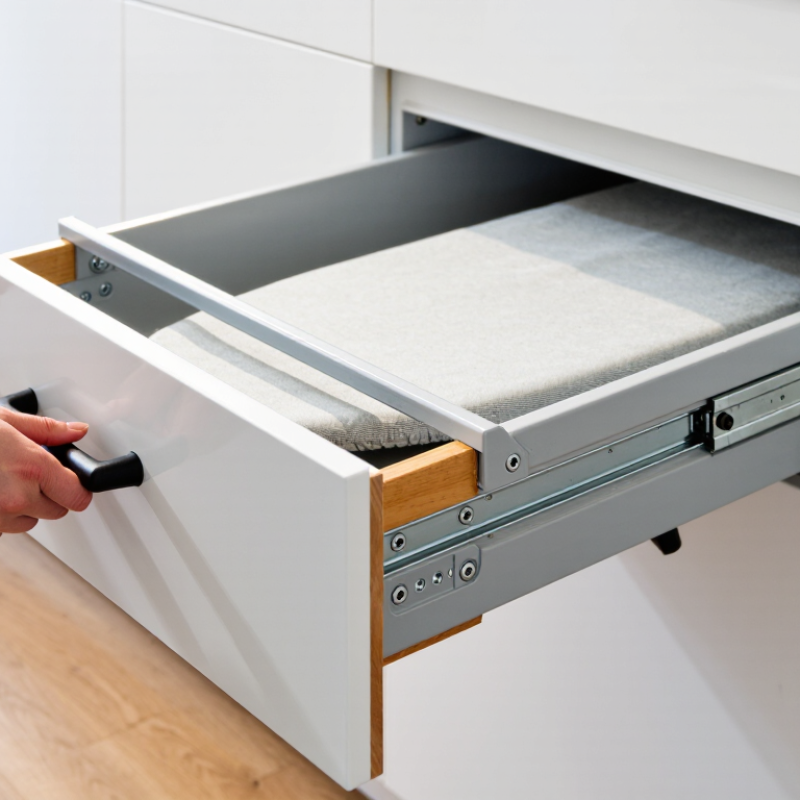
An ironing board drawer should slide smoothly, but its mechanism decides the correct release method. Look underneath the front edge and inside both side gaps. You may find metal runners, soft-close rails, a push-to-open catch, or a small locking lever. Do not pull harder when the drawer stops. A hidden safety lock may be holding it in place.
The U.S. Consumer Product Safety Commission’s 2023 Furniture Tip-Over Report estimated about 71,300 furniture tip-over injuries annually from 2018 through 2022. This figure concerns furniture generally, yet it supports a careful approach. Stabilize the cabinet with one hand, keep your feet clear, and remove heavy items before testing the drawer. Press both release tabs together if the runners have them. For a push-latch design, press the drawer inward first, then release it gently. I sometimes expect both rails to behave identically. They may not.
Tips: Use a flashlight to inspect the runners. Check for child-safety clips or transport locks. If the drawer moves unevenly, stop and inspect for a bent rail, trapped fabric, or loose screw. Never force a locked mechanism with a screwdriver. A short pause prevents expensive damage.
Clear the Area and Prepare the Right Tools
How to Pull Out an Ironing Board Drawer Easily?
Before touching the drawer, clear the floor and nearby surfaces. Remove laundry baskets, chairs, and loose fabric that could catch on the drawer. Good lighting matters, especially inside a narrow cabinet. I use a flashlight, work gloves, a soft cloth, and a small tray for screws. A flat screwdriver may help, but never force it into the runners. Protect the floor with a folded towel. It prevents scratches and gives dropped hardware a quiet landing.
Tips: Check the drawer handle, side gaps, and runner tracks before pulling. Some drawers stop because of hidden catches or safety levers. Look for these carefully. Keep both hands near the front edges, then pull slowly and evenly. If the drawer feels heavy, support its base instead of lifting the handle. A second person can steady the cabinet. I once pulled too quickly and shifted the whole unit slightly. That mistake showed me why clearing space is not optional. It also made the drawer harder to realign.
Wipe dust from the visible runners before testing movement. Use a dry cloth first, since moisture can collect inside wooden panels. Place every screw in the tray, not on the floor. If the drawer remains stuck, stop and inspect the alignment again. Forcing it can bend a runner or loosen the cabinet frame. A careful pause often saves more time than extra strength.
Pull Out the Ironing Board Drawer Smoothly and Safely
Pulling out an ironing board drawer should feel controlled, not forceful. Before touching it, clear the floor and open nearby cabinet doors. Place both feet firmly on the ground. Check the handle, rails, and visible screws for looseness. If the drawer is packed, remove the iron and bottles first. A heavy load can change its balance and strain the slides. Keep your fingers away from the gaps. Small spaces pinch quickly.
Grip the handle with both hands, if possible, and pull straight toward your body. Use slow, even pressure until the runners pass their initial stop. Support the front edge as the board extends. Do not twist the drawer or lift it while pulling. Either movement can disengage the runners. If it sticks, stop and inspect for fabric, a loose screw, or a misaligned rail. Never use a knife or improvised metal tool near the mechanism. I once pulled too quickly and made a rail jump. It seemed harmless. The drawer became harder to close afterward.
When fully extended, keep the board centered and check that its locking support has engaged. Test it with gentle downward pressure before placing a hot iron on it. If the support wobbles, close the drawer and arrange a repair. Do not work around a damaged slide. Clean dust from the runners with a dry cloth, then inspect the fasteners regularly. If resistance remains, follow the cabinet’s instructions or contact a qualified repair professional. Safety matters more than saving a few minutes.
Inspect the Rails and Reinstall the Drawer Correctly
How to Pull Out an Ironing Board Drawer Easily?
Pulling an ironing board drawer too hard can bend its rails or loosen the cabinet frame. I have rushed this step before. It created more repair work.
Open the drawer fully and inspect both rails with a flashlight. Look for bent metal, missing screws, cracked plastic stops, or uneven gaps. A drawer that drops on one side usually has a rail alignment problem. Remove clothing and accessories first. Then support the drawer with both hands. Many runners release through small levers, tabs, or stops near the front section. Press them gently while pulling the drawer straight outward. Do not force a stuck mechanism. ANSI/BIFMA storage-furniture testing evaluates repeated drawer movement, often across tens of thousands of cycles, so alignment matters more than brute strength.
Clean dust from the tracks using a dry cloth. Avoid excess oil because it can collect grit and slow the rollers. Check that each rail sits level and uses matching screw holes. Reinstall the drawer by aligning both runners at the same depth. Push slowly until the stops engage. Test it several times with light pressure. The U.S. Consumer Product Safety Commission’s NEISS surveillance reports continue to identify storage furniture among household injury sources, making secure installation important. A loose drawer can shift the cabinet’s balance.
Check the fit again. If the drawer rubs, remove it and reset the rails instead of forcing it. My first adjustment is rarely perfect. That is normal. Reliable repair comes from small corrections, not pressure.