7 Tips for Choosing a Lithium Battery Charger
Choosing a lithium battery charger is not just a matter of matching a plug. The charger must suit the battery’s chemistry, voltage, capacity, and built-in battery management system. A mismatch can cause poor charging, unexpected shutdowns, or battery damage. Small details matter.
The scale of the industry makes informed choices increasingly important. The International Energy Agency’s Global EV Outlook 2024 reports that electric-car battery demand reached about 750 gigawatt-hours in 2023, roughly 40% higher than in 2022. That figure describes electric vehicles, not every lithium battery application. Still, it shows how rapidly lithium-based systems are expanding—and why charging equipment deserves careful attention.
In this guide, seven practical tips will help you compare chargers with confidence. Check the battery label and manufacturer’s charging instructions before focusing on price or charging speed. Confirm the required chemistry and output voltage; a lithium iron phosphate battery, for example, may require a different charging profile from other lithium-ion batteries. Then assess current, connector fit, temperature limits, and safety protections. A higher current rating is not automatically better. The right choice depends on what the battery can safely accept. Not quite intuitive. Real-world labels can also be unclear, so verify specifications with the battery maker when they conflict. These tips offer a useful starting point, not a substitute for product-specific guidance.
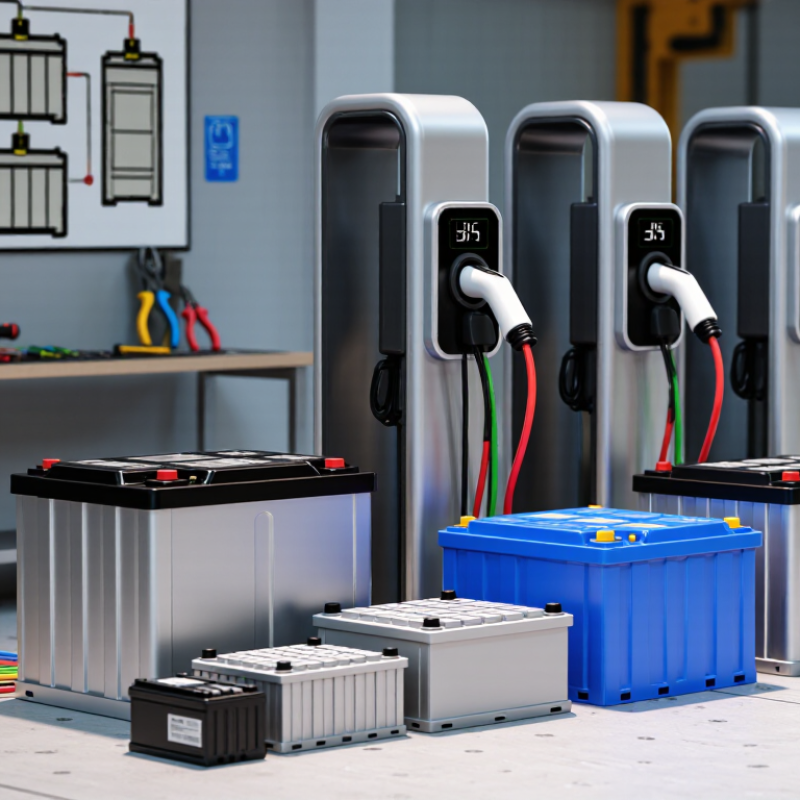
Identify the Lithium Battery Chemistry and Pack Configuration
Identify the cell chemistry before comparing charger features. Lithium iron phosphate (LFP) and nickel-based lithium-ion packs can require different charging-voltage limits. A four-cell LFP pack may specify a 14.6-volt charge ceiling, while a four-cell nickel-manganese-cobalt pack may specify 16.8 volts. These are common examples, not universal settings; follow the pack label and manufacturer’s approved charging profile.
Pack configuration matters just as much. Cells connected in series raise pack voltage; parallel cells increase capacity and potential current. The International Energy Agency’s Global EV Outlook 2024 reports that LFP supplied nearly 40% of global electric-car battery demand in 2023, up from under 10% in 2020. That market shift is a useful reminder: “lithium” alone does not identify a compatible charger.
Small detail. Big consequence.
Tip: Read the battery label for chemistry, nominal voltage, series count, and maximum charge current. Check the manual if the label is unclear. I would not infer chemistry from pack shape or wire color; those clues are easy to misread. Match the charger’s voltage and current limits to the battery maker’s specifications, and confirm that its charging profile suits the built-in battery management system.
Match Charger Voltage and Charging Current to the Battery
Match the charger’s output voltage to the battery’s chemistry and series-cell count. A lithium-ion cell commonly has a 4.2-volt charge limit, while lithium iron phosphate cells typically use a lower limit. The exact value still depends on the battery maker’s specification. A mismatch can cause incomplete charging or unsafe overvoltage. Check the pack label and manual, not just the connector shape.
Charging current matters just as much. The USABC Electric Vehicle Battery Test Procedures Manual, Revision 3 (2014), uses cell-specific voltage and temperature limits in its test protocols; it does not set one current for every pack. Use the battery’s stated maximum charge current, or a lower value if you prefer gentler charging. For example, a 100 Ah battery rated for 0.5C charging supports up to 50 A, if its documentation confirms that limit. Keep it simple. Also check that the charger is designed for the battery chemistry and monitors temperature where required. A charger’s “universal” label is not enough. I still double-check the small print; pack labels can be surprisingly easy to misread.
Check Charging Profiles and Battery Management System Compatibility
A charger can fit the plug and still be wrong. Match its charging profile to the battery’s chemistry and exact system voltage. Lithium iron phosphate and other lithium chemistries do not always share the same voltage limits or charging stages. Check the battery maker’s specifications, not just the charger’s front label. A small mismatch can shorten battery life or trigger a protective shutdown.
The battery management system (BMS) adds another layer. It may limit charging current, stop charging at low or high temperatures, or require a communication link with the charger. Confirm that the charger respects those limits and supports any required signal protocol. If the battery manual lists a maximum charge current of 20 amps, for example, do not assume a 30-amp charger will automatically reduce its output. Verify its settings or choose a suitable unit.
Temperature matters. A battery stored in a cold garage may refuse to charge, even when the charger appears normal. Look for clear instructions on temperature cutoffs and restart behavior. I have seen people focus on charging speed and overlook these details; it is an easy mistake. When specifications are unclear, ask the battery supplier for written compatibility guidance before connecting equipment.
Evaluate Safety Features, Certifications, and Environmental Limits
Safety is not just a feature listed on a charger’s box. Check that its output voltage and charging profile match the battery maker’s specifications. A mismatch can cause overheating or shorten battery life. Small details matter.
Look for certification marks from a recognized testing body, then verify what the mark covers. A printed logo alone is not enough. The charger’s manual should identify applicable safety standards and explain protections such as over-temperature, over-current, and short-circuit shutdown. It is easy to trust a familiar-looking label too quickly; I would check the documentation as well. Also inspect the cable and casing for damage before use.
Environmental limits deserve equal attention. Compare the charger’s stated operating temperature range with the room where you plan to charge, and follow the battery maker’s limits if they are stricter. Avoid charging near heaters, in direct sun, or where moisture can collect. Leave the charger on a firm, nonflammable surface, with airflow around its vents. A cool garage may seem harmless, but winter temperatures can fall below the approved range. If the manual is vague, that uncertainty is worth resolving before plugging in.
Compare Charger Connectors, Controls, and Practical Use Requirements
A lithium battery charger should match the battery’s chemistry, nominal voltage, and required charging profile. Check the battery label or its technical documentation before comparing charger specifications. A connector that fits is not proof of compatibility. Check its polarity and pin arrangement, too; similar-looking plugs can be wired differently. Fit is not proof.
Tips: Compare the connector and cable length with your actual setup. Look for clear controls, such as a readable status light or display, and a current setting suited to the battery. Small details matter. A charger with confusing indicators can make it harder to spot an interrupted charge.
Consider where and how you will use it. A compact charger may suit a workbench, while a longer cable can help when the outlet is awkwardly placed. Keep the unit dry, uncovered, and away from heat during use, following the battery maker’s instructions. Do not rely on a charger’s advertised features alone; confirm its output matches the battery’s stated limits. It is easy to overlook the cable until it strains against a shelf edge. Check the whole setup before plugging in.