How to Choose a Cereal Bar Cutting Machine?
Choosing a Cereal Bar Cutting Machine is not just a matter of selecting the fastest model. The right machine must match your recipe, bar dimensions, production volume, and cleaning routine. A soft fruit bar can smear under pressure. A chilled, dense bar may need stronger cutting force and carefully timed blades. Small differences matter.
Look closely at the product you actually make. Is it sticky, crumbly, nut-rich, or layered? Check whether the machine supports adjustable cutting widths, consistent feed, and tools that suit your bar’s texture. Ask for a trial using your own mixture. Watch the edges, not only the machine’s stated output. Clean cuts matter. So does the time required to remove residue from belts and blades.
A useful selection principle is: “Choose a cutter around the product’s real texture and operating conditions, not its brochure speed.” This is proposed wording, not a verified quotation. Before publication, confirm it with a named cereal-bar processing expert and obtain approval for the attribution. That step is easy to overlook. It should not be.
This guide explains how to compare cutting methods, capacity, blade design, adjustment range, and sanitation access. It also considers operator safety, maintenance needs, and room for future production changes. No single machine fits every line. The best choice is the one that produces uniform bars reliably, with manageable waste and practical upkeep.
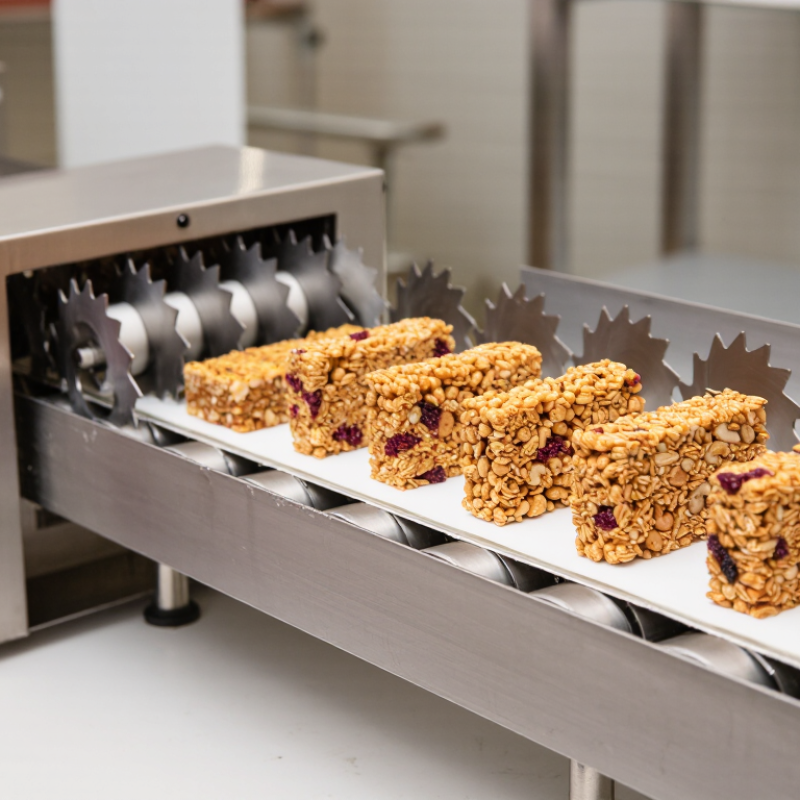
Identify Your Cereal Bar Types and Cutting Requirements
A good machine choice starts with the bar itself. Is it soft and chewy, crisp and brittle, or dense with nuts and dried fruit? Each texture behaves differently under a blade. Soft bars may compress or smear, while crisp bars can fracture and shed crumbs. Sticky coatings can cling to cutting surfaces. Small details matter.
Record the bar’s width, height, temperature at cutting, and expected piece size. Then define whether you need straight strips, individual portions, or several cuts in one pass. A wire cutter may suit delicate, sticky products; a guillotine-style blade can handle firmer slabs. Bars with large nuts or seeds need enough cutting force and stable product support. Test representative samples, including the least uniform batch. A neat sample can still mislead.
Check cut consistency, waste, and cleaning access during trials. Ask how quickly operators can adjust spacing when recipes change. Throughput matters, but not alone. A fast machine that crushes edges may create more rework than useful output. I would avoid choosing from speed figures alone; they rarely show how a real, uneven slab will behave. A little uncertainty is normal. Record it before purchase.
Compare Cutting Methods for Different Textures and Shapes
How to Choose a Cereal Bar Cutting Machine?
Texture changes the choice. Soft, chewy bars can stretch or smear under a blunt blade, especially when syrup is warm. A taut wire can make clean cuts through soft slabs, but chunky nuts or hard seeds may deflect it. For dense, crisp bars, a sharp guillotine-style blade often gives more control and neat rectangular edges. Watch for crumbs around the cut; they can signal excess pressure or a blade that needs attention.
Cutting method also affects shape and production flow. A guillotine suits evenly spaced portions from a stationary slab. Rotary knives can cut continuous sheets into consistent strips, while shaped dies may form rounded or specialty pieces. Ultrasonic cutting can reduce drag on sticky mixtures, though results depend on ingredients, thickness, and line speed. It is not a fix for every recipe.
Test the actual bar, not just a similar-looking sample. Compare cuts at the temperature used on the production line, and inspect edges, inclusions, and portion weight. Short trials help. A bar that looks tidy right after cutting may crack once cooled. I would also check how often operators must clean the blade or wires. That detail is easy to overlook, and it can change the practical choice.
Match Machine Capacity and Speed to Your Production Needs
A cereal bar cutting machine should match the line’s real output, not an optimistic target. Estimate how many bars your upstream equipment delivers per minute, then compare that figure with the cutter’s sustained capacity. A machine that runs faster on paper may still create backups if workers cannot load trays or downstream packaging cannot keep pace. Measure actual output.
Consider the full range of products you make. Wider bars, sticky coatings, and frequent size changes can slow cutting and cleaning. Ask how quickly operators can adjust blade spacing, clear crumbs, and restart safely. Small gaps matter. If the line regularly changes recipes, a slightly lower rated speed may deliver more usable production time.
Run a trial with your own mixture when possible. Record cuts per minute, rejected pieces, and stoppages over a representative shift, rather than relying on a brief demonstration. A spreadsheet can make the choice look simpler than it is; product temperature and texture may change during production. Leave some capacity in reserve for busy periods, but avoid paying for speed your packaging line cannot use. The right match is the one that keeps cutting steady without creating a pile of bars waiting at the next station.
Evaluate Hygiene, Safety, Maintenance, and Adjustment Features
Hygiene, safety, maintenance, and adjustment features deserve close attention when choosing a cereal bar cutting machine. Food-contact surfaces should be smooth and accessible, with few crevices where syrup, crumbs, or oil can collect. Ask how blades and belts are removed for cleaning, and whether parts can be inspected without awkward tools. Small gaps matter. A machine may look easy to clean, yet still leave residue around a guard or conveyor edge.
Safety features should protect operators during routine work, not just during a demonstration. Check that guards stay secure and that opening them stops hazardous movement. Emergency stops should be easy to reach from normal operating positions. Ask operators to test the controls. Convenience can tempt people to bypass an awkward guard, so watch how access works during a realistic changeover. That deserves scrutiny.
Maintenance access affects both downtime and cleaning discipline. Find out which wear parts need regular inspection, how long replacement typically takes, and whether adjustment points are clearly marked. Bar recipes vary in width, height, and firmness, so confirm that cutting spacing and pressure can be changed in controlled increments.
Run a trial with your own mixture if possible. A neat sample is useful, but it does not reveal every issue. Listen for uneven cutting, check the edges for crumbling, and note how much adjustment the operator needed. A little uncertainty is normal; record it before comparing machines.
Compare Total Cost, Supplier Support, and Trial Results
When choosing a cereal bar cutting machine, compare the full operating cost, not just the purchase price. Include installation, tooling, changeover labor, cleaning, spare blades, energy, and expected downtime. Then estimate cost per saleable bar at your real production rate. A fast cutter is not economical if it creates extra crumbs or uneven edges. Small details matter.
Supplier support affects that calculation. Ask for written response times, local service coverage, spare-parts lead times, operator training, and commissioning support. Deloitte’s 2024 Smart Manufacturing Survey reported that 86% of surveyed manufacturing executives expect smart manufacturing to drive competitiveness within five years. That makes machine data useful, but only if your team can access and interpret it. Check whether the supplier can show cut-rate, reject, and downtime records during a trial.
Run the trial with your own cereal mixture, not a substitute recipe. Record bar temperature, dimensions, cuts per minute, scrap, and cleaning time across several runs. Test a changeover too. A single smooth run can hide problems; ours may not reflect a full shift. Ask operators to inspect the edges and note jams or sticking. Compare trial results against your target cost per good bar, and keep the assumptions visible.
How to Choose a Cereal Bar Cutting Machine?
Compare total cost, supplier support, and trial results
Higher scores indicate a stronger result; for total cost, a higher score means a lower estimated cost of ownership. The 1–5 scores below are illustrative, not market data. Base your decision on written supplier quotes, documented support terms, and witnessed production trials using your own product.