How to Choose the Best Stainless Steel Roof Hook?
Choosing the right Stainless steel roof hook starts with the roof, not the product photo. A hook must suit the roofing profile, fixing method, and expected load. A design made for one tile shape may sit poorly on another. That small gap can affect stability and create pressure on the tile. Small details matter.
This guide explains how to compare stainless steel grades, hook dimensions, mounting points, and compatible fasteners. It also covers signs of sound fabrication, including smooth edges and consistent welds. These details help reduce corrosion risks and make installation more predictable, though they cannot replace a site inspection. Check the roof material and support structure before choosing a model. Follow the manufacturer’s specifications, especially for load limits and installation spacing. If details are missing, ask the supplier rather than assuming that similar-looking hooks perform alike.
Price alone is a weak guide. So is the word “stainless.” Grade, finish, exposure to moisture, and contact with other metals can all influence long-term performance. A coastal roof or a damp setting may need closer material checks than a sheltered project. The right choice is not always obvious, and product descriptions can leave important questions unanswered. Use this guide to assess those questions carefully and select a hook that fits the roof, the fixing system, and the conditions it will face.
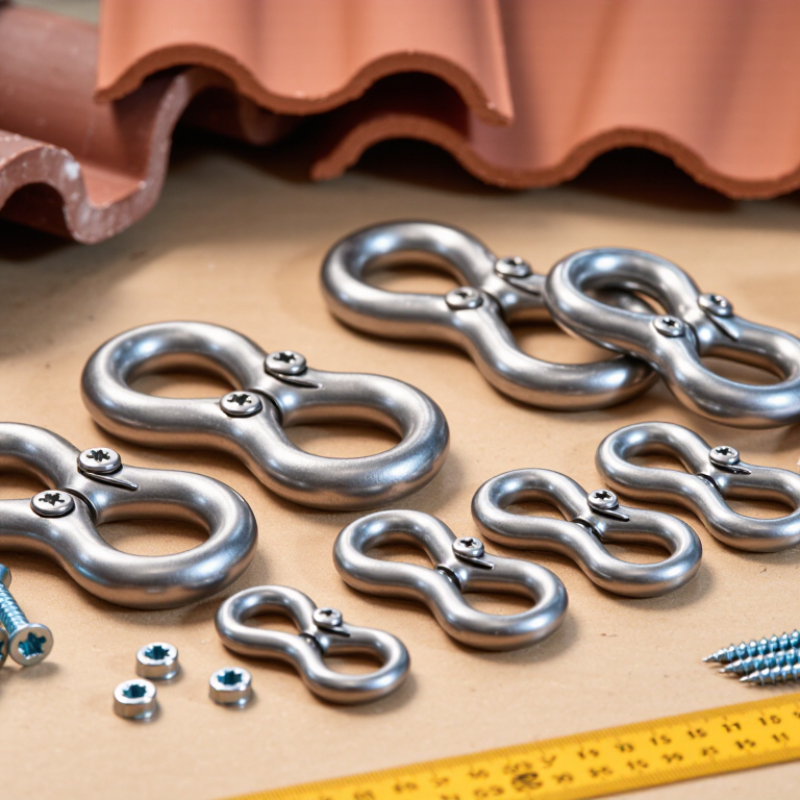
Identify Roof Covering, Rafter Position, and Hook Geometry
A stainless steel roof hook should match the roof covering, not just look sturdy in a product photo. Tile profiles vary in height and overlap, while metal roofs may need a different mounting approach. Check how the hook sits beneath or beside the covering. It should not lift a tile, pinch a seam, or block water from draining. Small gaps matter.
Find the rafters before choosing the hook. A hook fastened only to a roof board may not provide the support the installation needs. Use careful measurements, and confirm that the fixing position reaches sound structural timber. Rafter spacing can differ from what a quick glance suggests. A neat fit can still be wrong. If the structure is hidden or damaged, get an experienced installer to assess it.
Hook geometry affects clearance and stress. Compare the bend, throat depth, and mounting plate with the roof profile and the equipment being supported. The hook should clear the covering without pressing hard against its edge. Also consider the site: coastal air and persistent moisture can influence stainless steel selection. I would not judge suitability by appearance alone; verify material details and installation requirements, then inspect the finished fit for movement or trapped water.
Choose 304 (18–20% Chromium) or 316 (2–3% Molybdenum) for Exposure
A stainless roof hook faces more than rain. Salt spray, damp leaf litter, and water trapped beneath a washer can create localized corrosion. For inland roofs with clean drainage, 304 may be adequate. Near the coast or around de-icing salts, 316 is often the safer choice.
ASTM A240/A240M specifies 304 stainless steel at 18–20% chromium. Its 316 composition includes 2–3% molybdenum, alongside chromium. ASSDA grade data and Nickel Institute technical guidance describe molybdenum’s role in improving resistance to chloride-related pitting. That extra alloying matters where salty moisture repeatedly wets the hook. Salt changes the choice.
Still, 316 is not corrosion-proof. A narrow gap under a bracket can hold moisture, even on a higher-grade hook. Check the full assembly, including screws and washers, and avoid mixing metals without considering contact corrosion. I would also inspect shaded eaves after the first wet season; site exposure is rarely uniform. A roof’s distance from the sea helps, but wind and runoff can carry salt farther than expected.
How to Choose the Best Stainless Steel Roof Hook?
Choose 304 for many general environments; consider 316 for coastal or chloride-exposed locations.
Approximate specification ranges by weight: 304 contains 18–20% chromium, while 316 contains 16–18% chromium and 2–3% molybdenum. The added molybdenum improves resistance to pitting and crevice corrosion in chloride-rich environments. Actual suitability depends on exposure, design, and maintenance.
Check Hook Capacity Against Site-Specific Wind, Snow, and Dead Loads
A stainless steel roof hook is only as reliable as the loads it must carry. Check wind uplift, downward snow pressure, and dead load from modules, rails, and hardware. ASCE/SEI 7-22 provides location-specific wind and snow design inputs; its hazard data should be checked for the project site, not replaced by a regional average. For illustration, a hypothetical site lookup might show a 130 mph basic wind speed and 40 psf ground snow load. Those figures are not universal design values. NOAA’s 1991–2020 Climate Normals can help describe local weather, but climate averages are not a substitute for code-based design loads.
Compare the calculated demand with the hook’s published capacity in the relevant directions. A capacity stated only as a single “maximum load” may hide important details, such as test conditions, fastener type, and roof-deck material. Small details matter. Confirm hook spacing, attachment depth, and the condition of the rafters or deck; a strong hook cannot compensate for weak timber or poor installation. Account for load combinations and safety factors under the applicable design standard, and have a qualified structural professional verify the load path from module to building. One easy mistake is using snow depth as a direct load estimate: snow density varies, and drifting can concentrate weight near roof edges or obstructions. Check the site-specific design basis before selecting capacity.
Verify Roof-Hook Spacing and Fixings Against EN 1991 Load Design
How to Choose the Best Stainless Steel Roof Hook?
Verify Roof-Hook Spacing and Fixings Against EN 1991 Load Design
A stainless steel roof hook must suit both the roof covering and the loads it will carry. EN 1991 helps establish actions such as wind, snow, and the weight of mounted equipment. The applicable National Annex may also affect design values. Hook spacing should follow a project-specific calculation, not a convenient rule of thumb. A neat-looking layout can still be wrong.
Check the full load path: from the supported rail, through each hook and fixing, into the roof structure. Tile thickness alone does not confirm that a fixing is adequate. Inspect the rafter location, timber condition, embedment depth, and clearance around the hook. Near roof edges and corners, wind effects can differ from those across the central area. This matters. Use verified product capacities and relevant structural design checks alongside EN 1991; it defines loads, not a universal spacing table. On site, small shifts in rafter position can change the proposed layout. It is tempting to make the spacing fit the tiles, but that may leave a weak fixing pattern. Record assumptions, check the actual roof build-up, and revise the design when conditions differ. A little doubt is useful.
Confirm Material Traceability, Installation Instructions, and Test Evidence
A reliable stainless steel roof hook begins with traceable material, not a polished surface. Request a mill test certificate showing the alloy grade, heat number, and chemical composition, then check that the number matches the hook or its packaging. ASTM A240/A240M covers stainless steel plate, sheet, and strip; it does not, by itself, certify a finished hook. World Stainless’s Stainless Steel in Figures 2024 reports 58.4 million tonnes of global stainless crude steel production in 2023. That scale makes clear why grade and batch records matter.
Ask for installation instructions specific to the roof profile and substrate. They should show hook position, fastener type, spacing, and any limits on tightening. A screw driven too hard can deform a flashing or damage a coating. Too loose is no better. Check that the instructions address drainage and avoid pinching the roof panel. Small details matter.
Review test evidence, not just a claim of “high strength.” Look for dated reports identifying the sample, test method, load direction, and failure point. Corrosion testing, such as ASTM B117 salt spray, can support comparison, but it does not predict years of outdoor service on its own. Match test conditions to the site, especially near saltwater or industrial exposure. One thing is easy to miss: a strong hook may still fail when installed on a weak substrate. Ask for assembly-level evidence where possible, and note any gaps before choosing.