Blogs | Great Lakes Kwik Space

How to Choose a Side Opening Shipping Container in 2026?

Choosing a Side Opening Shipping Container in 2026 requires more than comparing prices online. Buyers must examine access, cargo dimensions, site conditions, certification, and long-term maintenance. A container may look robust in photographs, yet its side doors can bind on uneven ground. That small problem can delay unloading and damage valuable goods.

John O’Neill, a container logistics consultant with more than twenty years of field experience, offers a practical reminder: “The best side opening container is selected around the loading process, not the catalogue image.” His view reflects a common industry lesson. Forklift access, pallet width, door clearance, and vehicle positioning should be checked before purchase. A 20-foot model may suit compact sites. A 40-foot model may provide better capacity, but it also demands more space and stronger handling equipment.

Look closely at the details. Check the CSC plate and available inspection records. Test every locking bar. Examine hinges, floorboards, seals, and roof corners for corrosion or distortion. Measure the side opening with the actual equipment used at your facility. Consider wind exposure, drainage, lighting, and ground stability. These factors are easy to underestimate.

Do not trust appearance alone.

This guide explains how to compare Side Opening Shipping Container options with practical judgment. It also highlights areas where buyers may need to reassess their assumptions. A new-looking unit is not always the safest choice. A refurbished container may perform well when repairs are documented and professionally completed. Reliable decisions come from evidence, measured requirements, and honest evaluation of daily use.

How to Choose a Side Opening Shipping Container in 2026?

What Is a Side Opening Shipping Container?

How to Choose a Side Opening Shipping Container in 2026?

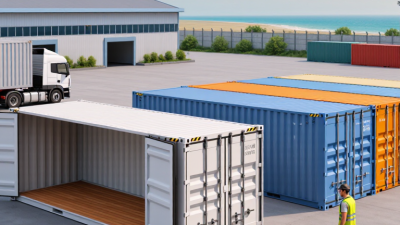
A side opening shipping container has large doors along its long wall. These doors create a wider access area than standard end doors. Forklifts, carts, and bulky equipment can enter more easily. This design uses steel panels, locking bars, hinges, and weather seals. Each part affects daily safety and storage performance.

From practical inspections, door alignment matters more than a fresh-looking paint finish. Open every panel and check for binding, uneven gaps, rust, or damaged seals. Measure the internal length, width, and height before ordering. A few centimeters can change how pallets fit. Consider ground conditions too. Uneven surfaces may twist the frame and make doors difficult to close. That detail is often overlooked.

Tips: Choose the opening direction according to your loading area. Leave clear space beside the container. Confirm floor capacity, ventilation needs, and delivery access. Ask for inspection photos, recent measurements, and maintenance records. In 2026, compare insulation, lighting, and monitoring options only after checking the basic structure. Technology sounds useful, but a poor seal still causes trouble. I would also allow a small budget for repairs. Even a carefully inspected unit may reveal a stubborn hinge later.

Which Side Opening Container Size and Layout Fit Your Needs?

Choosing a side opening shipping container starts with the cargo flow, not the container label. A 20-foot unit offers about 33 cubic metres of internal space, while a standard 40-foot unit provides roughly 67 cubic metres. High-cube models add height, but only when local transport clearance allows it. ISO 668 sets typical external widths near 2.44 metres and standard heights near 2.59 metres. Small differences matter beside loading bays.

Think about the layout.

A side opening design suits long, wide, or frequently accessed cargo. Forklifts can enter from the side, reducing repeated unloading through the end doors. For mixed pallets, a 20-foot container may provide better control and less unused space. A 40-foot version fits larger inventories, but poor stacking can create a dark, inaccessible rear section. Measure the awkward parts. Door width, opening height, forklift turning radius, and ground slope can decide usability.

UNCTAD’s Review of Maritime Transport 2024 reported global maritime trade at about 12.3 billion tonnes in 2023. That volume increases pressure for faster handling and better space planning. Drewry’s 2024 container fleet analysis also uses TEU as a fleet measure, but TEU does not equal usable cargo volume. A neat spreadsheet can still mislead. Check payload limits, tare weight, ventilation, and access frequency before choosing. Your best layout may be less obvious than the largest box.

How to Compare Door Designs, Materials, and Security Features

How to Choose a Side Opening Shipping Container in 2026?

A side opening container should match the loading pattern, not just the available budget. Full-height bi-fold doors provide fast forklift access, while multi-panel doors suit narrow yards. Curtain-side designs open widely, but their flexible fabric can offer weaker protection against cutting and weather. A wide door is not automatically better.

Material affects service life. Corten steel panels resist harsh marine conditions and repeated handling. Aluminum reduces tare weight, but it may dent more easily during busy loading operations. Check the door frame, hinges, locking bars, and floor load rating. The ISO 1496-1 standard provides a useful reference for container strength and testing. Also verify the CSC safety plate before purchase.

Security deserves closer attention. Choose recessed lock rods, protected padlock housings, concealed hinges, and internal locking options where practical. Use tamper-evident seals that match ISO 17712 requirements. TT Club cargo security reports repeatedly highlight poor access control and unsecured storage areas as major loss factors. The World Shipping Council notes that maritime transport carries about 80% of global merchandise trade by volume, so small design weaknesses can affect valuable supply chains. I would not trust a sales brochure alone. Inspect a working door, measure its opening, and test the seals. One overlooked drainage gap can become a serious maintenance problem.

How to Choose a Side Opening Shipping Container in 2026?

Comparing door designs, materials, and security features for practical container selection.

The chart uses an indicative 1–5 design-performance index: 1 represents a lower fit for the criterion and 5 represents a stronger fit. Full side-opening doors provide the widest loading access, double-leaf swing doors offer a balanced combination of durability and security, and bi-fold doors can improve access where operating space is limited.

Galvanized steel is commonly selected for strength and corrosion resistance, while aluminum and insulated sandwich panels can reduce weight or improve thermal performance. Final specifications should be checked against the container’s ISO dimensions, locking-bar construction, door seals, hinge protection, and applicable local safety requirements.

What Site Conditions and Handling Equipment Should You Consider?

How to Choose a Side Opening Shipping Container in 2026?

Site conditions should guide your container choice before dimensions or price. Measure the loading area, turning radius, ground slope, and overhead clearance. A side-opening unit needs clear space along its long wall. Fences, parked vehicles, and roof edges can quickly become obstacles. Check whether the ground is compacted, level, and strong enough for loaded corner castings. Soft gravel may look stable, but it can settle after rain.

Handling equipment matters just as much. A forklift needs enough reach to place cargo safely through the side opening. Confirm its rated capacity at the required load center, not only its headline capacity. Telehandlers can help on uneven sites, but their movement may increase sway. Cranes require certified lifting points, suitable slings, and an exclusion zone. Keep people away during lifting. I have seen small access mistakes create major delays, especially when doors open toward active work areas.

Tips: Sketch the container footprint at full scale. Mark door swing, equipment lanes, and emergency access. Test the route with an unloaded forklift first. Leave extra clearance for uneven turning. Do not assume the delivery truck can reach the final position. Ask the site supervisor to confirm drainage, power lines, and ground bearing conditions. A flexible plan is useful, but an untested assumption can become expensive.

How to Verify Quality, Compliance, Pricing, and Supplier Reliability

How to Choose a Side Opening Shipping Container in 2026?

A side opening container needs more than a low purchase price. UNCTAD’s Review of Maritime Transport 2024 states that over 80% of global merchandise trade by volume moves by sea. Small defects can therefore create serious handling delays. Inspect the side doors, locking bars, hinges, welds, floor, roof, and rubber seals. Open every panel. Check for daylight, standing water, fresh paint, and uneven movement. The CSC safety plate should be readable and match the container number. Ask for inspection records, repair history, and evidence of compliance with ISO 1496-1 requirements. Documents can be incomplete. Verify them independently.

Tips: Request timestamped photos, a live video inspection, and an independent survey before payment. Compare the quoted price with delivery, lifting, customs, repair, and modification costs. Drewry’s World Container Index shows how quickly shipping market rates can change, but freight rates do not equal equipment value. A cheaper unit may need costly door repairs. A higher price may reflect recent flooring, certified testing, or local delivery.

Supplier reliability is easier to judge through behavior than promises. Ask for serial-numbered documents, clear warranty terms, spare-part availability, and a written delivery schedule. Check whether the supplier explains rejected units honestly. That matters. Avoid sellers who provide only polished exterior photos. In practical procurement, a small inspection fee can prevent a large replacement bill. I would still leave a contingency budget, because corrosion hidden beneath paint is easy to miss.

How to Choose a Side Opening Shipping Container in 2026?

How to Verify Quality, Compliance, Pricing, and Supplier Reliability

Evaluation Area What to Verify Relevant Data or Standard Required Evidence Warning Signs Priority
Container Type Confirm that the unit is genuinely side-opening, not a standard dry container with an added access door. Side-opening configurations commonly use one long-side opening, multiple side doors, or a combination of side and end doors. Product drawings, door layout, internal photographs, and a completed specification sheet. Unclear door arrangement, missing opening dimensions, or photos that show a different model. High
Nominal Size Match the nominal length and height to the cargo, transport route, and available handling space. Common nominal lengths are 20 ft and 40 ft. High-cube units are normally 9 ft 6 in high, while standard-height units are normally 8 ft 6 in high. External and internal dimensions, door opening dimensions, tare weight, maximum gross mass, and payload calculation. Only nominal dimensions are provided; actual internal dimensions and tare weight are omitted. High
Internal Capacity Check whether the usable floor area and door opening are sufficient for the longest, widest, or tallest cargo item. Usable capacity varies with the frame, door system, insulation, flooring, and fittings. Side-door clearances are often smaller than the external side length. Dimensioned CAD drawing or certified technical data sheet showing clear openings and floor dimensions. Supplier quotes only external dimensions or uses “full side opening” without stating clear access dimensions. High
Structural Frame Inspect corner posts, corner fittings, top and bottom side rails, cross-members, and weld quality. Load-bearing components should be suitable for the declared maximum gross mass and compatible with container handling equipment. Manufacturing drawings, material specifications, weld inspection records, and recent inspection photographs. Visible buckling, cracked welds, distorted corner fittings, excessive corrosion, or unsupported modifications. Critical
Floor System Verify flooring condition, load rating, moisture resistance, and compatibility with forklifts or pallet trucks. Container floors are often hardwood or engineered wood over steel cross-members. The actual permissible point load depends on the design and manufacturer. Floor material, thickness, permissible axle or wheel load, repair history, and underside inspection images. Soft spots, delamination, oil contamination, water damage, protruding fasteners, or no stated floor load rating. Critical
Side-Opening Doors Test hinges, locking bars, gaskets, retainers, door alignment, and the ability to open safely on level ground. Doors should open and close without excessive force and should maintain weather resistance when locked. Opening-cycle test video, door hardware list, gasket details, replacement-part availability, and service instructions. Door sagging, uneven gaps, difficult locking, missing restraints, sharp edges, or water entering through the seals. Critical
Weather Tightness Confirm resistance to rain, spray, dust, and normal cargo-handling exposure. Door seals, roof seams, corner posts, side panels, and repaired areas are the main potential leakage points. Water-test report, inspection checklist, photographs of seals and roof seams, and repair records. Rust trails, daylight visible through door gaps, damp floorboards, mold odor, or unsealed weld repairs. Critical
CSC Compliance Determine whether the container is intended for international sea transport or only domestic storage and transport. Internationally used containers generally require a valid Convention for Safe Containers (CSC) safety approval plate and periodic examination status. Photograph of the CSC plate, approval number, maximum gross mass, stacking and racking values, examination date, and inspection documentation. Missing or illegible CSC plate, expired examination status, mismatched serial number, or altered structural components. Critical
ISO Compatibility Check whether the container can be handled and secured using the intended intermodal equipment. Relevant references may include ISO 668 for classification and dimensions, ISO 1161 for corner fittings, and ISO 1496-1 for general dry-freight container requirements. Declaration of conformity, dimensional inspection report, corner-fitting details, and compatibility statement for the intended route. Supplier claims “ISO standard” without identifying the applicable standard or the scope of compliance. Critical
Maximum Gross Mass Ensure the maximum gross mass covers cargo, pallets, dunnage, and any internal equipment. The permitted gross mass must be taken from the container safety plate and technical documentation, not assumed from nominal size. CSC plate, manufacturer data sheet, tare weight certificate, and payload calculation for the planned cargo. Payload is calculated using an estimated tare weight or exceeds the rating on the safety plate. Critical
Cargo Securing Verify lashing points, cargo bars, partition posts, and the permissible load for each fitting. Securing capacity varies by fitting and design. Lashing points must not be treated as lifting points unless specifically rated. Lashing-point layout, safe working load, engineering calculations where necessary, and installation details. No rated capacity, improvised weld-on rings, damaged fittings, or instructions that confuse lifting and lashing functions. Critical
Ventilation and Cargo Suitability Assess ventilation, condensation risk, odor, cleanliness, and suitability for the cargo type. Standard dry containers are not automatically temperature-controlled or gas-tight. Vents may reduce condensation but do not replace cargo-specific climate control. Vent layout, cleanliness report, prior-use declaration, odor inspection, and cargo compatibility statement. Strong chemical odor, unknown previous cargo, blocked vents, pest evidence, or use for sensitive goods without a risk assessment. High
Surface Protection Review corrosion protection on the frame, panels, roof, door hardware, and underside. Paint systems and coatings should be suitable for marine or outdoor exposure, with repair procedures for damaged areas. Coating specification, dry-film thickness record, corrosion inspection, and photographs of high-risk areas. Active corrosion at corner fittings, deep pitting, flaking coating, or fresh paint hiding unrepaired damage. High
New, Used, or Refurbished Define the condition category before comparing prices. “New build,” “one-trip,” “cargo-worthy,” “wind and watertight,” and “refurbished” describe different condition levels and should not be treated as interchangeable. Condition declaration, manufacturing year, serial number, repair log, inspection date, and photographs taken before shipment. Generic “like new” wording, no manufacturing year, no serial-number trail, or stock photos only. High
Indicative Pricing Compare the complete delivered cost rather than the ex-yard unit price alone. Budgetary prices in 2026 can vary widely by size, condition, side-door design, certification, delivery distance, taxes, freight, and local inventory. A realistic comparison should use written quotations for the same specification. Itemized quotation covering unit price, modifications, inspection, certification, inland delivery, port or terminal charges, taxes, installation, and warranty. Unusually low price, large unexplained deposit, omitted delivery costs, or a quote that does not identify the exact specification. Critical
Total Cost of Ownership Estimate maintenance, door-hardware replacement, corrosion treatment, inspection, and future relocation costs. Side-opening systems generally contain more hardware and seals than a single-end-door dry container, which may increase maintenance needs. Spare-parts price list, maintenance schedule, warranty terms, service response time, and expected inspection costs. No spare parts, no maintenance instructions, proprietary components with no local support, or warranty exclusions for normal door use. High
Supplier Identity and Traceability Confirm that the contracting entity, manufacturing source, inspection party, and payment beneficiary are consistent. Reliable documentation should create a traceable link between the quotation, serial number, inspection report, safety plate, invoice, and shipping documents. Registered business details, verifiable address, serial-number list, factory or depot photographs, inspection records, and references for comparable projects. Different names on documents, unverifiable address, pressure for full prepayment, or refusal to share serial-number evidence. Critical
Pre-Shipment Inspection Use an independent inspection before final payment or loading. Inspection should cover dimensions, structure, doors, seals, floor, CSC plate, serial number, cleanliness, corrosion, and photographs from all sides. Signed inspection report, timestamped photographs, test videos, nonconformity list, and corrective-action confirmation. Inspection is performed only by the seller, report lacks serial numbers, or defects are accepted without a written remedy. Critical
Delivery and Handling Confirm unloading equipment, ground conditions, access width, turning radius, and placement requirements. A loaded container requires suitable lifting or handling equipment. Side doors also need adequate clearance for safe operation after placement. Delivery method, lifting plan, site survey, unloading responsibility, access measurements, and installation instructions. “Delivery included” without unloading scope, no site survey, insufficient side clearance, or unsuitable ground conditions. High
Contract and Warranty Put specifications, acceptance criteria, delivery time, remedies, and warranty obligations in the contract. Warranty terms should identify coverage for structure, roof leaks, door hardware, seals, flooring, and corrosion separately. Signed purchase contract, approved drawings, acceptance checklist, warranty period, claims process, and retention or inspection terms. Verbal promises, vague warranty language, no remedy for nonconformity, or payment terms that leave no inspection leverage. Critical
Final Decision Rule Approve only when safety, compliance, fit, cost, and supplier evidence are all satisfactory. A lower price should not compensate for missing CSC documentation, structural defects, poor weather tightness, or unverified supplier identity. Completed comparison sheet with pass/fail results, approved drawings, inspection report, final quotation, and contract documents. Any unresolved critical defect or missing compliance evidence before shipment. Go / No-Go
Important: Dimensions, load ratings, certification status, delivery costs, taxes, and 2026 market prices must be confirmed for the exact container serial number, destination, cargo, and transport route. Local port, customs, road, lifting, and occupational-safety requirements may impose additional conditions.

Highly Trusted Local Portable Storage Solutions Since 1990

Rob was always very honest and upfront about everything and took the time to explain everything I needed. 

Nayla gamez awesome

“highly recommended. They provided us with a great storage container with ontime services.”

Carlos Montano

“Bought a used container, its perfect, no leaks and in good condition.”

Dudley Pankoke

“Good service and prompt delivery. A great option for temporary storage at a decent price.”

Joe Ward

Portable Storage FAQ

CLICK HERE

Storage Container News

CLICK HERE

Join our mailing list to get the latest storage container inventory and offers