How to Choose a High Torque Brushless DC Motor
Choosing a High Torque Brushless Dc Motor starts with the load, not the largest torque figure on a product page. A conveyor lifting a heavy tote needs steady torque at low speed. A robotic joint may need brief acceleration, precise positioning, and frequent reversals. These demands shape the motor, drive, and cooling requirements.
The International Energy Agency’s 2011 analysis, Energy-Efficiency Policy Opportunities for Electric Motor-Driven Systems, estimated that motor-driven systems use about 45% of global electricity. That figure covers many motor types, not brushless DC motors alone. Still, it shows why selecting the right motor and controller matters for energy use. Dr. Duane Hanselman, author of Brushless Permanent Magnet Motor Design, is a recognized authority in this field. A practical takeaway from his design work is to evaluate the motor as part of a complete system, rather than treating torque as an isolated specification.
Look beyond peak torque. Check continuous torque, speed range, winding temperature, duty cycle, and the controller’s current limit. Then compare the motor’s torque-speed curve with the real load profile. A compact motor can deliver impressive short bursts and still overheat during a long, slow lift. Details matter. A gearbox may increase output torque, but it also changes speed, efficiency, and backlash. The right High Torque Brushless Dc Motor is the one that meets the application’s sustained demands with suitable thermal and control margins. Catalog figures help, but they are not the whole story. Check the test conditions.
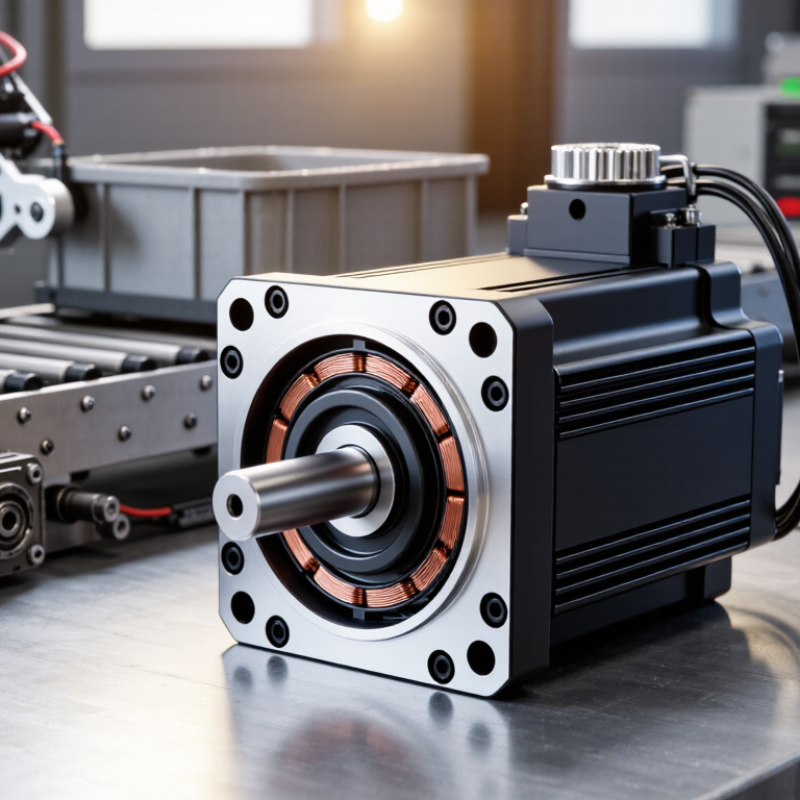
Identify the Application and Its Operating Requirements
Write down the load, motion, and environment before comparing motor ratings. A conveyor lifting a full bin needs different torque behavior from a joint that accelerates and reverses every second. Record the required speed, acceleration time, peak load, and hours of operation. Peak is not continuous. Estimate the torque needed during normal running, then check short bursts separately. Include friction, gear ratio, and reflected load inertia; these are easy to overlook. A neat spreadsheet can still miss a sticky bearing or a sudden jam.
Next, consider heat, power supply, and control limits at the installation site. A motor may deliver high torque briefly but overheat when asked to sustain it. Note ambient temperature, airflow, available voltage, and the controller’s current limit. The U.S. Department of Energy’s 2014 report, Improving Motor and Drive System Performance: A Sourcebook for Industry, estimates motor-driven systems use about 70% of U.S. manufacturing electricity. That figure makes system-level sizing important, not just motor selection. Compare the torque-speed curve with the actual duty cycle, and leave thermal margin for demanding conditions. Test the proposed setup under a representative load. Real loads are rarely as tidy as the first calculation.
Calculate the Required Torque, Speed, and Power
Begin with the driven load, not a motor catalogue. Measure the force at the point of contact and its distance from the shaft. Torque equals force multiplied by radius: 40 N at a 0.1 m arm requires 4 N·m. Then identify the required shaft speed under real operating conditions. A conveyor may need high starting torque but modest running speed. Do not size from stall torque; it is not a continuous operating rating.
Calculate mechanical power using P (W) = torque (N·m) × speed (rpm) × 2π ÷ 60. At 4 N·m and 600 rpm, the load needs about 251 W before losses. Add margin for acceleration, friction, gearbox losses, and the actual duty cycle. The U.S. Department of Energy’s 2014 United States Industrial Electric Motor Systems Market Opportunities Assessment estimates motor-driven systems use about 68% of U.S. manufacturing electricity. Right-sizing matters, but excess capacity can mean extra cost and heat.
Tips: Record peak and continuous torque separately. Check the motor’s torque-speed curve, controller current limit, and cooling conditions; a compact motor may overheat during repeated starts. A spreadsheet helps, but it can miss a sticky bearing or a sudden jam. Test the assembled mechanism at its heaviest load, then revisit the estimate if measured current or temperature differs from expectations.
How to Choose a High Torque Brushless DC Motor
Compare the required torque and mechanical output power at each operating speed. Select a motor that can deliver the peak required torque at the corresponding speed, with an appropriate design margin.
Calculation: Mechanical power (W) = torque (N·m) × speed (rpm) × 2π ÷ 60. The values shown are illustrative operating requirements.
Compare Motor Torque Curves and Performance Ratings
A high-torque brushless DC motor should be judged by its torque curve, not just its headline rating. The curve shows how torque changes as speed rises. At startup, a motor may deliver strong torque, then lose it as speed increases. That detail matters. Compare the curve with your machine’s real load, including startup, acceleration, and steady running.
Check whether ratings describe continuous or peak torque. Peak torque may last only briefly before heat builds in the windings. Continuous torque is more useful for loads that run for hours. Compare ratings at the same voltage, current limit, and cooling conditions; otherwise, the numbers can mislead. I’ve found that a motor can look ideal on paper but struggle when a load starts repeatedly. That is an easy detail to overlook.
Tips: Plot the load’s torque and speed needs beside the motor curve. Leave a practical margin for friction and sudden load changes. Check the duty cycle and operating temperature, too. A small mismatch may be acceptable, but don’t assume it will be.
Select the Controller and Verify Performance Under Load
A high-torque brushless DC motor needs a controller that can handle its real operating demands, not just its headline ratings. Match the controller’s voltage range to the motor and power supply. Check continuous current as well as peak current; a brief startup surge is different from sustained torque under load. Confirm that the controller supports the motor’s commutation method and any required position feedback. Small details matter. Wiring, cooling, and current limits can all affect performance.
Verify the setup with a gradual load test. Secure the motor and load, then record speed, current, and temperature at several operating points. A torque sensor gives useful data, but even a repeatable mechanical load can reveal speed droop or overheating. Watch for current climbing while speed falls. Then measure again. Compare results with the motor and controller specifications, and allow temperatures to stabilize before drawing conclusions. A short bench test can miss problems that appear after longer operation. It is easy to trust a clean specification sheet too much; real loads are rarely so tidy. If readings vary, check the test setup before blaming the motor.