Blogs | Great Lakes Kwik Space

Why Choose Steel Pipe for Your Project?

Choosing Steel Pipe is rarely just a matter of price. It means weighing pressure, temperature, corrosion exposure, installation conditions, and expected service life. A pipe that looks robust on a warehouse rack may still be wrong for a buried line or a high-pressure system. Details matter.

World Steel Association’s World Steel in Figures 2025 reports global crude steel production of 1,882.6 million tonnes in 2024. That figure shows the scale of steelmaking, not the quality or suitability of any particular pipe. For project decisions, specifications such as API 5L can help define requirements for line pipe, while engineers must still check grade, wall thickness, testing, and traceability against actual service conditions. A standard is a starting point, not a substitute for engineering review.

Steelmaking pioneer Henry Bessemer reflected, “I had an immense advantage over many others dealing with the problem of making steel, inasmuch as I had no fixed ideas derived from long-established practice to hamper me.” His words are not pipe-selection guidance, but they invite a useful question: are familiar assumptions driving the choice? Steel Pipe can offer strength, weldability, and practical availability. It can also require careful corrosion protection and maintenance planning. No material is perfect. A sound decision compares the project’s operating demands with documented product data, qualified technical advice, and realistic lifecycle costs.
Why Choose Steel Pipe for Your Project?

What Steel Pipe Is and How It Is Made

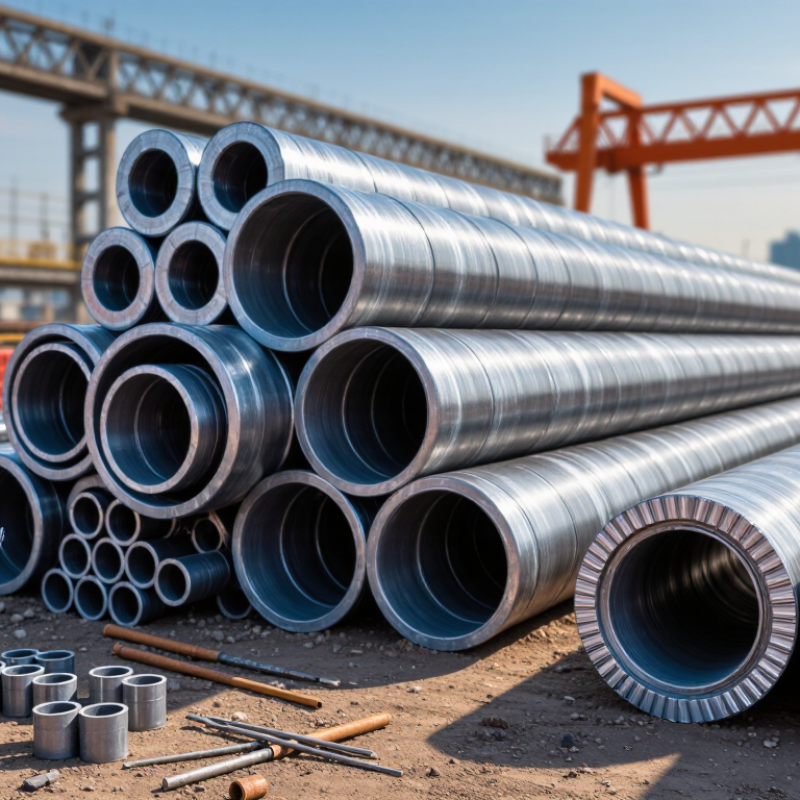
Steel pipe is a hollow steel product made to carry liquids or gases, or to support structures. Its inside diameter, wall thickness, and steel grade affect how it performs under pressure, load, and changing temperatures. That distinction matters. A pipe for a water line may have different requirements from one used in a building frame. The words “steel pipe” alone do not tell you whether a product suits a particular job; the drawings, operating conditions, and applicable specifications need review.

Manufacturers generally use one of two routes. For seamless pipe, a heated steel billet is pierced, then rolled and sized into a hollow shape. For welded pipe, a flat steel strip or plate is formed into a cylinder, and its edges are joined. The pipe may then be heat-treated, straightened, and checked for dimensions or defects. Inspection methods depend on the product and its specification. A visible seam is not, by itself, proof of poor quality, just as a seamless construction does not guarantee suitability. It is easy to focus on how a pipe is made and overlook how it will be installed. That deserves a second look.

Why Choose Steel Pipe for Your Project?

Steel pipe is a hollow steel product used to convey fluids and gases or provide structural support. It is commonly made either by forming and welding steel plate or strip, or by piercing and rolling a solid steel billet to produce seamless pipe.

Reading the chart: Nominal Pipe Size (NPS) is a designation, not a direct measurement of the pipe’s outside diameter. The outside diameters shown follow ASME B36.10M dimensions for steel pipe; the specified wall thickness affects the inside diameter.

Source: ASME B36.10M. Outside diameters are shown in millimeters.

Key Properties That Shape Steel Pipe Performance

Why Choose Steel Pipe for Your Project?

Key Properties That Shape Steel Pipe Performance

Steel pipe performance begins with the right balance of strength, wall thickness, and diameter. A pipe carrying water through a building faces different demands than one supporting a frame outdoors. Check the design pressure, expected loads, and operating temperature before choosing a specification. Small differences matter. A thicker wall can improve resistance to pressure, but it also adds weight and may complicate handling.

Corrosion resistance depends on the steel grade, surface condition, and surrounding environment. Moist soil, salt spray, and certain process fluids can shorten service life. Protective coatings or corrosion-resistant alloys may help, but they need to suit the actual exposure. A coating scratched during installation can leave a vulnerable spot. Inspecting cut ends and joints is easy to overlook.

Weldability and dimensional consistency also affect installation quality. Pipes with reliable dimensions are easier to align, especially when several sections meet in a tight mechanical room. For a real project, confirm applicable material standards and consult a qualified engineer when pressure or structural safety is involved. Steel is versatile, but it is not automatically the best choice. I would still question a specification that lists strength without explaining the environment or maintenance plan.

Common Project Applications for Steel Pipe

Steel pipe appears in projects where fluids, gases, or structural loads must move safely and predictably. In energy networks, it carries natural gas between production areas, storage sites, and communities. The U.S. Energy Information Administration describes a natural gas pipeline network spanning more than three million miles. That is substantial. Pipe selection still depends on pressure, temperature, corrosion exposure, and installation conditions.

Water and wastewater projects use steel pipe for transmission mains, treatment facilities, pump stations, and crossings where strength matters. The U.S. Environmental Protection Agency’s 2023 Drinking Water Infrastructure Needs Survey and Assessment estimated that the United States needs $625 billion in drinking-water infrastructure investment over 20 years. That figure covers many kinds of assets, not steel pipe alone, but it shows the scale of renewal work. At a site, a pipe’s coating, joint design, and access for inspection can matter as much as its diameter.

Steel pipe also serves industrial plants, heating systems, and building structures, including columns and piles. One detail is easy to miss: a strong pipe can still be a poor fit if its weight complicates handling or its protection does not suit the soil. Fit still matters. Project teams should compare design loads, service life, and maintenance needs before specifying a material.

How Steel Pipe Compares with Alternative Materials

Steel pipe is often chosen where loads, pressure, or impact matter. Its strength allows many designs to use a thinner wall than some alternatives, though sizing must match operating conditions. On a jobsite, that difference can mean fewer bulky supports and more room around valves. Small details count.

Compared with PVC, steel generally tolerates higher temperatures and mechanical knocks better. PVC is lighter and resists many forms of corrosion, so it can be easier to handle in suitable water or drainage systems. Steel is heavier, and moisture can cause rust if its surface protection is damaged or poorly maintained. That trade-off is easy to underestimate.

Copper is also corrosion-resistant in many settings, but it usually costs more and may not suit large structural loads. Aluminum weighs less than steel, yet its strength and connection behavior differ, so it is not a direct substitute in every design. Concrete pipe can work well for buried drainage, but it is heavy and difficult to modify on site. No material wins everywhere. Compare pressure, temperature, fluid compatibility, installation access, and maintenance needs before deciding. A specification that looks efficient on paper may prove awkward when workers need to fit a wrench beside a wall.

Why Choose Steel Pipe for Your Project? - How Steel Pipe Compares with Alternative Materials

Comparison Factor Steel Pipe Copper Pipe PVC Pipe HDPE Pipe Ductile Iron Pipe
Typical strengths High strength and stiffness; available in many grades and wall thicknesses. Well suited to many building water and heating systems; easy to form and join with established methods. Lightweight and resistant to many common corrosive substances; widely used for drainage and certain water services. Flexible and corrosion-resistant; useful for buried water and gas distribution where approved. Robust pipe commonly used in municipal water and wastewater networks.
Mechanical strength and rigidity Generally high; suitable for many structural, industrial, and pressure applications when correctly specified. Good for plumbing-scale systems, but typically less suitable than steel for heavily loaded structural pipework. Lower stiffness than metal; support, installation conditions, and pressure rating matter. Flexible rather than rigid; pressure capacity depends on pipe dimensions, material grade, and operating conditions. High strength for buried distribution service; design must account for soil and installation loads.
Corrosion and chemical resistance Carbon steel can corrode; coatings, linings, corrosion allowance, or stainless grades may be needed for the service environment. Corrosion behavior depends on water chemistry, flow, and installation conditions. Does not rust; chemical compatibility depends on the fluid, temperature, and pipe formulation. Does not rust; verify compatibility with the conveyed fluid and applicable standards. Often supplied with protective linings or external coatings; soil and water conditions affect protection requirements.
Temperature considerations Can serve a broad range of temperatures, depending on grade, joints, pressure, and design code. Common in hot- and cold-water building services; allowable conditions depend on the system and applicable code. Temperature limits are comparatively restrictive and reduce allowable pressure as temperature rises; check the product rating. Temperature affects pressure capacity and long-term performance; follow the pipe standard and manufacturer design data. Used in water networks within specified service conditions; joint, lining, and application limits should be checked.
Joining and installation May be welded, threaded, flanged, or mechanically coupled; method depends on grade, size, and service requirements. Common joining methods include soldering, brazing, and approved mechanical fittings. Typically joined with solvent cement or gasketed fittings, subject to the pipe system and local requirements. Often joined by heat fusion or approved mechanical fittings; qualified procedures and equipment may be required. Commonly uses gasketed push-on or mechanical joints; handling and trench preparation are important.
Weight and handling Heavier than plastic pipe; larger or thicker sections may require lifting equipment. Generally manageable in common plumbing sizes; handling needs increase with diameter and wall thickness. Lightweight and relatively easy to handle, though care is needed to avoid impact or installation damage. Lightweight and flexible; coils or long lengths can simplify some installations. Heavy compared with plastic pipe; lifting and alignment planning are often needed.
Common applications Industrial process lines, building services, structural applications, and pressure systems when the selected grade and design are suitable. Building plumbing, hot- and cold-water distribution, and some heating applications. Drainage, sewer, conduit, and selected pressure-water applications where approved. Water and gas distribution, service connections, and other applications permitted by relevant standards. Municipal water mains, wastewater networks, and related buried infrastructure.
Cost considerations Cost varies with grade, dimensions, coating, fabrication, and installation; evaluate total installed and lifecycle cost. Material cost can be sensitive to metal prices; labor and joining choices affect project cost. Often economical for suitable applications, but installation, temperature, and service limits must be considered. Material and installation costs depend on diameter, joining method, site conditions, and required approvals. Compare pipe, fittings, handling, trenching, and protective systems; project conditions influence total cost.
Best-fit decision Consider when strength, rigidity, fabrication options, or higher-temperature service are priorities and corrosion protection is addressed. Consider for building-scale water and heating systems where its cost and compatibility suit the project. Consider for compatible fluids and temperature ranges where lightweight, corrosion-resistant piping is beneficial. Consider where flexibility, fusion joining, and corrosion resistance suit the installation and service. Consider for buried municipal networks requiring a well-established water-main pipe system.

Note: Performance, pressure and temperature limits, code compliance, and cost vary by pipe grade, dimensions, joint system, fluid, and installation conditions. Confirm requirements against applicable standards and project specifications.

Factors to Consider When Specifying Steel Pipe

Why Choose Steel Pipe for Your Project?

Factors to Consider When Specifying Steel Pipe

Pipe selection starts with service conditions, not nominal diameter alone. Define the fluid, design pressure, temperature range, flow rate, and operating cycles. A warm-water line needs a different corrosion plan from an abrasive-slurry line. Small details matter.

Specify grade, outside diameter, wall thickness, and manufacturing route against the project’s design code. Confirm allowable stress, joint type, inspection level, and test requirements with qualified engineering review. The 2016 NACE IMPACT study estimated global corrosion costs at US$2.5 trillion annually, or about 3.4% of global GDP. It also estimated that established corrosion-control practices could save 15–35%. Coatings, linings, and corrosion allowance deserve careful consideration. Still, a global estimate cannot predict conditions at one facility.

Check installation realities: supports, thermal expansion, weld access, transport length, and future maintenance. Soil chemistry, chloride levels, and stagnant pockets can change material needs. Request traceable material certificates and test records, then compare them with the project specification. One specification gap is easy to miss: pressure and grade may be clearly stated, while water chemistry remains vague. That omission can become an expensive lesson.

Article Source:

Highly Trusted Local Portable Storage Solutions Since 1990

Rob was always very honest and upfront about everything and took the time to explain everything I needed. 

Nayla gamez awesome

“highly recommended. They provided us with a great storage container with ontime services.”

Carlos Montano

“Bought a used container, its perfect, no leaks and in good condition.”

Dudley Pankoke

“Good service and prompt delivery. A great option for temporary storage at a decent price.”

Joe Ward

Portable Storage FAQ

CLICK HERE

Storage Container News

CLICK HERE

Join our mailing list to get the latest storage container inventory and offers