Why Choose Chemical Heating Systems for Industrial Buyers?
Industrial buyers rarely choose a heating system based on nameplate output alone. They must match the heat source to process temperatures, duty cycles, site utilities, and maintenance capacity. Chemical Heating systems can provide controlled, repeatable heat for reactor jackets, storage tanks, heat exchangers, and production lines. A suitable design may reduce temperature swings and support consistent process control. It is not automatic.
Before comparing suppliers, buyers should define the operating conditions: temperature range, fluid compatibility, flow rate, pressure, ambient conditions, and start-up frequency. A system sized only for average demand may struggle during cold starts or peak production. Small details matter. Insulation condition, sensor placement, and pump selection can affect temperature stability and energy use. Ask suppliers for performance data, control-system details, material specifications, service requirements, and references from comparable installations. Have qualified engineers check site requirements and safety standards. That distinction can prevent costly redesigns after equipment arrives.
Purchase price tells only part of the story. Consider installation, energy consumption, potential downtime, spare parts, and expected service life over the system’s ownership period. Heating fluids may require monitoring and scheduled replacement; intervals depend on fluid chemistry and operating conditions. There are trade-offs. A sophisticated package may improve control but add components to maintain, while a simpler option may not meet tight process tolerances. The right choice depends on verified process data, not broad promises. Record uncertainties, then test assumptions through technical discussions, an engineering assessment, or, where practical, a controlled trial. Even careful planning can miss something. That is worth acknowledging before committing.
What Chemical Heating Systems Are and How They Work
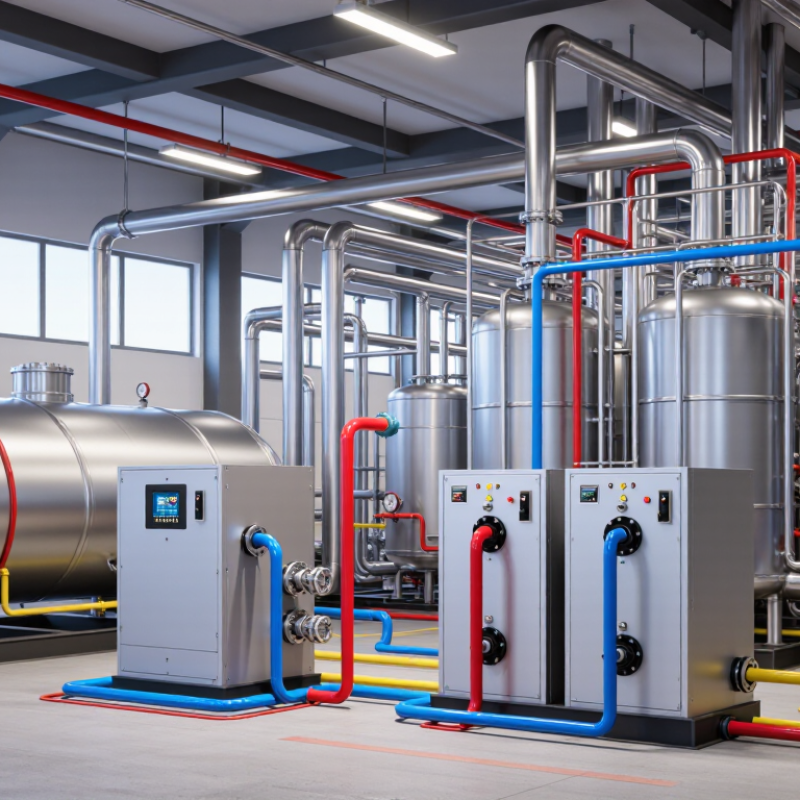
Chemical heating systems transfer controlled heat to process materials, tanks, pipes, or reactors. They may use steam, hot water, thermal oil, or electric elements. In an indirect system, a heating medium circulates through a jacket or coil, passing heat through a metal surface without mixing with the product. Sensors and control valves adjust flow or power as temperatures change. Simple in principle. Less simple in operation.
The International Energy Agency’s Tracking Clean Energy Progress 2023 reports that industry accounted for about 37% of global energy use in 2022. That figure covers industry broadly, not chemical heating alone, but it shows why process heat matters to industrial buyers. A poorly matched system can waste energy or create uneven temperatures. For example, a vessel wall may become hot while a thick product near its center remains cool. Heat-transfer area, fluid properties, insulation, and mixing all affect performance.
Buyers should check the required temperature range, heating rate, process material, and temperature uniformity before selecting equipment. The U.S. Department of Energy’s Process Heating Assessment and Survey Tool also emphasizes evaluating process conditions and energy use together. Real plants rarely behave exactly like a design calculation. Fouling, changing production loads, and sensor placement can complicate control, so operating data deserves a close look.
Why Choose Chemical Heating Systems for Industrial Buyers? - What Chemical Heating Systems Are and How They Work
Overview of common industrial heating systems used in chemical processing | System Type | Heat Transfer Medium | How It Works | Common Applications | Potential Advantages | Important Design Considerations |
| Steam heating | Steam, usually supplied by a boiler or central steam network | Steam transfers heat as it condenses in a jacket, coil, or heat exchanger. Condensate is collected and returned or drained. | Vessel and tank heating, reboilers, process heat exchangers, and utility services | Can deliver heat efficiently through condensation; may integrate with an existing steam utility system. | Requires suitable pressure-rated equipment, condensate management, and control of water hammer and corrosion risks. |
| Thermal-fluid heating | A circulating heat-transfer fluid, commonly a formulated thermal oil | A heater warms the fluid, which is pumped through jackets, coils, or exchangers to transfer heat to the process. | Reactors, batch-process vessels, dryers, and processes needing indirect heating | Provides circulating heat without requiring the process equipment to use steam as its heating medium. | Fluid selection must match the operating conditions; systems need expansion management, leak prevention, and regular fluid monitoring. |
| Electric process heating | Electrical energy converted to heat by resistance elements or other electric heating components | Heating elements transfer heat directly to a process fluid or indirectly through a vessel, pipe, or heat-transfer medium. | Small and modular process units, circulation heaters, heat tracing, and locations without a convenient fuel supply | Allows responsive control and avoids on-site combustion emissions at the point of use. | Check electrical supply capacity, element compatibility, temperature limits, and hazardous-area requirements. |
| Direct-fired heating | Combustion gases from a fuel-fired burner | A burner releases heat that is transferred to process equipment or a process stream, directly or through a heating surface. | Fired process heaters and applications where a process stream is heated in purpose-designed equipment | Can provide high heat input where fuel and appropriately designed fired equipment are available. | Requires combustion safeguards, emissions management, fire protection, and careful assessment of process-fluid and equipment hazards. |
Selection depends on required process temperature, heat duty, control needs, available utilities, fluid compatibility, safety requirements, and applicable codes. Actual system performance and operating limits depend on equipment design and operating conditions.
Key Components and Common Heat Transfer Methods
A chemical heating system is more than a heater. The heat source may be a fired unit or an electric element, but the circulation loop controls how energy reaches the process. Typical components include a heater, pump, expansion tank, insulated piping, valves, sensors, and a control panel. Each has a practical job. A sticking valve can leave one vessel cooler than the rest.
Many plants use a closed loop of thermal fluid. The pump moves heated fluid through jackets or internal coils, transferring heat across a metal wall without mixing with the product. This indirect method suits batches that need steady temperatures. A shell-and-tube or plate heat exchanger can also transfer heat between separate circuits. Flow rate and surface area matter; a powerful heater cannot compensate for poor circulation.
Steam is another common medium. It may condense in a jacket or exchanger, releasing heat efficiently; direct injection is appropriate only when adding water is acceptable. Electric immersion heating can serve smaller or localized duties, though element placement and fouling need attention. Controls should track fluid temperature, pressure, and flow, with alarms for abnormal readings. Instrumentation is not perfect. Sensor drift happens. Maintenance records help operators catch it before product temperatures wander.
Industrial Applications and Operating Requirements
Industrial heating requirements vary with the material, production rate, and operating environment. A chemical processing line may need stable temperatures during long shifts, while a batch vessel may require quick, controlled heat-up. Buyers should check the fluid’s properties, target temperature, heat demand, and expected operating hours. These details influence equipment choice and help avoid uneven heating or unnecessary energy use.
Tips: Record start-up times, temperature swings, and downtime from existing equipment. Small details matter. Confirm that sensors, controls, insulation, and maintenance access suit the actual site. A tidy specification can still miss a difficult pipe run.
Before purchase, review heat transfer, control accuracy, and safety provisions with qualified engineering staff. Ask how the system responds to changing loads, and what routine inspection involves. Consider available utilities and the consequences of a planned shutdown. An early capacity estimate may need revision once real production data is available. That is not a failure; it is a useful check. Clear operating records make comparisons more reliable and support decisions grounded in site conditions.
Benefits and Trade-Offs for Industrial Buyers
Chemical heating systems can give industrial buyers steady, controllable heat for reactors, tanks, and process lines. Indirect heating helps limit direct contact between a heat source and sensitive materials. That can matter when product quality shifts with small temperature changes. In practice, operators need reliable sensors, clear alarm limits, and access to critical components. A stable setpoint is useful; it is not a substitute for good process design.
The trade-offs start with installation and operating costs. Pumps, heat exchangers, insulation, and control equipment all affect the purchase price and energy use. The right heat-transfer fluid depends on operating temperature, material compatibility, and the consequences of a leak. Check these details with qualified process and maintenance staff. A fluid that performs well on paper may create extra work during draining or changeover. Small details matter.
Buyers should compare expected duty cycles, warm-up times, cleaning needs, and maintenance intervals—not just rated capacity. Ask how the system behaves during startup, low-flow conditions, and a sensor fault. Those questions expose gaps early. Specifications can still miss real operating habits; night shifts may adjust controls differently, for example. Pilot data or a site review can help, though neither guarantees trouble-free operation. Consider who will inspect seals, monitor fluid condition, and respond to alarms before finalizing the design.
Why Choose Chemical Heating Systems? Benefits and Trade-Offs for Industrial Buyers
Compare common industrial heat-transfer options by indicative upper operating temperature. Higher-temperature capability can support demanding processes, but system pressure, fluid compatibility, safety requirements, and total lifecycle cost also matter.
Indicative ranges vary by system design and heat-transfer fluid. Pressurized hot water: approximately 120–200°C; saturated steam: approximately 100–300°C, depending on pressure; thermal oil: approximately 150–400°C, depending on fluid and equipment limits. These are general engineering ranges, not guaranteed ratings.
Buyer takeaway: Thermal-oil systems can deliver high temperatures at relatively low system pressure, but require careful fluid management and monitoring. Steam can provide efficient heat transfer and is widely used, while pressure-rated hot-water systems can suit lower-temperature processes. Evaluate installation cost, operating efficiency, maintenance, and process needs before selecting a system.
How to Select, Install, and Maintain a Chemical Heating System
Why Choose Chemical Heating Systems for Industrial Buyers?
How to Select, Install, and Maintain a Chemical Heating System
Choosing a chemical heating system starts with the process fluid, not a catalogue rating. Document its composition, concentration, viscosity at startup, target temperature, and compatibility with wetted materials. Then calculate the required heat duty, including startup load and heat loss through pipes and vessels. The U.S. Department of Energy’s process-heating guidance attributes about 17% of U.S. industrial energy use to process heating, making efficiency and operating conditions worth careful review. A neat spreadsheet can still miss changing production loads.
During installation, provide adequate circulation, expansion capacity, insulation, temperature controls, and accessible isolation points. Confirm sensor placement against the actual process, not just a convenient pipe location. Commission gradually: check flow, pressure, temperature response, alarms, and leaks under realistic operating conditions. Even a well-sized unit can underperform. That assumption deserves a second look.
Maintenance should follow the fluid and duty cycle. Inspect seals, connections, filters, and insulation; trend inlet and outlet temperatures; and investigate unexplained changes in pressure or warm-up time. Sample the heat-transfer fluid at intervals suited to operating conditions, and record any top-ups or contamination. The International Energy Agency’s Tracking Industry 2023 report estimates industry uses roughly 37% of global energy, underscoring the value of reliable thermal operation. Keep clear service records, but revisit the maintenance interval when the process changes.