A well-chosen entryway cabinet can make a small daily routine feel calmer: shoes tucked away, keys within reach, and the front door clear. The Vintage Shoe Cabinet brings warmth through details such as turned legs, aged brass pulls, and softly distressed wood. Yet vintage style should not mean guessing. Measure the wall, door swing, and tallest pair of shoes before choosing a cabinet. A lovely piece can still block the hallway.
The market offers plenty of choice. Grand View Research estimated the global furniture market at USD 766.2 billion in 2024 and projected 5.4% annual growth from 2025 to 2030. That broad figure does not measure shoe cabinets specifically, but it shows how large the furniture category has become. In this guide, we compare cabinet styles through practical details: footprint, shelf layout, ventilation, materials, and everyday access. Small entryway? Look for slim depth and doors that open cleanly. A busy household may need adjustable shelves and a wipeable interior. Not every “vintage” finish feels authentic, either; some surfaces look overly distressed under bright light. That matters. Our recommendations balance character with usable storage, while recognizing that room dimensions and shoe habits differ. A little imperfection is part of the appeal. It should not become a daily inconvenience.
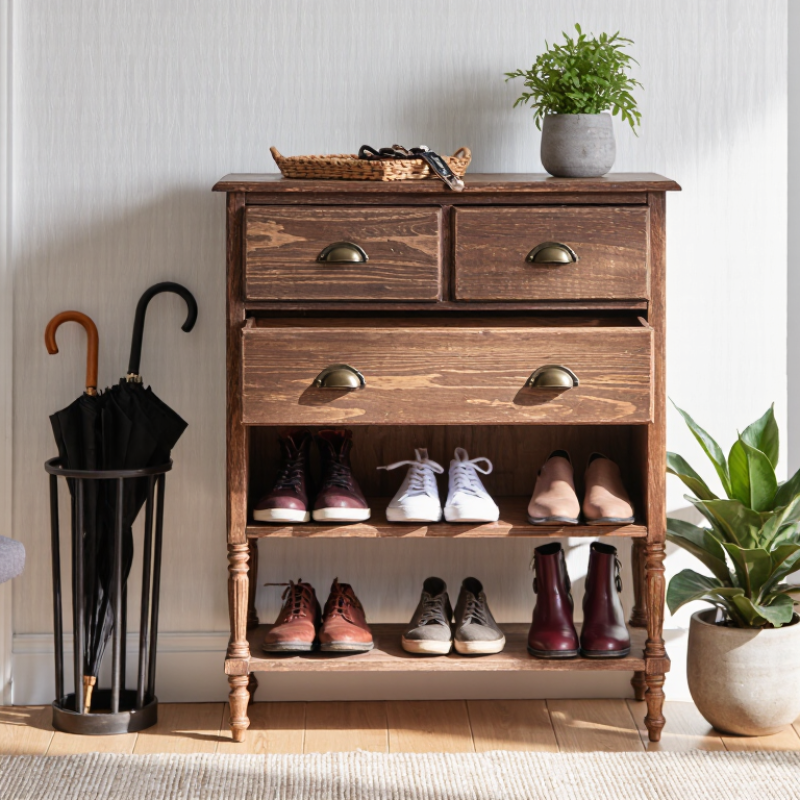
In 2026, “vintage” describes more than an old-looking finish. A convincing vintage shoe cabinet usually has clear design cues, such as tapered legs, framed doors, aged brass pulls, or warm-toned wood. The details should feel consistent rather than pasted on. A distressed surface can add character, but heavy artificial wear may look less convincing up close.
Age and construction matter, too. A genuinely older cabinet may show small variations in its finish, joinery, or hardware. Those marks can tell a story. They can also signal damage, so check hinges, drawer movement, and the cabinet’s stability before buying. A vintage-inspired piece is different: it borrows older shapes while offering newer materials or storage features. Neither category is automatically better; the right choice depends on your space and upkeep preferences.
For everyday use, measure the entryway and the shoes you plan to store. Low shelves may suit flats, while boots need more clearance. Look for a sturdy top, a door that opens without blocking the walkway, and some airflow to reduce trapped odors. Small details count. A cabinet can be beautiful and still awkward. And honestly, a little wear may be welcome, but not if a loose leg makes the whole piece wobble.
Rob was always very honest and upfront about everything and took the time to explain everything I needed.

“highly recommended. They provided us with a great storage container with ontime services.”
“Bought a used container, its perfect, no leaks and in good condition.”
“Good service and prompt delivery. A great option for temporary storage at a decent price.”