Blogs | Great Lakes Kwik Space

What Are the Best Types of Carbon Steel in 2026?

Choosing the best Carbon Steel in 2026 starts with the job, not the label. A low-carbon grade can bend and weld readily, while a higher-carbon grade can offer greater hardness after suitable heat treatment. Medium-carbon steels often balance strength and toughness. There is no universal winner. That sounds simple. In practice, small changes in chemistry, processing, and section thickness can alter performance. A grade that works well for a bracket may disappoint in a cutting edge or rotating shaft.

Metallurgist George Krauss’s work on steel processing and performance supports a practical selection principle, paraphrased here: choose steel by its composition, processing, and service demands—not by its grade name alone. This is not a direct quotation. The distinction matters. This guide compares common carbon-steel families, their typical strengths, and their trade-offs in applications such as structural parts, shafts, tools, and formed sheet. It also considers machinability, weldability, wear resistance, and heat-treatment needs. Real-world choices depend on the specified standard and supplier documentation, so verify both before purchasing. A familiar grade is not automatically the right one. The best choice is the one that meets the required performance reliably, without adding properties or processing the application does not need.
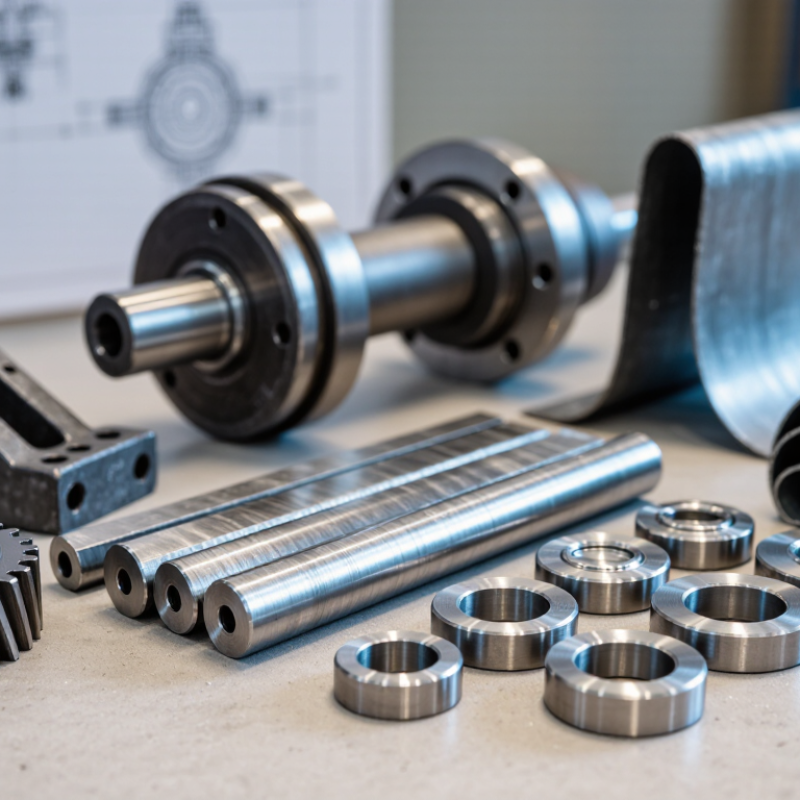
What Are the Best Types of Carbon Steel in 2026?

How Carbon Steel Is Classified by Carbon Content and Composition

Carbon steel is classified mainly by carbon percentage, but its chemistry includes more than carbon. Common engineering references describe low-carbon steel as below about 0.25% carbon, medium-carbon steel as roughly 0.25–0.60%, and high-carbon steel as above about 0.60%. These boundaries vary between standards and suppliers, so a grade certificate is more reliable than a broad label. Small shifts matter. They can change hardness, ductility, and how readily a part can be welded or heat-treated.

Low-carbon grades usually bend and form well, making them practical for sheet, tube, and structural sections. Medium-carbon grades balance strength and toughness; shafts and axles are typical examples after suitable processing. High-carbon grades can reach greater hardness, which suits wear-resistant tools, but they generally sacrifice ductility and require careful heat treatment. There is no single “best” type without a defined load, shape, and service environment.

Composition also matters beyond the carbon number. Manganese can support strength and hardenability, while silicon is commonly present as a deoxidizer; allowable amounts depend on the specification. ASTM A29/A29M provides requirements for hot-wrought carbon and alloy steel bars, illustrating why grade-specific limits matter. For industry context, World Steel Association’s World Steel in Figures 2025 reports 1,882.6 million tonnes of crude steel production in 2024; that scale makes consistent grade identification important across supply chains, though the figure does not describe carbon-steel shares. A useful habit is to check the stated chemistry and intended condition—not just the category name.

What Distinguishes Low-, Medium-, and High-Carbon Steel

Carbon content is the main distinction between low-, medium-, and high-carbon steel. Common guides place low-carbon steel below about 0.25% carbon, medium-carbon steel around 0.25–0.60%, and high-carbon steel above that. Exact boundaries vary by standard and application. These labels are useful, but blunt tools.

Low-carbon steel is generally easier to form, weld, and machine. It suits car body panels, wire, and many structural parts.

Medium-carbon steel offers a stronger balance of strength and ductility. Shafts, axles, and gears often use it, especially when heat-treated. Small changes in processing can alter performance.

High-carbon steel can become very hard and wear-resistant after suitable heat treatment. That makes it useful for springs, cutting edges, and tools. It may also be less ductile and more challenging to weld. Hardness is not automatic; alloy content, section thickness, and cooling conditions matter. A thick part may not behave like a thin sample.

Carbon percentage alone cannot identify the best grade. Check the material specification and intended service conditions before choosing. That detail matters.

Which Carbon Steel Grades Suit Common Industrial Applications

For structural frames, base plates, and brackets, ASTM A36 is a practical low-carbon choice when welding and forming matter more than high strength. AISI 1018 suits pins and lightly loaded machined parts; its low carbon content supports machining, but it is not ideal where wear resistance is critical. Fit matters. For shafts and gears, AISI 1045 offers more strength and responds to heat treatment, though welding requires greater care.

Pressure vessels need a different balance. ASTM A516 Grade 70 is specified for pressure-vessel plate, with strength and toughness requirements that suit boilers and storage vessels. Check the applicable ASTM edition, plate thickness, and service temperature before specifying it. Grade names alone can mislead. A mill test certificate helps verify chemistry and mechanical properties for the actual batch.

World Steel Association’s Steel Statistical Yearbook 2024 reports roughly 1.89 billion tonnes of crude steel production in 2023. That figure shows the material’s industrial scale, not which grade fits a particular component. For selection, compare load, thickness, joining method, temperature, and corrosion exposure against the relevant product standard. I would also question a habit of choosing the strongest grade by default: extra strength may add cost and fabrication difficulty without improving the finished part.

How Carbon Steel Types Compare in Strength, Hardness, and Workability

Carbon steel selection is a trade-off: strength and hardness often rise with carbon, while forming and welding become less forgiving. ASTM A36/A36M specifies a 250 MPa minimum yield strength and 400–550 MPa tensile strength for qualifying thicknesses. That suits welded frames, brackets, and base plates that need practical forming. It is not a wear champion.

SAE J403 composition limits list 1045 at 0.43–0.50% carbon and 1095 at 0.90–1.03%. The ASM Handbook, Volume 4A, explains how heat treatment can raise hardness in higher-carbon steels. 1045 often balances strength and machinability in shafts and pins. Properly hardened 1095 can resist wear better. Harder, but less forgiving. A bent bracket and a polished pin do not ask the same thing of steel. Neither chemistry nor a catalog hardness guarantees a finished part’s behavior. Section thickness, prior processing, and the delivered heat-treatment condition matter; compare mill test certificates and specify the required condition. That extra checking can feel fussy.

Carbon Steel Types Compared: Strength, Hardness & Workability

Representative values vary with processing and heat treatment. The examples shown are AISI 1018 cold-drawn, 1045 normalized, and 1095 annealed. Workability here is represented by relative machinability, with free-machining steel B1112 set to 100; it does not measure weldability or formability. Choose a grade based on the required properties and fabrication process.

How to Select the Right Carbon Steel for a Specific Use

What Are the Best Types of Carbon Steel in 2026?
How to Select the Right Carbon Steel for a Specific Use

Choose carbon steel by matching its properties to the job, not by chasing the highest strength. Low-carbon steel is generally easier to form and weld, making it useful for brackets, sheet parts, and frames. Medium-carbon grades can offer greater strength after suitable heat treatment, while high-carbon grades can provide hardness and wear resistance. The trade-off? They may be less forgiving to weld or machine. These carbon ranges are broad guides; the relevant standard and product specification matter.

World Steel Association’s World Steel in Figures 2024 reports 1,892.2 million tonnes of crude steel production worldwide in 2023. That scale reflects a diverse industry, not one universal grade. Check the grade certificate, thickness, required strength, forming method, and service environment. For a welded outdoor frame, weldability and corrosion protection may matter more than maximum hardness. A common mistake is selecting by carbon percentage alone. It’s not enough.

Tips: Write down the load, wear, and joining needs before comparing grades. Ask the supplier to confirm the applicable specification and condition. Test a sample when forming or heat treatment is critical; calculations and datasheets can miss shop-floor details. Sometimes the first choice needs revisiting.

What Are the Best Types of Carbon Steel in 2026? — How to Select the Right Carbon Steel for a Specific Use

Steel type or grade Typical carbon content Key characteristics Weldability and formability Suitable applications Selection guidance
Low-carbon steel Generally below 0.25% C Relatively soft, ductile, and easy to form; usually has limited through-hardening response. Generally good weldability and formability. Welding procedures still depend on thickness, chemistry, and service requirements. Sheet metal, formed panels, general fabrication, tubing, and structural components. Choose when ease of forming, machining, or welding matters more than high hardness or strength.
ASTM A36 Carbon content is limited by product specification and thickness; commonly associated with low-carbon structural steel. General-purpose structural steel with a specified minimum yield strength of 36 ksi (250 MPa) for common product forms and thicknesses. Commonly welded and fabricated using suitable procedures. Building frames, plates, brackets, base plates, and general structural fabrication. Choose for common structural work where the applicable specification, dimensions, and design requirements are met.
AISI/SAE 1018 About 0.15–0.20% C Low-carbon steel often supplied as cold-drawn bar; offers a smooth finish and good machinability for many general-purpose parts. Generally weldable and formable; cold-drawn condition can affect forming behavior and properties. Shafts, pins, studs, spacers, and machined components that do not require high through-hardness. Choose for general machining and moderate-strength parts; consider a different grade if high wear resistance is needed.
AISI/SAE 1020 About 0.18–0.23% C Low-carbon steel with good ductility and a modest response to surface hardening, depending on process and section size. Generally good weldability and formability. Welded assemblies, lightly loaded machine parts, and components that may be carburized. Choose when a weldable core and the option of a harder carburized surface are useful.
Medium-carbon steel Generally 0.25–0.60% C Offers greater strength and hardness potential than low-carbon steel; heat treatment can significantly change its properties. Weldability and formability are generally lower than for low-carbon grades; preheat and controlled procedures may be needed. Machine parts, axles, gears, and components requiring a balance of strength and toughness. Choose when higher strength or heat-treatable properties are needed and fabrication requirements can be managed.
AISI/SAE 1045 About 0.43–0.50% C Medium-carbon steel that can be hardened and tempered; achievable properties depend on section size and heat-treatment practice. Welding is more demanding than with low-carbon steel and may require qualified procedures and preheat. Shafts, pins, gears, studs, and general-purpose parts requiring greater strength or wear resistance than 1018. Choose for heat-treated machine parts; verify hardenability and properties through the full section before specifying.
High-carbon steel Generally above 0.60% C, commonly up to about 1.0% in plain-carbon grades Can achieve high hardness and wear resistance after suitable heat treatment, but is less ductile and more sensitive to cracking. Usually more difficult to weld and form than low- and medium-carbon steels. Springs, blades, high-wear parts, and other components where hardness is important. Choose only when the required hardness or wear resistance justifies reduced ductility and more demanding processing.
AISI/SAE 1060 About 0.55–0.65% C High-carbon steel with heat-treatable hardness and strength; toughness depends on heat treatment and design. Limited weldability compared with low-carbon steel; welding needs careful procedure control. Springs, blades, and wear-resistant parts made to suitable design and heat-treatment requirements. Choose when a high-hardness heat-treated part is needed; assess fatigue, impact, and cracking risks.
AISI/SAE 1095 About 0.90–1.03% C Very high carbon content for a plain-carbon grade; can achieve high hardness but may have lower toughness and greater brittleness. Generally poor candidate for routine welding; forming and heat treatment require careful control. Cutting edges, blades, and wear parts where high hardness is prioritized. Choose for specialized hard, wear-resistant parts—not for general structural use or impact-loaded components without validation.

Selection note: Carbon-content ranges are broad classification guides, while listed grade ranges are typical specification limits and may vary by standard, product form, and revision. Confirm the governing material specification, required strength and toughness, section size, heat treatment, corrosion protection, and welding procedure before purchase or design approval.

Highly Trusted Local Portable Storage Solutions Since 1990

Rob was always very honest and upfront about everything and took the time to explain everything I needed. 

Nayla gamez awesome

“highly recommended. They provided us with a great storage container with ontime services.”

Carlos Montano

“Bought a used container, its perfect, no leaks and in good condition.”

Dudley Pankoke

“Good service and prompt delivery. A great option for temporary storage at a decent price.”

Joe Ward

Portable Storage FAQ

CLICK HERE

Storage Container News

CLICK HERE

Join our mailing list to get the latest storage container inventory and offers