What Is the Best Meat Processing Equipment in 2026?
In 2026, choosing the best Meat Processing Equipment means matching each machine to the work, not chasing the newest model. A compact butcher shop may need a dependable grinder, mixer, and slicer. A larger plant may prioritize automated portioning, vacuum stuffing, and packaging. The right choice depends on product type, daily volume, available floor space, and the skills of the people operating the line. Small details matter. A smooth weld, accessible controls, and removable parts can make cleaning and routine maintenance easier.
There is no perfect machine. A high-capacity model may waste space or exceed a smaller team’s needs. A lower-cost option can become frustrating if parts are hard to replace or service is slow. Compare equipment specifications carefully, including output, construction materials, cleaning requirements, and warranty support. Ask suppliers for demonstrations, and, where possible, test the machine with the ingredients and cuts you actually process. Real conditions can reveal problems a brochure misses. Safety features and clear operating instructions also deserve close attention. This guide explores practical equipment choices for different processing needs, explains the trade-offs behind popular machines, and offers questions to ask before buying. Recommendations should be checked against your own workflow; equipment that suits one facility may not suit yours. It is easy to overlook that.
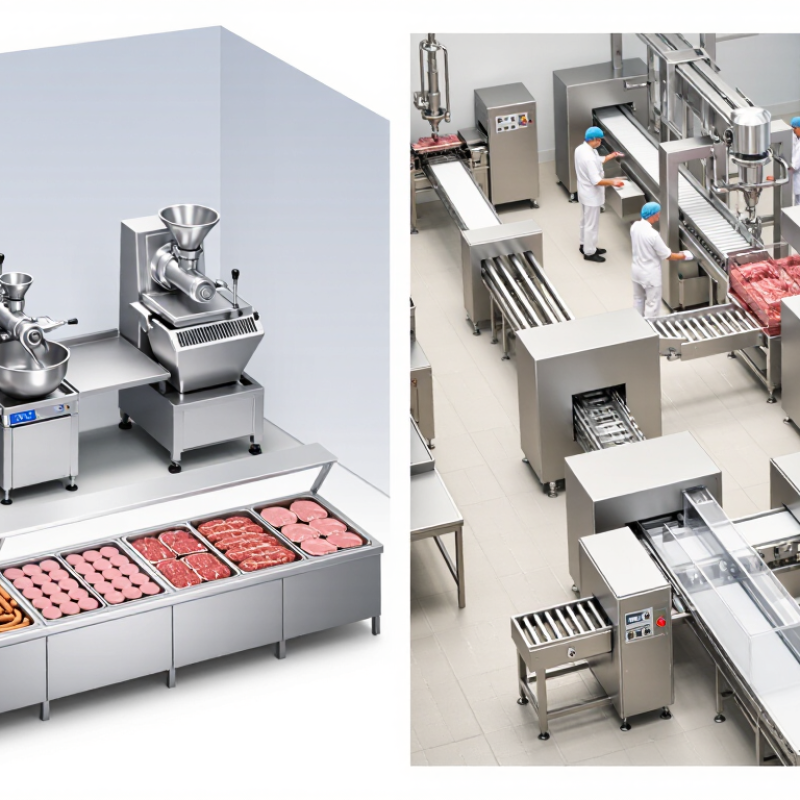
What Meat Processing Equipment Does and How It Is Used
Meat processing equipment turns whole cuts into portions, mince, sausages, or packaged products. The right setup depends on volume, product type, available space, and cleaning capacity. A receiving scale records incoming weights, while sharp knives and sturdy cutting tables support trimming and portioning. Small details matter: a stable table reduces slipping, and a calibrated thermometer helps staff verify product temperatures.
A grinder reduces trimmed meat to a chosen texture; plate size affects the result. Mixers distribute salt, seasonings, and other ingredients evenly through the batch. For sausages, a stuffer moves the mixture into casings with less air trapped inside. Slicers create consistent portions, but operators need training and careful cleaning around blades. No machine replaces sound judgment.
After processing, vacuum sealers remove much of the air from suitable packages, and chillers help keep products cold. Equipment should be sized for the actual workflow, not just its advertised output. A powerful grinder can become a bottleneck if the mixer or packing station is too small. Real rooms are rarely textbook-perfect. Measure doorways, drainage, electrical capacity, and cleaning access before choosing machinery. Follow manufacturer instructions, maintain sanitation procedures, and keep service records. Even an efficient line needs pauses for inspection and cleaning.
Which Equipment Is Needed at Each Processing Stage
What Is the Best Meat Processing Equipment in 2026?
Equipment needs depend on the product, production volume, and layout. At receiving, use sturdy scales, temperature probes, and refrigerated storage to check and hold incoming meat. A calibrated probe gives useful readings; guessing from surface temperature does not. Keep product moving through chilled areas to limit unnecessary warming. Cold matters. For cutting and portioning, worktables, knives, band saws, and portion cutters support different tasks. Choose equipment that fits the cut size and can be cleaned thoroughly. Sharp blades matter.
Grinding and mixing usually follow cutting. Grinders need plates suited to the target texture, while mixers help distribute seasonings evenly. Batch size matters: an overloaded mixer can leave uneven pockets. Small details count. Sausage lines may add a stuffer and linking equipment; cooked products may need ovens, smokehouses, and controlled chilling equipment. Packaging stations use scales, sealers, and label printers, with inspection tools selected for the product and process. Sanitation equipment is essential throughout, including accessible washdown areas and removable parts. Still, no line is perfect. Operators should check temperatures, equipment condition, and cleaning results regularly, then adjust the workflow when bottlenecks appear.
How to Compare Meat Processing Equipment in 2026
How to Compare Meat Processing Equipment in 2026
The best equipment depends on the product, daily volume, and available floor space. Compare machines against your actual work, not just their listed capacity. A grinder handling 500 pounds per hour may sound suitable, but uneven feeding or frequent pauses can slow a real shift. Ask for a demonstration using a similar cut and batch size. Watch how easily operators load, adjust, and clear the machine.
Check construction, safety features, cleaning access, and temperature control. Look for removable parts that can be cleaned without awkward reaching, and inspect seams where residue could collect. Confirm what routine maintenance involves, how quickly replacement parts can be obtained, and whether local technicians are available. Measure doorways and work zones, too. A spreadsheet helps, but it can make a clumsy machine look better than it feels at 6 a.m. I’d give operator feedback more weight than I once did.
Tips: Bring a sample product and a simple checklist to equipment demonstrations. Record setup time, noise, product consistency, and cleanup time. Small details matter. Compare total operating costs, not only the purchase price. If a feature seems useful but nobody can explain how it improves your workflow, pause and ask for evidence.
What Is the Best Meat Processing Equipment in 2026? How to Compare Meat Processing Equipment
When comparing cooking and thermal-processing equipment, check that it can reliably reach the required internal temperature throughout the product. USDA guidance specifies 145°F for whole cuts of beef, pork, lamb, and veal, followed by a 3-minute rest; 160°F for ground meats; and 165°F for poultry. Also compare capacity, temperature uniformity, cleanability, and monitoring controls.
Key Safety, Hygiene, and Efficiency Features to Assess
What Is the Best Meat Processing Equipment in 2026?
The best choice is not simply the fastest machine. Assess how its safety, hygiene, and efficiency features hold up during a real production shift. Look for fixed guards around blades and moving parts, accessible emergency stops, and interlocks that prevent operation when covers are open. Controls should remain easy to use with gloves, without encouraging staff to bypass safeguards.
For hygiene, inspect every food-contact surface and ask how quickly the machine can be cleaned and checked. Smooth, corrosion-resistant surfaces and removable parts can make cleaning easier, but seams and tight corners may still collect residue. A polished specification sheet is not enough. Ask for cleaning instructions, maintenance access, and clear guidance on reassembly. Requirements vary by facility, so confirm that the equipment fits your food-safety procedures.
Tips: Watch a full cleaning and changeover, not just a brief demonstration. Check whether one person can safely remove and reinstall parts. Compare rated output with your actual batch sizes; excess capacity may add cost without improving the workflow. Also ask about routine wear parts and service intervals. Small delays matter. And no checklist catches everything—review the machine with the people who will operate and clean it.