Choosing the right 3d Print Filament can turn a promising design into a dependable, useful object. The best choice depends on more than color or price. Printer compatibility, nozzle temperature, bed adhesion, flexibility, strength, and moisture sensitivity all affect the final result. A spool that prints smoothly on one machine may need different settings on another.
PLA is often an accessible option for decorative models and everyday prototypes. PETG can offer a useful balance of strength and impact resistance, while ABS may suit parts that need greater heat tolerance. Flexible TPU works for prints that bend, such as protective feet or soft grips. Specialty materials add other possibilities, but they can demand more careful setup. Small details matter. A damp spool, a drafty room, or a poorly leveled bed can spoil an otherwise sensible choice. No filament is perfect.
This guide compares ten popular materials by practical features, common uses, and printing considerations. It also highlights trade-offs, because a material’s advertised strength does not guarantee a successful part. Check your printer’s specifications and the filament maker’s recommended settings before printing. For materials that require higher temperatures or produce noticeable fumes, follow manufacturer guidance and use suitable ventilation. Keep filament dry and store it according to its packaging. A dry spool helps. You may still need to adjust temperature, speed, or cooling for your own machine. Treat each recommendation as a starting point, not a promise.
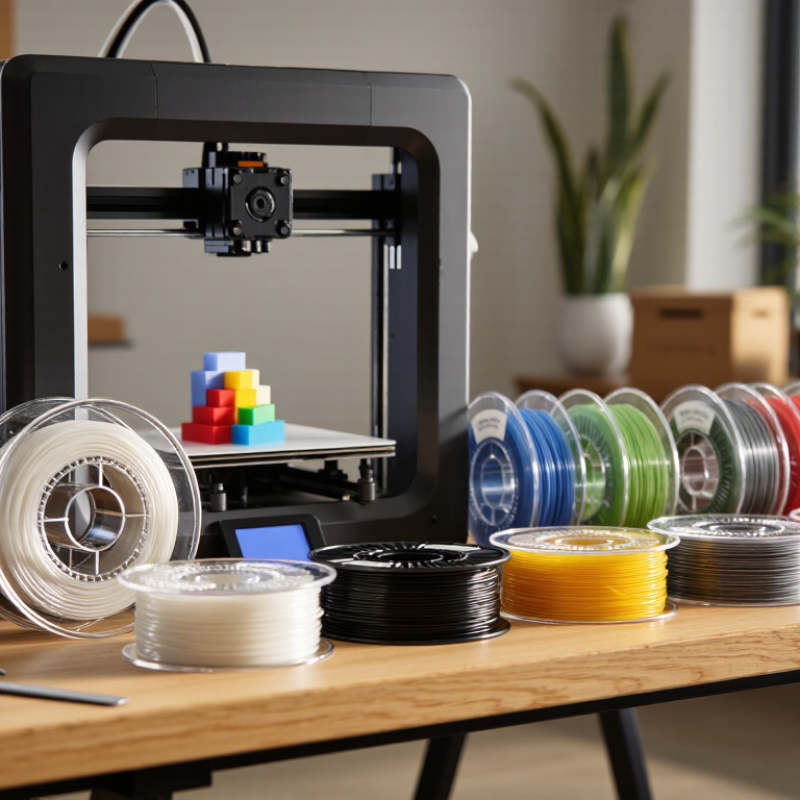
Choosing a filament starts with the part’s job, not its color. PLA is easy to print and holds crisp detail, making it useful for models, organizers, and display pieces. It can soften in a hot car, though, so it is a poor choice for parts exposed to heat. PETG handles moisture and everyday knocks better in many applications, but strings can form around small features if settings are not tuned. A short test print helps reveal that.
ABS tolerates higher temperatures than PLA, but it can warp and needs controlled printing conditions and good ventilation. TPU is flexible; think phone-case-like give rather than a rigid snap-fit. Nylon can make tough, wear-resistant parts, yet it absorbs moisture from the air and may print inconsistently when damp. Dry storage matters. Small details matter.
Some filaments contain fibers or other additives to change their appearance or stiffness. They may also wear a standard nozzle faster, so check equipment compatibility before printing. I find material charts too tidy: real results depend on the printer, part shape, and settings. A simple cube may look fine while a thin clip fails under bending. Match the material to the load, temperature, and finish you need, then test the weakest feature.
Choosing a filament starts with the part’s job, not its color. A desk organizer may need clean edges and easy printing, while a bracket needs strength and resistance to bending. Check tensile strength, flexibility, and impact resistance against the forces the part will face. Small details matter. A rigid material can crack under repeated flexing, while a softer one may deform under a steady load. Heat resistance matters near sunlight, warm appliances, or a car interior. Moisture sensitivity matters too; damp filament can produce rough surfaces and brittle parts. Store it sealed and dry.
Printability affects the result as much as material specifications. Consider the printer’s nozzle temperature, build surface, and enclosure requirements before choosing a spool. A filament that needs high heat may warp on a cool bed, even when its strength looks ideal on paper. Look for consistent layer bonding and predictable shrinkage, especially for parts with holes or fitted edges. I would test a small sample first. It can reveal stringing, weak corners, or poor fit before a long print wastes hours. Surface finish, support removal, and ventilation also deserve attention. Some choices involve trade-offs, and a neat first print is not proof of lasting performance.
| Filament | Typical nozzle temperature | Typical bed temperature | Key properties | Well suited for | Important considerations |
|---|---|---|---|---|---|
| PLA | 190–220°C | 0–60°C | Easy to print, rigid, and generally low-warping; limited heat resistance. | Prototypes, models, décor, and everyday indoor objects. | Can soften in hot environments; not ideal for sustained outdoor exposure or high temperatures. |
| PETG | 220–250°C | 70–90°C | Tough and somewhat flexible, with good layer adhesion and better moisture resistance than PLA. | Functional parts, brackets, containers, and outdoor items with moderate demands. | May string during printing; can adhere strongly to some build surfaces. |
| ABS | 230–260°C | 90–110°C | Impact-resistant and more heat-resistant than PLA; can be post-processed with acetone. | Enclosures, durable components, and parts exposed to moderate heat. | Prone to warping; an enclosure and good ventilation are recommended because printing can release irritating fumes. |
| ASA | 240–260°C | 90–110°C | Durable and weather-resistant, with strong resistance to UV exposure compared with ABS. | Outdoor housings, fixtures, and parts exposed to sunlight or changing weather. | Can warp and benefits from an enclosure; use good ventilation while printing. |
| TPU | 210–240°C | 30–60°C | Flexible, elastic, and abrasion-resistant; softness depends on the material’s hardness rating. | Protective covers, flexible hinges, grips, and vibration-damping parts. | Print slowly; flexible filament can be difficult to feed through some extruder setups. |
| Nylon (Polyamide) | 240–290°C | 70–100°C | Tough, wear-resistant, and relatively flexible under load. | Gears, fasteners, hinges, and functional parts subject to repeated movement. | Absorbs moisture readily; dry before printing and store in a sealed, dry environment. Warping can occur. |
| Polycarbonate (PC) | 260–310°C | 90–120°C | High impact strength and heat resistance; properties vary considerably by formulation. | Strong functional parts and components that need to withstand elevated temperatures. | Requires a high-temperature-capable printer; an enclosure and dry filament help reduce warping and print defects. |
| PVA (Water-Soluble Support) | 190–220°C | 45–60°C | Dissolves in water, making it useful as removable support material for complex shapes. | Dual-extrusion prints with enclosed cavities or hard-to-reach support structures. | Highly moisture-sensitive; keep it dry and confirm compatibility with the main printing material. |
| HIPS (High-Impact Polystyrene) | 220–250°C | 90–110°C | Lightweight, impact-resistant, and soluble in limonene; often used as removable support. | Support structures for compatible materials and lightweight prototypes. | Can warp; dissolving supports requires limonene and appropriate handling. |
| Wood-Filled PLA | 190–220°C | 0–60°C | PLA blended with wood particles for a matte, wood-like appearance and texture. | Decorative models, ornaments, and display pieces. | Can clog small nozzles; filled filaments may wear soft brass nozzles over time. Print settings depend on the blend. |
Temperature ranges are typical starting points, not universal specifications. Check the filament manufacturer’s recommended settings and your printer’s limits.
A useful filament choice begins with the part’s job, not its color. PLA is an easy option for prototypes, desk models, and crisp decorative details. PETG suits brackets and containers that need more impact resistance. ABS works for functional parts exposed to moderate heat, but it needs ventilation and a stable, enclosed printer. ASA offers similar toughness with better outdoor weather resistance. Keep airflow in mind.
For flexible grips, phone cases, or cable guides, TPU can bend without snapping, though it often prints slowly. Nylon is useful for gears and hinges that face repeated movement, but it absorbs moisture and may need drying before printing. Polycarbonate handles demanding, heat-exposed parts when the printer can maintain the required temperature. Polypropylene fits lightweight, fatigue-resistant living hinges, although its poor bed adhesion can frustrate beginners. PVA dissolves in water and can support complex overhangs in dual-material prints. Wood-filled filament adds a textured, matte look to ornaments, but abrasive particles can wear a standard nozzle.
Match the filament to the environment, then test a small sample. A neat-looking spool does not guarantee a reliable part. Check the manufacturer’s temperature range, use a dry, sealed storage container for moisture-sensitive materials, and inspect layer bonding before trusting a load-bearing component. I still find that “strong” is too vague: impact, heat, and repeated bending are different tests.
Representative tensile-strength values are approximate and can vary with filament formulation, print settings, and test method. Choose PLA for easy prototypes, PETG or ASA for outdoor parts, nylon or polycarbonate for demanding components, TPU for flexible parts, and PVA or HIPS for soluble support.
A successful print starts with the job, not the spool. For a decorative model kept indoors, PLA is often a practical choice: it prints easily and holds crisp details. It can soften in a hot car, though. For a bracket near a warm appliance, check the expected temperature before choosing it.
PETG can handle more impact and heat than typical PLA, making it useful for storage hooks or protective covers. It may leave fine strings between features, so adjust retraction and keep the filament dry. Nylon suits parts that need wear resistance or some flexibility, but it absorbs moisture quickly. A damp spool can hiss at the nozzle and produce rough, weak layers. Drying conditions matter; follow the filament maker’s guidance.
For a flexible grip or cable guide, TPU bends without snapping, but its softness can make feeding and fine details harder. ABS and ASA tolerate heat better than PLA, yet they often need an enclosed printer and careful ventilation. Match the material to the load, temperature, movement, and outdoor exposure. Then consider nozzle limits, bed adhesion, and the printer’s enclosure. A small test part can expose warping or poor layer bonding before a full-size print wastes time. One caveat: settings that work on one machine may fail on another. Test first.
Filament performance starts before printing. PLA is forgiving, but keep every spool sealed with desiccant; damp filament can pop, string, and leave rough walls. PETG and nylon absorb moisture more readily, so dry them according to the spool maker’s stated temperature and time. Nylon needs extra care. A practical industry benchmark is the Wohlers Report 2024: it estimated the global additive manufacturing industry reached $20.035 billion in 2023, growing 11.1%. That growth spans many materials, but it does not make one storage method suitable for all.
Match the printer to the material. PLA commonly starts around 190–220°C at the nozzle; PETG around 230–250°C; and ABS around 230–260°C. These are starting ranges, not guarantees. Check the spool’s specifications, then adjust in small steps. ABS usually benefits from an enclosure to limit drafts and warping. Flexible TPU often prints better at a slower feed rate. Some settings still take trial and error; a perfect profile is not always perfect on another machine.
Tips: Label spools with material, opening date, and drying notes. Store them in airtight containers with fresh desiccant, and check for brittle strands or inconsistent extrusion before a long print. Keep a simple log. It saves guesswork.
Rob was always very honest and upfront about everything and took the time to explain everything I needed.
“highly recommended. They provided us with a great storage container with ontime services.”
“Bought a used container, its perfect, no leaks and in good condition.”
“Good service and prompt delivery. A great option for temporary storage at a decent price.”

Join our mailing list to get the latest storage container inventory and offers