2026 How to Choose Flap Turnstile Gates?
Choosing Flap Turnstile Gates in 2026 requires more than comparing finishes, prices, or touchscreen features. A dependable decision begins with the entrance itself. Measure the available width, observe peak traffic, and identify how visitors actually move. A busy office lobby may need fast lanes during morning arrivals. A museum entrance may require quieter operation and a more welcoming design. Context matters.
This guide explains how to evaluate flap turnstile systems through practical performance, not brochure promises. We will examine passage speed, lane width, sensor accuracy, emergency release behavior, accessibility, weather resistance, and integration with access control platforms. Product specifications should be checked against real installation conditions. Ask for test records, maintenance guidance, warranty terms, and references from comparable sites. Experienced installers can also reveal limitations that product pages rarely mention.
No gate is perfect.
A fast mechanism can create uncomfortable queues when the reader, software, or visitor flow is poorly planned. Glass wings may look elegant, yet they require careful cleaning and inspection. Wider lanes may improve accessibility, but they also consume valuable floor space. These trade-offs deserve honest attention. Even experienced buyers can overlook cable routes, service clearance, or future visitor growth. That oversight can become expensive after installation.
The following sections offer a clear framework for selecting Flap Turnstile Gates that balance security, user comfort, operational reliability, and long-term value. Recommendations should be verified with qualified suppliers, site professionals, and applicable local safety and accessibility requirements.
Understanding Flap Turnstile Gates and Their Main Applications
2026 How to Choose Flap Turnstile Gates?
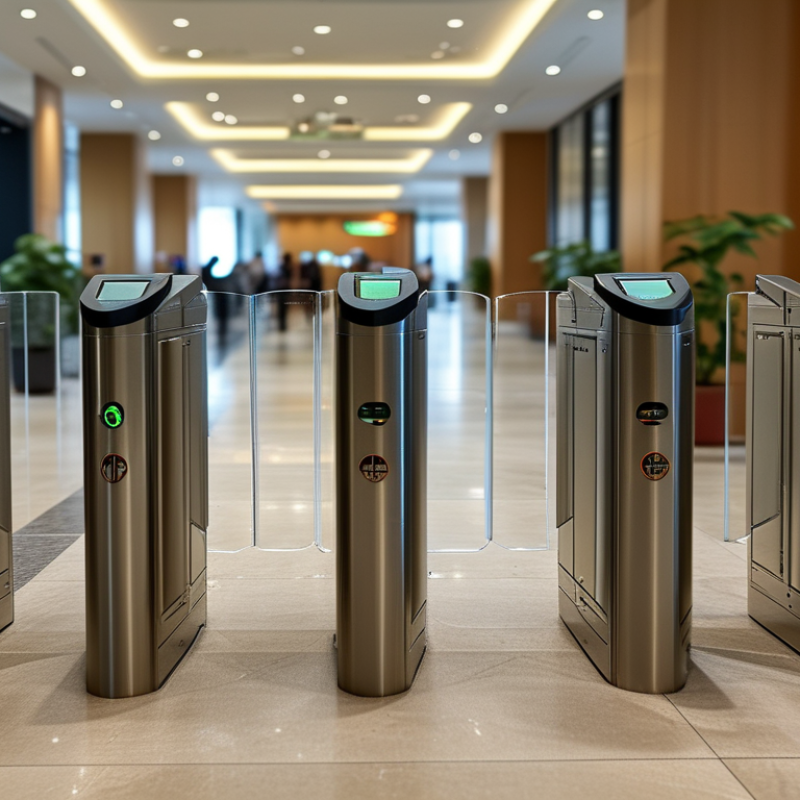
Flap turnstile gates combine controlled entry with a clean, visible design. Their glass or acrylic wings open after valid authentication. This suits office lobbies, transport stations, campuses, stadiums, and controlled public facilities.
Grand View Research estimated the global access control market at approximately USD 10.5 billion in 2023. Its forecast also indicates strong growth through 2030, driven partly by integrated identity systems.
The trend suggests more facilities will connect gates with cards, mobile credentials, biometrics, and visitor platforms.
Application defines the correct gate. Busy transit entrances need fast processing, wide lanes, and reliable sensors. Offices often prioritize quiet operation, appearance, and visitor management. Airports and stadiums may require stronger guidance, wider accessible lanes, and emergency release functions.
IATA reported nearly 4.8 billion air travelers in 2024, showing why passenger facilities need predictable pedestrian flow.
Still, a busy site should not choose only by advertised throughput. Real performance changes with queue behavior, credential delays, and staff intervention.
Fit matters. Measure the opening, lane width, ceiling height, and nearby evacuation routes before ordering. Check anti-tailgating detection, obstacle sensing, backup power, and maintenance access.
Mordor Intelligence’s physical security research highlights the growing role of connected monitoring and centralized management. However, connectivity can add failure points.
A perfect configuration is a myth.
Operators should test wet shoes, luggage, wheelchairs, and hurried users. Small tests often reveal large design mistakes.
Evaluating Security, Traffic Flow, and Access Control Requirements
2026 How to Choose Flap Turnstile Gates?
Evaluating Security, Traffic Flow, and Access Control Requirements
Choosing a flap turnstile starts with the site, not the product brochure. Measure the queue during peak entry periods. A school, office lobby, and stadium need different traffic capacities. Observe how people carry bags, use wheelchairs, or move in groups. Small details can expose serious flow problems.
Security depends on controlled movement and reliable detection. Select sensors that identify tailgating, forced passage, and objects left in the lane. The gate should open quickly for authorized users, then close smoothly without trapping anyone. Emergency release settings must match the building’s evacuation procedures. I have seen overly sensitive sensors create constant alarms. That weakens staff attention over time.
Access control should fit existing operations. Check compatibility with cards, mobile credentials, biometric readers, and visitor systems. Define who can enter, when they can enter, and which events require records. A clear audit trail supports investigations and routine reviews. Traffic reports also reveal whether two lanes are enough. Do not rely only on advertised throughput. Real movement is slower when users pause, search for credentials, or ask for help. Maintenance access matters too. Technicians need safe space around motors, sensors, and control panels. A perfect configuration rarely exists. Review the design after installation.
Comparing Gate Designs, Materials, and Available Features
2026 How to Choose Flap Turnstile Gates?
Flap turnstiles suit offices, transit stations, gyms, and controlled entrances. Their glass or polymer wings create a clear, modern barrier. Choose a single-lane design for compact lobbies. Wider accessible lanes support wheelchairs, carts, and supervised movement. Swinging flaps usually feel less restrictive than tripod barriers. However, their moving panels need enough side clearance. Measure real pedestrian flow, not just the doorway.
Materials affect durability, appearance, and maintenance. Tempered glass looks refined but shows fingerprints and requires careful replacement planning. Polycarbonate panels resist impact and may reduce repair costs. Stainless steel frames handle frequent contact, moisture, and cleaning better than painted steel. Check weld quality, edge finishing, and corrosion protection.
These details matter more than a glossy product photograph. In site reviews, poor cable routing often creates avoidable service delays.
Useful features include contactless readers, card access, QR scanning, alarm signals, and remote status monitoring. Integrate them with the existing access-control system before purchasing gates. Sensors should detect tailgating, trapped objects, and unauthorized passage without creating false alarms. Confirm emergency release behavior and backup power requirements with qualified installers.
A quiet motor is valuable in a reception area. Fast operation is not always better. Rushed openings can confuse visitors and increase maintenance needs. I would test the gate during peak traffic, after cleaning, and with accessibility equipment. One weakness remains: no design performs well when staff ignore clear operating procedures.
Checking Installation Conditions, Maintenance, and Safety Standards
2026 How to Choose Flap Turnstile Gates?
Choosing a flap turnstile starts with the installation environment, not the cabinet design. Measure the passage width, floor strength, ceiling height, drainage, and nearby barriers. Check whether the gate supports wheelchair access and emergency evacuation routes. Measure twice. Keep it clear. A level, solid surface reduces vibration and improves sensor accuracy. Leave service space behind the housing, especially in crowded lobbies. Power supply, network cabling, and backup power also need early verification. In my experience, poor cable routing causes more trouble than the gate mechanism itself.
Maintenance should be simple, scheduled, and documented. Inspect moving panels, hinges, sensors, fasteners, and warning indicators regularly. Remove dust from optical sensors and check for unusual noise or delayed closing. Test emergency release functions during controlled inspections, never during public traffic. Keep it clean. A maintenance log helps technicians identify gradual changes before failure occurs. Still, inspection intervals should reflect traffic volume, dust, humidity, and operating hours. A busy station may require more frequent checks than a quiet office.
Safety requires more than automatic opening. Confirm anti-pinch detection, obstruction sensing, controlled closing speed, and safe behavior during power loss. Review applicable electrical, machinery, accessibility, and fire-safety requirements with qualified professionals. Do not assume one certificate covers every installation site. That assumption is easy, but unsafe. Test the completed system with realistic users, luggage, mobility devices, and evacuation scenarios. Some designs look efficient on paper, yet create confusing queues in practice. Reconsider the layout when people hesitate, turn sideways, or gather near the exit.
2026 How to Choose Flap Turnstile Gates?
Checking Installation Conditions, Maintenance, and Safety Standards
The chart shows key accessibility planning dimensions from the 2010 ADA Standards for Accessible Design, converted from inches to millimetres. A flap turnstile selection should provide an accessible route of at least 914 mm, a clear opening of at least 813 mm where applicable, and sufficient space for a 1524 mm turning circle.
Before installation, verify local building and fire regulations, emergency-release behavior, obstacle detection, power-failure operation, and service access. Maintenance intervals should follow the equipment manufacturer’s instructions and the site’s risk assessment. Source: 2010 ADA Standards for Accessible Design.
Selecting the Right Flap Turnstile Gate for Your Facility
2026 How to Choose Flap Turnstile Gates?
Selecting the right flap turnstile gate starts with your facility’s daily rhythm. Count peak arrivals, not average traffic. MarketsandMarkets’ 2024 Access Control Market report projects growth from about USD 10.4 billion in 2023 to USD 14.9 billion by 2028. That growth reflects wider demand for controlled, connected entry systems. However, a larger market does not automatically mean a better gate.
Measure the doorway, queue length, and evacuation route. A flap gate should support smooth pedestrian flow without creating a narrow waiting line. Check the manufacturer’s tested throughput, then reduce it for real conditions. Bags, visitors, alarms, and slow badge presentation affect performance. A practical site trial is valuable. Watch the gate during shift changes. Ten seconds of delay can become a crowded lobby.
Accessibility also needs careful review. The U.S. Access Board’s ADA Standards require accessible routes and sufficient clear width, while local rules may add stricter requirements. Choose a configuration with a clearly identified accessible lane and safe emergency release. Integration matters too. Confirm compatibility with cards, mobile credentials, visitor systems, and fire alarms. The 2024 Grand View Research report identifies rising demand for integrated physical security systems, but integration can still fail during network outages. Test offline operation. Do not trust a brochure alone. Temperature, cleaning routines, glass visibility, and maintenance access deserve equal attention. Some facilities overvalue appearance and underestimate service space. That mistake is expensive.